
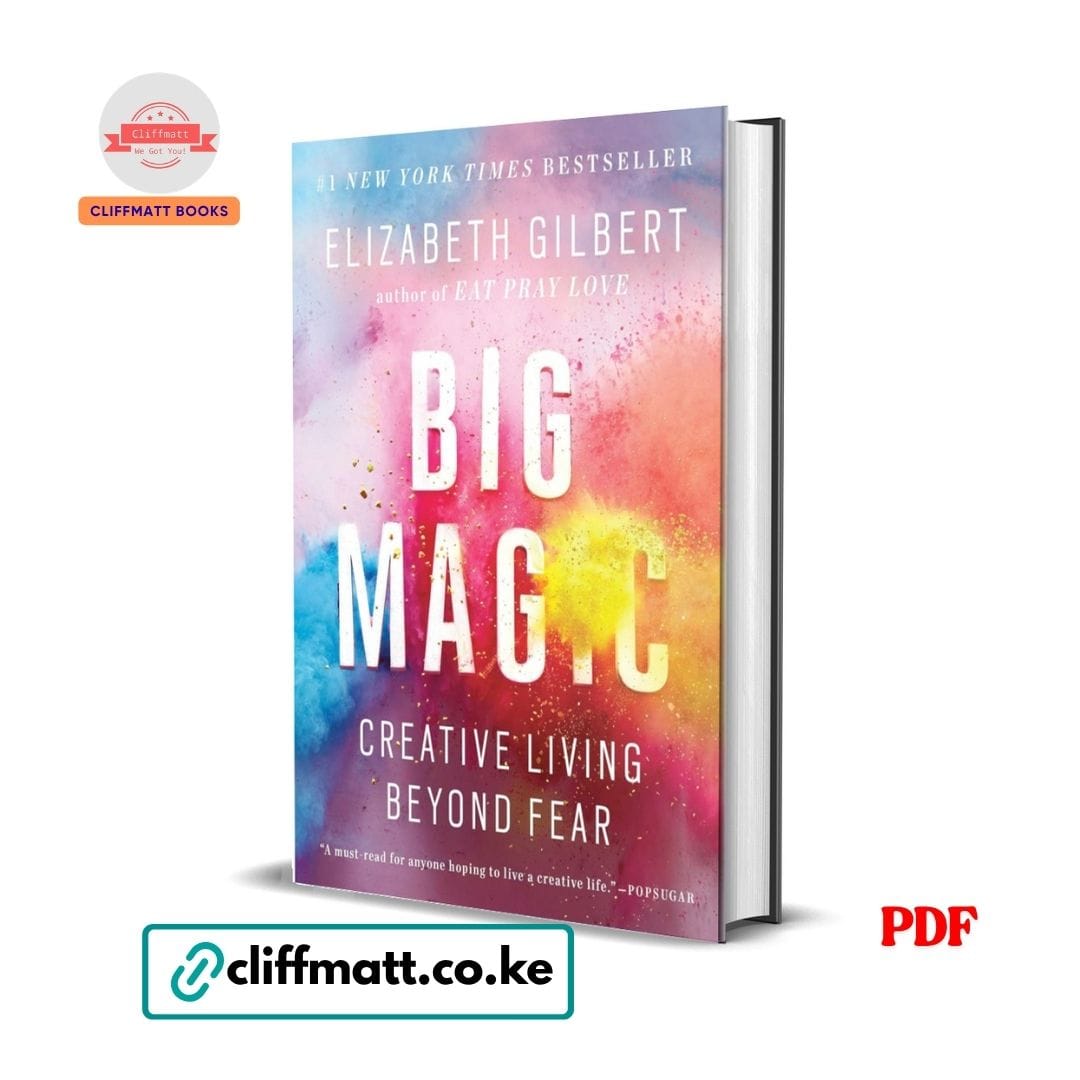


Description
There is something inside you that wants to make things. It has always been there. The specific curiosity that pulls you toward certain ideas. The specific satisfaction of making something that did not exist before you made it. The specific joy of expressing what cannot be expressed any other way — through writing, through cooking, through gardening, through music, through business, through the specific creative act that is uniquely yours.
And there is something else inside you that is absolutely terrified of that making. That whispers the specific reasons why you are not qualified, not talented enough, not the right person, not the right time. That counsels you to wait until conditions improve, until you have more training, until someone gives you permission. That has been successfully preventing the specific creative life that the first something has been trying to produce for years.
Elizabeth Gilbert — author of the global phenomenon Eat Pray Love — wrote Big Magic as the most direct, most personal, most honest, and most ultimately liberating answer to that second something she could produce. It is not a manual for becoming a professional artist. It is the specific invitation — from someone who has spent her entire adult life pursuing creative work through every conceivable form of fear, doubt, rejection, and practical difficulty — to live a genuinely, fully, specifically creative life. Regardless of your profession. Regardless of your talent level. Regardless of whether anyone will ever pay you for it.
“A must-read for anyone hoping to live a creative life.” — POPSUGAR
What This Book Covers:
Courage — The First Requirement:
- The specific nature of creative courage — not the dramatic, once-for-all bravery of a single heroic decision but the specific, daily, ordinary courage of continuing to show up to the specific creative work in the presence of the specific fear that will never fully leave and that Gilbert argues should never be expected to
- The specific relationship between fear and creativity — Gilbert’s foundational insight that fear and creativity consistently travel together; that the specific presence of fear around a creative project is not evidence that the project should be abandoned but the specific sign that it matters; the particular reframe that makes fear a companion rather than a gatekeeper
- Why waiting for fear to subside before creating is the specific strategy that guarantees the specific creative life is never lived; the specific alternative of creating in the presence of fear with the specific understanding that fear does not get to drive
- The specific fear conversation — Gilbert’s specific, memorable image of speaking directly to your fear before beginning any creative project; acknowledging its presence, respecting its concern, and making clear that it may ride along but it may not choose the destination
Enchantment — The Magic of Ideas:
- Gilbert’s most distinctive and most personally charming philosophical contribution — the specific understanding of ideas as living entities that wander the world seeking the specific human collaborators who are most willing and most equipped to bring them into being; the specific mythology that makes the creative process feel like a relationship rather than a performance
- The specific idea-as-entity framework — how ideas approach us through the specific sensation of curiosity, of pull, of the specific energised interest that distinguishes the idea that is meant for us from the information that merely passes through; how to recognise when an idea is genuinely knocking and what saying yes to it requires
- The specific stories of ideas that moved — from one creator to another when the first creator failed to act; the specific evidence from creative history of the same idea appearing independently to multiple people simultaneously; what this phenomenon reveals about the specific nature of creative inspiration and the specific urgency of responding when it appears
- The specific invitation to say yes — not to every idea but to the specific idea that produces the specific sustained pull that genuine creative invitation produces; and the specific commitment to that yes that makes the specific creative work possible rather than merely aspirational
Permission — The Most Important Thing You Give Yourself:
- The specific permission framework that is the most immediately liberating aspect of the book — the specific understanding that no one is coming to give you permission to live a creative life; that the specific permission you have been waiting for is yours to give yourself; and that giving it does not require a credential, a contract, a commission, or anyone else’s specific approval
- Why waiting for permission is the specific creative life’s most consistent killer — the particular cultural conditioning, the particular educational messaging, and the particular internalized scarcity thinking that produces the specific belief that creative expression must be earned, qualified, or validated by someone with more authority than the person who wants to create
- The specific amateur as exemplar — Gilbert’s specific, counter-cultural celebration of the amateur (the one who does it for love rather than for money or recognition) as the specific purest and in many ways most genuinely creative practitioner available; why the professional’s anxiety about commercial viability and critical reception consistently produces a specific quality of creative constraint that the amateur never experiences
- The specific permission practices — the particular self-authorisation, the particular public declaration of creative intention, and the specific beginning of the creative work that constitutes the specific act of giving yourself permission rather than waiting for it
Persistence — The Long Game of Creative Living:
- The specific craft and persistence dimension — Gilbert’s honest, sustained engagement with what the specific long creative life actually requires beyond inspiration and permission; the specific daily showing up, the specific disciplined practice, and the specific willingness to produce work that is not yet as good as the specific work you are capable of producing in order to develop the specific capacities that the genuinely excellent work will eventually require
- Why the muse respects discipline — the specific Gilbert argument that inspiration is most reliably available to the creator who is consistently present at their creative practice; that waiting for inspiration before beginning produces the specific creative drought that consistent practice prevents
- The specific perfectionism as procrastination diagnosis — how the specific demand for perfect work before the work is shared, before the process is begun, or before the specific commitment is made consistently produces the specific paralysis that perfectionism presents as standards; what genuine standards look like compared to the specific disguised fear that perfectionism usually represents
- The specific finishing as creative practice — why finishing things, even the specific things that fall short of the specific vision that inspired them, is the specific skill that most distinguishes the creator who grows from the one who perpetually begins; what finishing consistently imperfect work teaches that perfectionism prevents
Trust — Surrendering to the Process:
- The specific trust dimension — Gilbert’s consistent, gently mystical encouragement to trust the creative process even when — especially when — it is not producing the specific outcomes the creator most wants; the specific faith that the specific creative work has its own wisdom that the creator’s anxiety and impatience consistently disrupts
- The specific detachment from outcomes — the specific creative freedom available to the creator who genuinely loves the process regardless of the specific reception it produces; why the work created from this specific detachment is consistently the most genuine work and often the most commercially successful work, despite the specific paradox that seems to contradict the intuition that caring more produces better results
- The specific creative lifespan perspective — the long view of a creative life that makes any individual project’s specific success or failure a minor event in the specific story of a life that is committed to creative living across decades; what this perspective does to the specific anxiety around any particular creative project
- The specific divine creativity dimension — Gilbert’s personal, lightly held, undogmatic spiritual understanding of creativity as participation in something larger than the individual creator; the specific experience of being used as a vehicle for something that exceeds your specific capacity that creators across every tradition and every era have consistently reported
Divinity — The Transcendent Dimension of Creative Living:
- The specific trickster energy that Gilbert identifies as the specific spirit of genuine creativity — playful, irreverent, not entirely serious about its own productions but entirely committed to the specific joy of making; why the creator who takes their work too seriously is the specific creator most consistently blocked
- The specific lightness as creative philosophy — the particular understanding that the creative life does not require the specific suffering, the specific tortured genius narrative, and the specific portentous self-importance that Western romantic mythology has attached to artistic creativity; that lightness, play, and genuine enjoyment of the creative process are not signs of insufficient seriousness but the specific signs of the most genuine creative relationship available
- The specific gift of creativity to the creator — regardless of what it produces for the audience, the market, or the critical reception; why the specific enrichment of the creator’s own inner life that genuine creative practice produces is itself sufficient justification for the specific investment the creative life requires
Why Kenyan Creatives Are Buying This Book: Kenya is producing an extraordinary generation of writers, artists, musicians, entrepreneurs, chefs, designers, and makers of every kind — people who are living creatively in every sense of the term but who often carry the specific fear, the specific guilt about time and money spent on creation, and the specific cultural pressure to produce something immediately practical rather than something genuinely made.
Big Magic is the specific, liberating, generous permission slip that every Kenyan creative who has ever doubted their right to make things — who has ever felt that creativity was a luxury rather than a fundamental human expression — most needs to read.
At Ksh 100, the #1 New York Times Bestselling guide to creative living from the author of Eat Pray Love.
Who This Book Is For:
- Every Kenyan writer, artist, musician, designer, chef, maker, and entrepreneur who wants the most liberating and most personally honest guide to the specific creative life they have been hesitating to fully inhabit
- Kenyan professionals who want to reconnect with the specific creative dimension of their work and their life that the specific practical pressures of adult professional life have progressively suppressed
- Every Kenyan who has a creative project they have been meaning to begin and have not begun — and who wants the specific book that addresses the specific reasons they have not begun with the specific honesty and the specific warmth that those reasons deserve
- Kenyan women specifically — Gilbert’s voice speaks with particular warmth to women who have been conditioned to deprioritise their own creative expression in service of every other person and every other demand; Big Magic is specifically liberating for the specific woman who has been waiting for permission to make the thing she has always wanted to make
- Every reader of Outliers (Gladwell), So Good They Can’t Ignore You (Newport), Hero (Byrne), Good Vibes Good Life (King), and The Alchemist (Coelho) who wants the most warmly personal and most creatively specific guide to living the specific life that creative courage makes possible
📖 Author: Elizabeth Gilbert 📄 Format: PDF eBook (instant download via WhatsApp or email) 💰 Price: Ksh 100 only 🚀 Delivery: Instant after M-Pesa payment confirmation
👉 Order now on cliffmatt.co.ke — Pay via M-Pesa, receive your PDF instantly.









Reviews
There are no reviews yet.