


Description
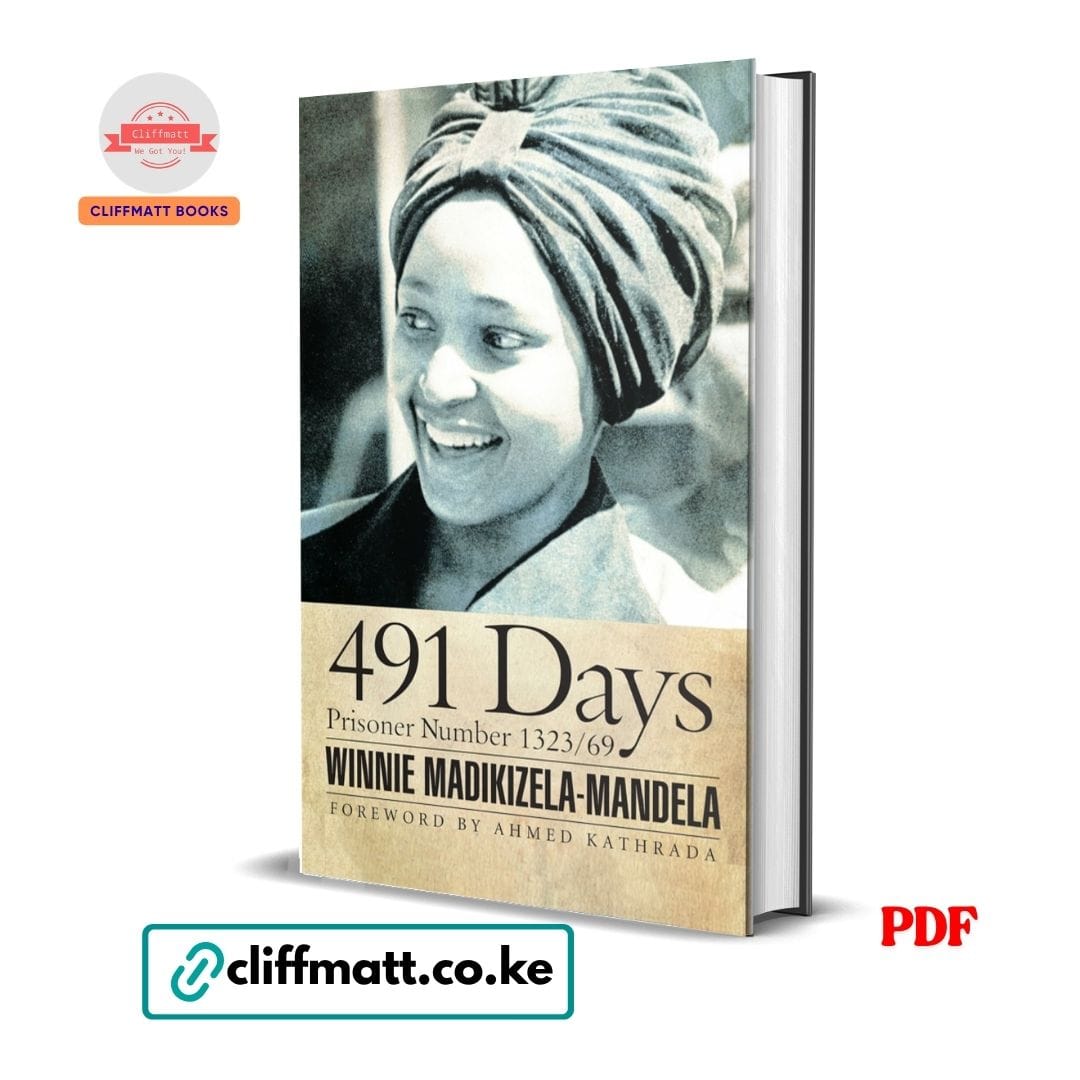
The world knows the story of Nelson Mandela’s 27 years in prison. Far fewer know the story of what happened to the woman he left behind — the woman who kept the liberation movement alive on the streets of South Africa while her husband was silenced behind bars, and who paid for that defiance with a price that has rarely been fully told. 491 Days: Prisoner Number 1323/69 is Winnie Madikizela-Mandela’s own account — drawn from her prison diaries and interrogation records — of the 491 days she spent in solitary confinement at the hands of the apartheid security apparatus. It is a document of extraordinary historical importance and extraordinary human courage.
With a Foreword by Ahmed Kathrada — one of Nelson Mandela’s closest comrades and a fellow Robben Island prisoner — this is not just a political memoir. It is one of the most visceral, most honest, and most moving accounts of what apartheid did to real human beings ever committed to paper.
What This Book Documents:
The Arrest and the Beginning:
- The 1969 security police swoop that took Winnie Madikizela-Mandela into detention under Section 6 of the Terrorism Act — legislation specifically designed to hold people indefinitely without charge, without access to lawyers, and without any external oversight
- The moment of arrest — what it felt like, what she thought of, what she refused to show her captors
- The initial interrogation sessions — the specific tactics used by the apartheid security apparatus to break political detainees, and Winnie’s response to each of them
- Being separated from her young daughters — Zenani and Zindzi — and the specific anguish of a mother imprisoned while her children are left without either parent
491 Days in Solitary:
- The physical reality of solitary confinement — the cell, the isolation, the sensory deprivation, and the deliberate psychological tactics designed to produce mental collapse
- How Winnie Madikizela-Mandela maintained her psychological integrity across 491 days of sustained isolation — the specific mental strategies, the spiritual resources, and the sheer force of character that refused to break
- The interrogation sessions — the questioning, the pressure, the attempts to extract information about the ANC’s underground network
- The other detainees — the political community of women who were held alongside her, their solidarity across prison walls, and the strength they drew from each other despite their isolation
- Her prison diaries — the extraordinary documents she kept that form the backbone of this memoir and that capture the daily texture of her captivity with devastating intimacy
The Trial and Its Aftermath:
- The eventual trial under the Suppression of Communism Act — and the legal battle that followed months of unlawful detention
- The specific charges, the evidence, and the political theatre of a trial that was never really about justice
- The verdict and its immediate consequences — and what it revealed about the apartheid state’s specific fear of Winnie Madikizela-Mandela
The Woman Behind the Story:
- What 491 days in solitary confinement does to a human being — and what it failed to do to this particular woman
- The specific sources of Winnie’s resilience — her identity, her convictions, her love for her family, and her absolute refusal to betray the people who trusted her
- The relationship with Nelson Mandela conducted through letters, prison visits, and the extraordinary intimacy of two people separated by the full force of state power
- Who Winnie Madikizela-Mandela was before the detention — and who she became afterward
Why This Story Matters Beyond South Africa: The story of Winnie Madikizela-Mandela’s imprisonment is not just a South African story. It is the story of what happens when a state decides that a woman is too dangerous to be free — and what happens when that woman refuses to become what the state needs her to become. It is a story about the specific courage required of women in liberation movements — the courage that is rarely celebrated as loudly as the courage of the men alongside whom they fought. And it is a story about what human beings are capable of enduring when their convictions are genuine and their love is real.
Who This Book Is For:
- Every reader of Long Walk to Freedom (Nelson Mandela) who wants the other half of the story — the story that happened outside the prison walls while Mandela was inside them
- Kenyan women who want the stories of Africa’s most courageous women told in their own words
- University students of African history, gender studies, political science, and human rights
- Anyone who has read Unbowed (Wangari Maathai) and Left to Tell (Ilibagiza) and wants another essential African woman’s voice in their reading
- Human rights practitioners, journalists, and civil society professionals who want the most intimate available account of what political detention actually does to a human being
- Every person who believes that history belongs only to the people who won — and needs the reminder that the people who endured are equally its authors
Why Kenyan Readers Are Buying This Book: Winnie Madikizela-Mandela is one of the most complex, most debated, and most misunderstood figures in African political history. 491 Days does not resolve the complexity — it deepens it, because it gives her back her own voice in the most vulnerable and most truthful moment of her life. For Kenyan readers who know her name but have heard mostly the controversies rather than the courage, this book is a necessary corrective and a genuinely extraordinary read.
Book Details:
- 📖 Author: Winnie Madikizela-Mandela
- 📖 Foreword: Ahmed Kathrada
- 📄 Format: PDF eBook (instant download via WhatsApp or email)
- 💰 Price: Ksh 100 only
- 🚀 Delivery: Instant after M-Pesa payment confirmation
👉 Order now on cliffmatt.co.ke — Pay via M-Pesa, receive your PDF instantly.













Reviews
There are no reviews yet.