


Description
There have been few lives in human history as consequential as Mahatma Gandhi’s. He led the largest nonviolent independence movement the world has ever seen. He developed a philosophy of resistance — satyagraha, truth-force — that became the template for every major nonviolent civil rights movement of the twentieth century, from Martin Luther King Jr.’s Civil Rights Movement to Nelson Mandela’s anti-apartheid struggle. He faced the full coercive power of the British Empire with no weapon except the specific quality of his own conscience — and he won.
And yet the autobiography he wrote is not, primarily, a book about any of that. It is a book about the specific inner journey — the specific experiments, the specific failures, the specific disciplines, and the specific searching after truth — that produced the person capable of those external achievements. Gandhi called it The Story of My Experiments with Truth because that is precisely what it is: the honest, detailed, sometimes uncomfortable account of one man’s lifelong attempt to live with complete integrity, complete truth, and complete service to something larger than himself.
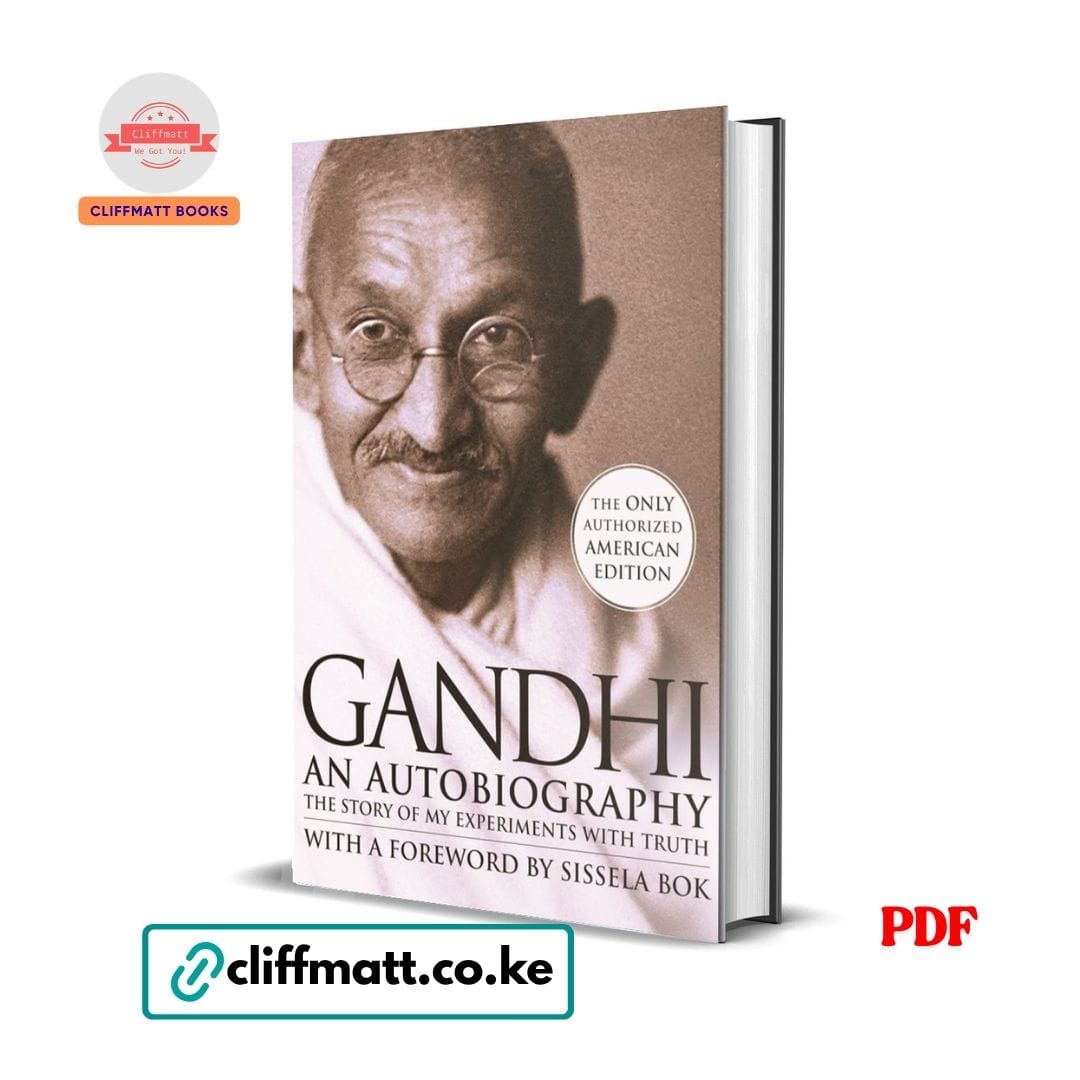
Gandhi: An Autobiography — The Story of My Experiments with Truth — the only authorized American edition, with a foreword by Sissela Bok — is not merely one of the greatest autobiographies ever written. It is one of the most important books ever written about what it means to live a fully human life.
What This Book Covers:
Childhood and Formation — The Making of the Mahatma:
- Gandhi’s specific Gujarati childhood — the specific family environment, the specific religious influences (his deeply devout mother’s Vaishnavism, his exposure to Jainism and its emphasis on non-violence and truth), and the specific early experiences that planted the specific seeds that his entire life would cultivate
- The specific childhood incident of truth-telling — the moment of confessing a theft to his father and receiving forgiveness rather than punishment; how this specific experience of the power of truth and the transformative quality of genuine honesty shaped Gandhi’s entire subsequent philosophy of satyagraha
- His specific youthful failures — the specific moments of moral compromise (eating meat in secret, smoking, petty theft) that he documents with the unflinching honesty that characterises the entire autobiography; why the man who became the world’s greatest moral exemplar is so specific about his own failures; what this honesty communicates about the nature of genuine moral development
- His marriage to Kasturba at thirteen — the specific joys, the specific difficulties, and the specific moral examination of the institution of child marriage that Gandhi subjects himself to across the autobiography with a candour that was remarkable for its time
London — The Young Lawyer and His Experiments:
- Gandhi’s three years studying law in London — the specific culture shock, the specific loneliness, and the specific determination to keep his promises (vegetarianism, sexual fidelity, truthfulness) against the specific social pressure to conform to English habits
- His engagement with the specific intellectual currents of late Victorian London — his reading of Tolstoy, of the Bhagavad Gita, of Madame Blavatsky, and of the Bible; the specific way that this reading shaped his emerging understanding of the relationship between religion, ethics, and political action
- His vegetarianism as both discipline and philosophy — the specific evolution from keeping a promise made to his mother to developing a genuine conviction about the relationship between diet, self-discipline, and moral clarity; the specific essay he wrote for the London Vegetarian Society that was one of his first published pieces
South Africa — The Crucible:
- The specific incident that changed the trajectory of Gandhi’s life — his ejection from a first-class railway compartment in Pietermaritzburg despite holding a valid first-class ticket; the specific night he spent in the cold station, deciding whether to go home to India or to stay and fight; the specific decision that was made that night
- Twenty-one years in South Africa — the specific legal work, the specific political campaigns, the specific experiments in communal living (Phoenix Farm, Tolstoy Farm), and the specific development of the philosophy and technique of satyagraha that would later transform India
- The specific campaigns against the discriminatory legislation targeting Indian residents of South Africa — the specific organisation, the specific negotiations, the specific willingness to accept imprisonment as a moral statement; how these specific campaigns became the laboratory in which Gandhi’s most important political and philosophical insights were developed and tested
- His specific relationships with the specific South African political figures — Jan Smuts, the specific adversary who came to respect him; the specific dynamic of negotiation with an opponent who had genuine power and genuine principle
The Philosophy of Satyagraha — Truth-Force:
- What satyagraha actually means — not passive resistance but the active, courageous, demanding practice of holding to truth in the face of power; the specific distinction Gandhi always insisted upon between the weakness of passive non-resistance and the strength of active non-violent truth-force
- The specific relationship between ahimsa (non-violence) and satya (truth) in Gandhi’s philosophy — how he came to understand these not as separate values but as two dimensions of the same fundamental commitment; why truth requires non-violence and non-violence requires truth
- The specific demand that satyagraha places on the practitioner — the willingness to accept suffering rather than inflict it; the specific self-discipline, the specific courage, and the specific love for the opponent that genuine satyagraha requires; why Gandhi consistently insisted that satyagraha was more demanding, not less demanding, than violence
- The specific experiments with communal living, with fasting, with sexual abstinence (brahmacharya), and with dietary simplicity that Gandhi pursued as the specific personal disciplines necessary to purify the self for the specific demands of satyagraha — the specific understanding that political action was inseparable from personal moral development
Return to India — National Leadership:
- Gandhi’s specific return to India in 1915 — after twenty-one years in South Africa, as a figure of international reputation, and with the specific instruction from his spiritual mentor Gokhale to travel India for a year before speaking or acting on public matters; the specific discipline of listening before leading
- The specific campaigns that established his national leadership — the Champaran indigo farmers, the Kheda peasants, the Ahmedabad mill workers — each a specific application of satyagraha to a specific local injustice; each a specific model for the national movement that would follow
- The specific development of the independence movement — the specific relationship with the Indian National Congress, the specific collaboration and the specific tensions with other leaders, and the specific strategic choices that made the independence movement genuinely mass-based rather than elite-driven
- The specific role of the charkha (spinning wheel) — not merely a symbol but the specific economic and philosophical statement that Gandhi believed it embodied; why spinning cotton was simultaneously an act of economic resistance, a spiritual discipline, and a specific connection between the educated leadership of the independence movement and the poorest Indians whose liberation it claimed to seek
The Inner Life — What the Autobiography Is Most About:
- Gandhi’s specific experiments with brahmacharya — his vow of sexual abstinence taken in 1906 and the specific account of what led to that vow, what it cost him, and what it produced; the specific Gandhian understanding of the relationship between sexual energy, spiritual power, and the capacity for the specific sustained moral effort that satyagraha requires
- His specific relationship with food — the specific dietary experiments (giving up milk, giving up salt, testing various combinations of foods for their effects on clarity and energy) that he documented as seriously as any other experiment; the specific understanding that the body’s discipline is the foundation of the spirit’s freedom
- His specific prayer life — the Vaishnava tradition he was born into, the specific practices he maintained throughout his life, and the specific relationship between his daily prayer and the specific quality of equanimity that he brought to the most difficult political moments of his career
- His specific relationship with the Bhagavad Gita — the Hindu scripture that became his most important companion text; the specific interpretation of its message about action without attachment to results (nishkama karma) that became the philosophical foundation of his political life
- His specific relationship with Kasturba — the specific honesty with which he examines his treatment of his wife across the autobiography; the specific acknowledgment of the specific ways his own moral development was slower in this most intimate relationship than in any other; the specific tribute to her courage and her suffering in the cause that was more his than hers
Why This Book Remains Indispensable:
- The specific quality that makes this autobiography unlike almost any other — Gandhi’s radical honesty about his own failures; his specific willingness to document the moments of moral compromise, the moments of excessive severity, the moments of mistaken judgment that most autobiographers carefully omit; what this specific honesty produces in the reader
- The specific inspiration of a life that was not born great but that became great through the specific daily practice of specific disciplines — that was not marked by early promise but by early failure and ordinary beginnings; that demonstrates with specific, documented evidence that extraordinary moral development is possible for any person willing to do the specific inner work it requires
- Why Martin Luther King Jr. said that Gandhi was the first person in history to lift the love ethic of Jesus Christ beyond mere interaction between individuals to a powerful and effective social force; the specific connection between Gandhi’s philosophy and the Christian tradition that makes this book specifically relevant to Kenya’s deeply Christian culture
- Why Nelson Mandela — whose Long Walk to Freedom is already in your Cliffmatt catalogue — drew so directly on Gandhi’s philosophy; the specific intellectual and moral lineage that connects Mandela’s struggle with Gandhi’s; and why reading both autobiographies together produces an understanding of African liberation that neither provides alone
Why Kenyan Readers Are Buying This Book: Gandhi’s specific challenge — facing a colonial power with no weapons except truth, non-violence, and the organised moral force of a people who chose suffering over submission — speaks directly to the specific history of Kenya, whose own independence movement was shaped by some of the same questions about resistance, dignity, and the specific cost of freedom that Gandhi navigated in India.
His autobiography is simultaneously a book about India, about colonialism, about political strategy, and about the specific inner work that any person who wants to live with genuine integrity must be willing to do. All of those dimensions speak directly to Kenyan readers — to their history, to their faith, to their ambition, and to their daily challenge of building lives of genuine character in a complex world.
At Ksh 100, this is one of the most important autobiographies ever written — the complete, authorised account of the man Martin Luther King Jr. called “the guiding light of our technique of nonviolent social change” — now available to every Kenyan.
Who This Book Is For:
- Every Kenyan who wants to understand the specific philosophical and spiritual foundations of nonviolent resistance — and what those foundations required of the person who embodied them
- Political science and history students at Kenyan universities for whom this is essential reading in any serious study of colonialism, independence movements, and the philosophy of nonviolence
- Kenyan Christians who want to understand the specific life that Martin Luther King Jr. credited as the model for the Civil Rights Movement — and the specific philosophy that made it possible
- Leaders and public servants who want the most searching and most honest account of what genuine public integrity looks and costs in practice
- Every reader of Long Walk to Freedom (Mandela), Dreams from My Father (Obama), Team of Rivals (Goodwin), and Dangerous Prayers (who featured Gandhi on its cover) who wants the autobiography of the man whose philosophy shaped the twentieth century’s most important nonviolent movements
- Readers of The Obstacle Is the Way (Holiday) and Make Your Bed (McRaven) who want the specific historical testimony of the most committed practitioner of disciplined living under adversity that the modern world has produced
📖 Author: Mahatma Gandhi (Foreword by Sissela Bok) 📄 Format: PDF eBook (instant download via WhatsApp or email) 💰 Price: Ksh 100 only 🚀 Delivery: Instant after M-Pesa payment confirmation
👉 Order now on cliffmatt.co.ke — Pay via M-Pesa, receive your PDF instantly.












Reviews
There are no reviews yet.