

Description
Every industry that has ever been disrupted was disrupted by someone who was not supposed to win.
Not the specific established player with the specific dominant market position, the specific abundant resources, and the specific decades of accumulated competitive advantage. The specific newcomer. The specific outsider. The specific person who entered the specific market from the specific low end, who was ignored by the specific incumbents because the specific revenue they were generating was too small to be worth defending against, and who then moved steadily, inevitably, and unstoppably up-market until the specific incumbents discovered — too late — that the specific disruption they had been ignoring had become the specific existential threat they could no longer survive.
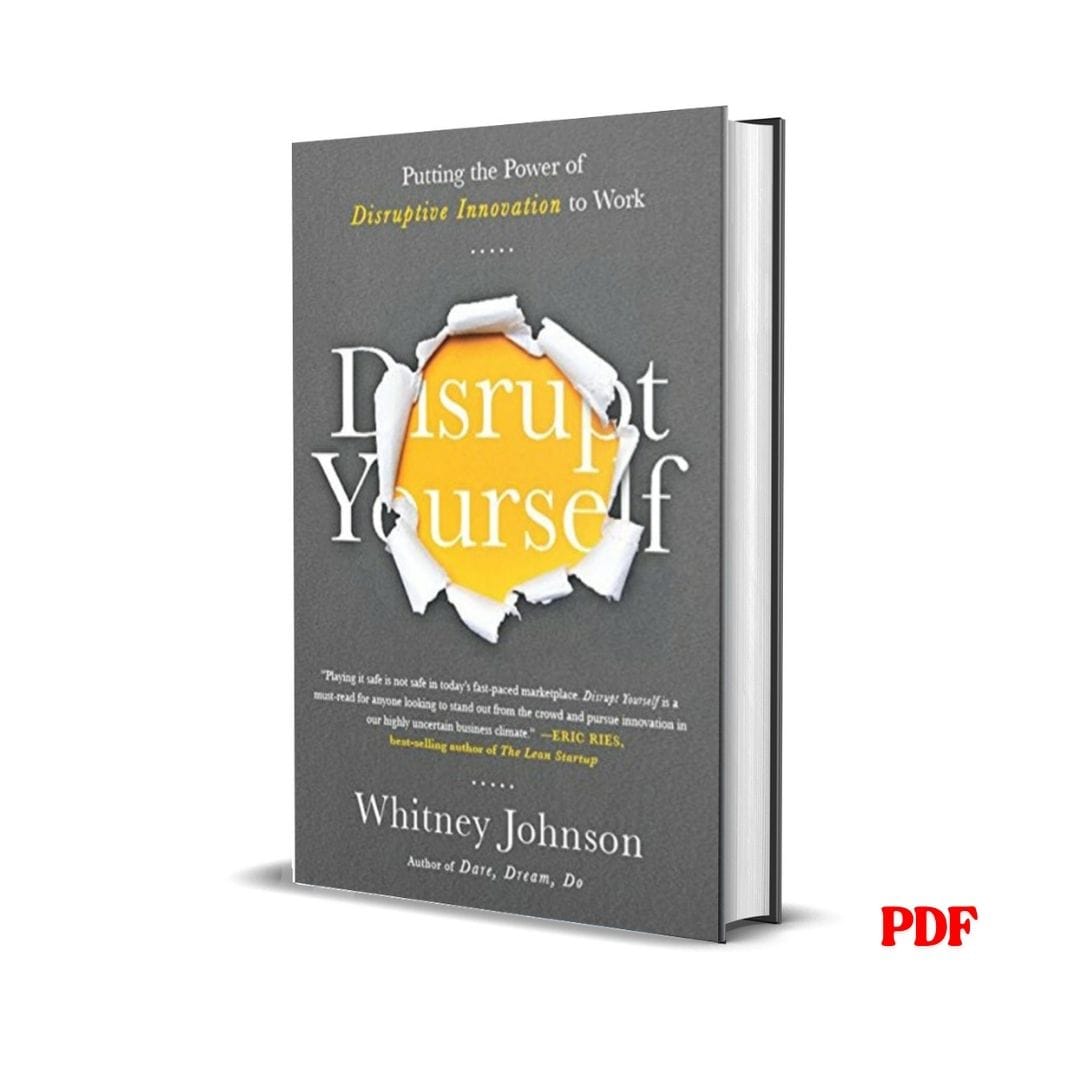
Clayton Christensen’s disruptive innovation theory is one of the most influential business frameworks of the last thirty years. Whitney Johnson asks a question that Christensen himself acknowledged as brilliant: what happens when you apply that same framework not to companies and industries but to individual careers and individual lives?
The answer is Disrupt Yourself — the specific, practically structured, personally compelling guide to using the specific principles that disrupted Kodak, disrupted Blockbuster, and disrupted Nokia to disrupt the specific career, the specific professional trajectory, and the specific personal limitations that are keeping the specific most ambitious and the specific most capable people from achieving the specific outcomes their potential most deserves.
What This Book Covers:
The Core Insight — Disruption Is Personal:
- The specific application of disruptive innovation to individual careers — how the particular framework that Christensen developed to explain why the specific largest and the specific most successful companies consistently failed to see disruptive competitors until too late applies with equal force and equal explanatory power to the specific individual professional who has accumulated the specific expertise, the specific credentials, and the specific track record that should be producing the specific advancement and the specific fulfilment that their investment deserves but consistently is not
- The specific personal disruption paradox — how the specific most successful professionals are simultaneously the specific most vulnerable to the specific personal equivalent of the Innovator’s Dilemma; why the specific person who has invested the specific most in the specific current professional identity is the specific most resistant to the specific disruption of that identity that new growth requires; why the specific comfort of the specific current expertise is the specific most reliable obstacle to the specific new learning that the specific next level demands
- The specific Kenyan professional context — how the particular rapidly changing Kenyan economy, the specific technological disruption of traditional industries, and the specific emergence of entirely new professional categories that did not exist ten years ago makes the specific ability to personally disrupt — to strategically reposition, to deliberately learn new skills, and to move to new challenges before the specific current ones stop being challenging — the specific most valuable professional skill available to any Kenyan professional navigating the specific most rapidly changing labour market in the country’s history
The S-Curve Framework — The Heart of the Book:
Understanding the S-Curve:
- The specific S-curve of learning and growth — the particular shape of the specific performance improvement curve that every new skill, every new role, and every new professional challenge follows: the specific slow, difficult, frequently discouraging early phase where progress is minimal and the specific investment of effort seems disproportionate to the specific visible result; the specific steep, exhilarating, rapidly rewarding middle phase where the specific accumulated foundation of the early effort begins to produce the specific accelerating returns that make the specific difficult beginning worthwhile; and the specific flattening, slowing, gradually stagnating late phase where the specific skill or role that was producing the specific most rapid growth begins to produce the specific diminishing returns of mastery without new challenge
- Why the S-curve is universal — how this specific growth pattern appears in the specific acquisition of every skill (musical instruments, programming languages, medical procedures, management capabilities), in the specific development of every business model, and in the specific trajectory of every career; why understanding where you are on the specific S-curve of your specific current professional situation is the specific most important strategic information available to any Kenyan professional making decisions about their specific next career move
- The specific transition problem — how the particular human tendency to remain at the specific top of the specific current S-curve (where the specific competence is highest, the specific confidence is greatest, and the specific recognition is most abundant) rather than moving to the specific bottom of the specific next S-curve (where the specific competence is lowest, the specific confidence is shakiest, and the specific recognition is minimal) is the specific career equivalent of the specific Innovator’s Dilemma; why the specific most career-limiting decision available to any professional is the specific decision to stay at the specific top of the specific current curve rather than beginning the specific next one
Navigating the S-Curve:
- The specific low end of the new curve — how the particular experience of starting at the specific bottom of the specific new S-curve — being a beginner again, being the specific person in the room who knows the least, navigating the specific slow early progress that beginners experience in every new domain — is the specific most growth-productive and the specific most strategically important experience available to the specific professional who has the specific courage to pursue it; why the specific senior professional who is willing to be a beginner in the specific new domain is the specific most disruptive and the specific most ultimately successful career-builder available
- The specific identification of the right new curve — how to identify the specific next S-curve that is the specific right challenge for the specific particular person at the specific particular career stage; the particular combination of the specific genuine strength that the existing experience has produced, the specific genuine passion that the specific new direction generates, and the specific genuine market need that the specific transition is positioned to address; why the specific right next curve is almost never the specific obvious next step but almost always the specific adjacent but genuinely new challenge
The Seven Disruptive Innovation Principles Applied to Personal Careers:
Principle 1 — Take the Right Risks:
- The specific right risk identification — not the specific reckless risk that ignores the specific genuine constraints of the specific current situation but the specific calculated, strategically chosen risk that moves the specific professional from the specific flattening current curve to the specific steep new one; how to distinguish the specific right risk (the specific new challenge that the specific genuine strengths are positioned to address from the specific low end of the specific new market) from the specific wrong risk (the specific leap into the specific domain where the specific genuine strengths provide no advantage)
- The specific risk-taking in the Kenyan professional context — how the particular Kenyan professional’s specific genuine strengths (the specific domain knowledge, the specific cultural context, the specific networks and relationships) position them for the specific right risks in the specific Kenyan market that the specific outsider cannot identify; why the specific Kenyan professional who understands disruption theory is the specific most capable of identifying the specific low-end entry points in the specific Kenyan market that represent the specific most genuine disruption opportunities
Principle 2 — Play to Your Distinctive Strengths:
- The specific distinctive strength identification — the particular combination of the specific genuine talent, the specific specific experience, and the specific specific knowledge that produces the specific unique positioning that disruptive entrants consistently use to enter the specific markets that the specific established players have either ignored or over-served; the particular Whitney Johnson strength-identification process and how it applies to every Kenyan professional’s specific situation
- Why the specific distinctive strength is rarely the specific most obvious strength — how the particular strengths that the specific professional has worked hardest to develop are rarely the specific strengths that produce the specific most distinctive positioning; why the specific most distinctive strength is often the specific seemingly obvious, the specific seemingly basic, and the specific seemingly unremarkable ability that the specific professional exercises so naturally that they have never considered it a competitive advantage
Principle 3 — Embrace Constraints:
- The specific creative power of constraints — how the particular limitations of the specific resource-constrained position at the specific low end of the specific new curve consistently produce the specific creative solutions, the specific unconventional approaches, and the specific genuine innovations that the specific resource-abundant incumbents cannot produce because their specific resources fund the specific conventional approaches that the specific disruption is making obsolete
- The specific Kenyan constraint advantage — how the particular resource constraints that characterise the specific Kenyan professional’s environment — the specific limited capital, the specific limited institutional support, and the specific limited inherited advantage — are the specific same constraints that have consistently produced the specific most innovative and the specific most disruptive solutions in the specific markets where they have been applied most creatively; why the specific Kenyan entrepreneur who embraces their specific constraints as the specific specific creative brief rather than the specific specific complaint is the specific most likely disruptor available
Principle 4 — Battle Entitlement, Embrace Failure:
- The specific entitlement as the disruptor’s enemy — how the particular expectation that the specific current success, the specific current expertise, and the specific current recognition entitles the specific professional to the specific next level of success without the specific effort of the specific new beginning consistently prevents the specific personal disruption that genuine growth requires; why the specific most successful professional is the specific most vulnerable to the specific entitlement that is simultaneously the specific most understandable and the specific most career-limiting response to genuine achievement
- The specific failure reframe for the disruptor — how the particular failures at the specific low end of the specific new curve are not the specific evidence of the specific wrong choice but the specific expected and specific informative early results of the specific right process; the particular learning extraction process that the specific disruptive innovator applies to every failure; why the specific professional who has never failed at the specific low end of a new curve has never genuinely disrupted their own specific career trajectory
Principle 5 — Be Discovery Driven:
- The specific discovery-driven approach — the particular understanding that the specific plan for navigating the specific new curve is always a hypothesis rather than a certainty; that the specific most important skill of the specific disruptive career-builder is not the specific precise execution of the specific predetermined plan but the specific agile adjustment of the specific plan based on the specific discoveries that the specific early execution consistently produces; why the specific Lean Startup methodology that Eric Ries endorsed this book for embodying is the specific correct approach to personal career disruption as well as to business disruption
- The specific discovery-driven career navigation — how to identify the specific minimum viable career experiments that test the specific key assumptions of the specific new direction without the specific full commitment of the specific irreversible transition; the particular sequencing of the specific small bets and the specific early experiments that produce the specific evidence for the specific confident full commitment
Principle 6 — Be Patient for Growth, but Impatient for Profitability:
- The specific growth patience — how the particular understanding that the specific new curve requires the specific extended early period of slow progress before the specific steep growth phase produces the specific sustainable, long-term professional development rather than the specific premature abandonment that impatience with the specific slow early phase consistently produces; why the specific patience for the specific S-curve growth is the specific most important temporal orientation for any Kenyan professional navigating the specific early phase of a career transition
- The specific profitability impatience — how to identify the specific early signals that the specific new curve is the specific right curve: the specific small wins, the specific genuine value delivered, the specific real feedback from the specific real market that indicates the specific specific direction is the specific correct one; why the specific disruptive career-builder is simultaneously patient about the specific time horizon and impatient about the specific early evidence of value creation
Principle 7 — Exit Before You Have To:
- The specific strategic exit — one of the specific most counterintuitive and the specific most practically important principles in the entire book; the particular understanding that the specific best time to move to the specific new curve is when the specific current curve is still producing the specific most rewarding results — not when the specific current curve has fully flattened and the specific stagnation is already producing the specific restlessness, the specific boredom, and the specific professional frustration that the specific too-late exit always follows
- The specific voluntary disruption as the highest career skill — how the particular Kenyan professional who develops the specific habit of the specific voluntary, strategically timed exit from the specific successful current position to the specific challenging new one is the specific most consistently growing, the specific most consistently relevant, and the specific most ultimately influential professional available in any Kenyan organisation or industry; why the specific person who disrupts themselves before the specific market disrupts them is the specific person who is always ahead of the specific change rather than behind it
The Team and Organisational Dimension:
- The specific S-curve portfolio thinking for leaders — how the particular leader who understands the specific S-curve framework can build the specific team portfolio that combines the specific beginner on the specific new curve, the specific accelerating performer on the specific steep middle section, and the specific master on the specific mature section to produce the specific most consistently high-performing and most consistently innovating team available
- The specific talent development through disruption — how the particular leader who deliberately places the specific high-potential team members at the specific low end of the specific new curves is the specific most effective talent developer available; why the specific Kenyan manager who understands and applies this principle is the specific most effective builder of the specific genuinely capable team that the specific rapidly changing Kenyan business environment requires
Why Kenyan Professionals Are Buying This Book: The specific Kenyan professional environment — with its specific rapid technological change, its specific emerging new industries, its specific disruption of traditional employment models through the specific gig economy and the specific digital economy, and its specific extraordinary entrepreneurial opportunity — is one of the specific most naturally S-curve-dense professional environments available. The specific Kenyan who understands how to navigate the specific S-curve, how to identify the specific right new curves to start, and how to exit the specific current curves before they force an exit is the specific most strategically positioned professional in the specific most dynamic labour market in East Africa.
At Ksh 100, the specific most practically applicable disruption framework available for the specific individual career — endorsed by the author of The Lean Startup.
Who This Book Is For:
- Kenyan professionals at every career stage who feel the specific restlessness of the specific flattening current S-curve and want the specific framework for identifying and navigating the specific next one
- Kenyan entrepreneurs who want the specific disruptive innovation framework applied to the specific personal decisions — what to learn next, what to build next, when to pivot — that entrepreneurial career-building consistently requires
- Kenyan managers and HR professionals who want the specific talent development framework that the specific S-curve model provides for the specific most effective team-building and the specific most effective individual development available
- Kenyan young professionals entering the specific most rapidly changing labour market in Kenyan history who want the specific strategic framework for navigating that change proactively rather than reactively
- Every reader of The Millionaire Fastlane (DeMarco), Same as Ever (Housel), Atomic Habits (Clear), Outliers (Gladwell), Essentialism (McKeown), and The CEO Next Door (Botelho) who wants the most specifically career-strategy-focused disruption framework to complete their professional development library
📖 Author: Whitney Johnson 📄 Format: PDF eBook (instant download via WhatsApp or email) 💰 Price: Ksh 100 only 🚀 Delivery: Instant after M-Pesa payment confirmation
👉 Order now on cliffmatt.co.ke — Pay via M-Pesa, receive your PDF instantly.












Reviews
There are no reviews yet.