


Description
There are millions of Kenyan boys being raised without their fathers. Some lost their fathers to death. Some to absence. Some to abandonment. Some to incarceration. Some to the economic migration that separates Kenyan families across counties and across continents. And the women raising those boys — alone, often without support, frequently without models for how to do what they are doing — are carrying one of the most important and most underacknowledged responsibilities in Kenyan society: the task of raising the next generation of men.
They are doing it in the face of a widespread, deeply held cultural assumption that boys without fathers are destined for deficit — that the absence of a man in the home is a wound that cannot be healed, a gap that cannot be filled, and a disadvantage that will follow a boy into every relationship, every institution, and every dimension of his adult life.
Dr. Peggy F. Drexler — research psychologist, assistant professor of psychology at Cornell University Medical College, and one of the most rigorous researchers in the field of gender and family development — spent years studying that assumption. She followed real families. She measured real outcomes. She interviewed real boys, real mothers, and the real men those boys became. And her findings — documented in Raising Boys Without Men: How Maverick Moms Are Creating the Next Generation of Exceptional Men — challenge every pessimistic assumption about fatherless households with the most powerful weapon available in any argument: evidence.
The boys raised by the “maverick moms” in Drexler’s study are not damaged. They are not deficient. They are not destined for the outcomes that conventional wisdom predicts. They are, in measurable, documentable, scientifically grounded ways, exceptional — emotionally intelligent, relationally capable, morally grounded, and equipped with a specific quality of empathy, self-awareness, and resilience that Drexler traces directly to the specific parenting practices of the women who raised them.
This book is not a consolation prize for single motherhood. It is a landmark research study, a practical parenting guide, and a profoundly hopeful message for every Kenyan woman who is raising a son alone and needs to know — not as a platitude but as a documented fact — that she is enough.
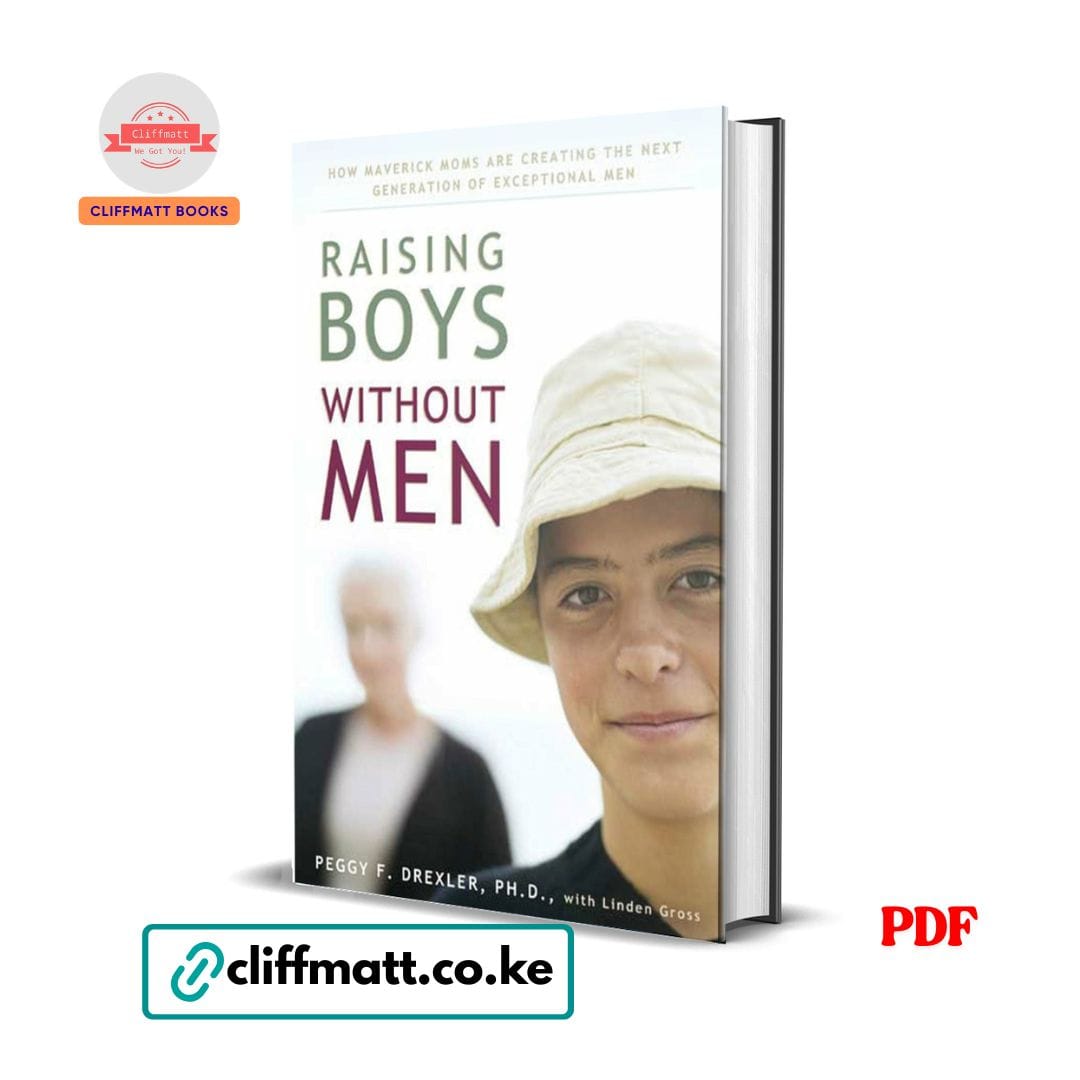
The cover communicates the book’s heart with quiet power: a boy in a bucket hat, clear-eyed and confident, with a woman — his mother — present but slightly out of focus in the background. He is the subject. She is the foundation. That relationship — the boy moving into his own identity while his mother remains the steady, deliberate, loving constant behind him — is exactly what this book is about.
What This Book Covers:
The Research — What the Evidence Actually Shows:
- How Drexler designed her landmark study — the specific methodology, the families studied, the outcomes measured, and the longitudinal approach that distinguishes this research from anecdotal claims and ideological assumptions in both directions
- What the boys raised without fathers actually look like at adolescence and young adulthood — the specific psychological, social, emotional, and behavioural outcomes that Drexler’s data produced, and why those outcomes contradict the dominant cultural narrative about fatherless homes
- The specific characteristics that consistently emerged in the boys raised by maverick moms — emotional intelligence, empathy, moral clarity, relational depth, and a specific quality of confidence that Drexler traces to the deliberate parenting practices of their mothers
- Why the presence or absence of a father is not the determining variable in a boy’s development — what the research reveals about the specific parenting practices, relationship qualities, and family environments that actually predict outcomes, regardless of family structure
- The limits of the research — Drexler’s own honest acknowledgment of what her study cannot claim, what questions remain open, and how her findings fit within the broader scientific literature on family structure and child development
What Maverick Moms Do Differently:
- The specific parenting practices that Drexler identifies in the mothers whose sons thrived — not heroic, not superhuman, but specific, learnable, consistently applied approaches to raising boys that every single mother can adopt
- How maverick moms talk to their sons about masculinity — the specific conversations, the specific models, and the specific frameworks they use to help boys understand what it means to be a man without defaulting to either the absent father’s shadow or a vague, undefined alternative
- How they handle their sons’ questions about their fathers — the honest, age-appropriate, emotionally intelligent approaches that protect a boy’s sense of self while acknowledging the reality of his family situation with truth and grace
- How they manage their own emotional needs — the specific self-care, community-building, and psychological practices that allow single mothers to show up consistently for their sons without being consumed by the weight of doing it alone
- How they build their sons’ emotional intelligence — the deliberate, daily practices of naming emotions, modelling vulnerability, and creating the specific emotional safety that allows boys to develop the inner life that their adult relationships will depend on
Masculinity Without a Male Template in the Home:
- How boys develop a healthy masculine identity without a father present — the specific developmental pathways that Drexler’s research identifies, and why those pathways are more varied, more flexible, and more robust than the single-pathway model that most developmental literature assumes
- The role of male mentors, teachers, coaches, uncles, grandfathers, and community figures in supplementing a single mother’s parenting — how maverick moms deliberately cultivate male relationships for their sons without making those relationships a substitute for their own primary parenting
- Why the absence of a father does not mean the absence of male influence — and how intentional, structured access to healthy male relationships provides what a boy needs without requiring the presence of a resident father
- The specific qualities of masculinity that boys raised by women often develop more fully than boys raised in two-parent households — empathy, emotional articulation, relational attentiveness, and a specific comfort with female perspectives that Drexler identifies as significant social and professional advantages in the adult world
Raising Emotionally Intelligent Sons:
- Why the sons of maverick moms score consistently higher on measures of emotional intelligence than boys from more conventionally structured families — and the specific parenting practices that produce that outcome
- How to raise a boy who can name, express, and manage his emotions without shame — the specific daily practices that build emotional vocabulary, emotional regulation, and the specific masculine emotional intelligence that most Kenyan boys are never explicitly taught
- Empathy development in boys — the specific approaches that maverick moms use to cultivate the capacity for genuine empathy in their sons, and why that empathy is both a moral value and a practical life skill that will shape every significant relationship their son ever has
- Emotional safety in the single-parent home — how to create the specific home environment where a boy feels genuinely free to bring his full emotional life rather than learning to hide, suppress, or perform his way through the feelings he actually has
Building Moral Character and Values:
- How maverick moms transmit values — the specific, daily, often unspoken ways that a mother’s own character, choices, and commitments shape her son’s moral framework more powerfully than any explicit instruction
- Discipline in the single-parent home — the specific approaches to boundaries, consequences, and accountability that produce the internal moral compass rather than mere external compliance
- Teaching boys about respect for women — how single mothers, by virtue of their own example and their deliberate conversations, raise sons who understand female humanity in ways that boys with absent or disrespectful fathers rarely learn
- Building a son’s sense of responsibility — the specific expectations, the specific accountability, and the specific graduated independence that maverick moms use to raise boys who understand that they are responsible for their choices, their impact, and their character
Practical Guidance for Kenyan Single Mothers:
- How to build the support network that makes solo parenting sustainable — the specific community relationships, the extended family resources, and the professional supports that transform isolated single parenting into the genuinely communal endeavour it was always meant to be
- How to talk to your son about his father — at different ages, in different circumstances, with the specific combination of honesty, protection, and emotional intelligence that serves a boy’s development rather than burdening him with adult complexity before he is ready for it
- How to handle the specific challenges that adolescent boys present to single mothers — the physical, the emotional, the relational, and the identity challenges of raising a teenage boy when you are the only parent in the house
- How to use Kenya’s communal culture as a parenting resource — the specific ways that Kenya’s traditional Ubuntu-adjacent communal values, extended family networks, church communities, and neighbourhood relationships provide the “village” that every single Kenyan mother needs and that her son’s development genuinely depends on
- Financial management as a single parent — how to make the resource decisions that protect your son’s development and your own stability when you are carrying the full economic weight of the household alone
The Long View — Who These Boys Become:
- What Drexler’s research shows about the adult men raised by maverick moms — their relationships, their professional lives, their emotional health, and their own approach to fatherhood when they become fathers themselves
- Why the sons of maverick moms consistently report their mothers as among the most significant influences on their adult character, their professional values, and their approach to the relationships that matter most
- The specific qualities that adult men raised by single mothers consistently demonstrate — and why those qualities are among the most sought-after in partners, employees, leaders, and friends
- What the research means for how Kenyan society should understand, support, and value the work of single mothers — and why the cultural narrative of inevitable deficit needs to be replaced with the evidence-based narrative of demonstrated possibility
Why Kenyan Mothers Are Buying This Book:
Kenya has one of the highest rates of single-parent households in Africa, with the majority of those households headed by women. The Kenyan single mother navigates an environment that is frequently unsupportive, often judgmental, and almost never equipped with the specific, evidence-based, practically structured guidance she needs to raise her son with the confidence that she is doing it right.
Raising Boys Without Men provides that guidance — not as sympathy, not as a lowered bar, but as a research-grounded, practically detailed, deeply hopeful resource that tells every Kenyan woman raising a boy alone exactly what the evidence shows: that she is capable of raising an exceptional man, that specific practices make a measurable difference, and that the son she is raising with so much love, so much sacrifice, and so much determination has every reason to become the man she is working so hard to help him be.
At Ksh 100, it is the most affordable, most research-grounded, and most practically empowering investment any Kenyan single mother can make in the most important work she will ever do.
Who This Book Is For:
- Kenyan single mothers raising sons alone — whether through divorce, widowhood, abandonment, or circumstance — who want the specific, evidence-based guidance that replaces anxiety with informed, confident, intentional parenting
- Widows raising boys without their fathers and carrying both the grief of loss and the weight of solo parenting simultaneously
- Grandmothers, aunties, and female guardians who are raising boys in the absence of both parents and need the specific framework that this research provides
- Pastors, counsellors, social workers, and community development practitioners who work with single-parent families and want the most rigorous, most practically useful resource to support the mothers they serve
- School teachers and counsellors who work with boys from single-parent households and want the research-grounded understanding of those boys’ developmental context and specific strengths
- Every reader of Raising an Emotionally Intelligent Child (Gottman), The Yes Brain (Siegel), Building Emotional Intelligence (Lantieri), and His Needs Her Needs for Parents who wants the most directly single-mother-specific parenting resource to complete their parenting library
- Married mothers who want to understand how to raise emotionally intelligent, empathetic, relationally capable sons — because the practices Drexler identifies in maverick moms are not exclusive to single parenting but represent the best of what any mother can do for her son
📖 Author: Peggy F. Drexler, Ph.D., with Linden Gross 📄 Format: PDF eBook (instant download via WhatsApp or email) 💰 Price: Ksh 100 only 🚀 Delivery: Instant after M-Pesa payment confirmation 👉 Order now on cliffmatt.co.ke — Pay via M-Pesa, receive your PDF instantly.













Reviews
There are no reviews yet.