

Description
In November 1860, Abraham Lincoln was elected President of the United States. Among those he defeated in the Republican primary were three men who were more experienced, more widely known, more educated, and more widely considered to be the obvious choice for the presidency — William H. Seward, Salmon P. Chase, and Edward Bates. Each of them believed Lincoln was unqualified. Each of them expected to be president themselves. Each of them was humiliated by their defeat to a backwoods lawyer from Illinois who had served a single term in Congress and was known to almost no one east of the Mississippi.
Lincoln appointed all three of them to his cabinet.
Not because he was naive about their hostility. Not because he was unaware of their contempt. But because he possessed the specific political genius — the specific emotional intelligence, the specific strategic clarity, and the specific greatness of character — to understand that the most formidable minds available to lead the nation through its most dangerous crisis were exactly the minds he needed, regardless of what they thought of him personally.
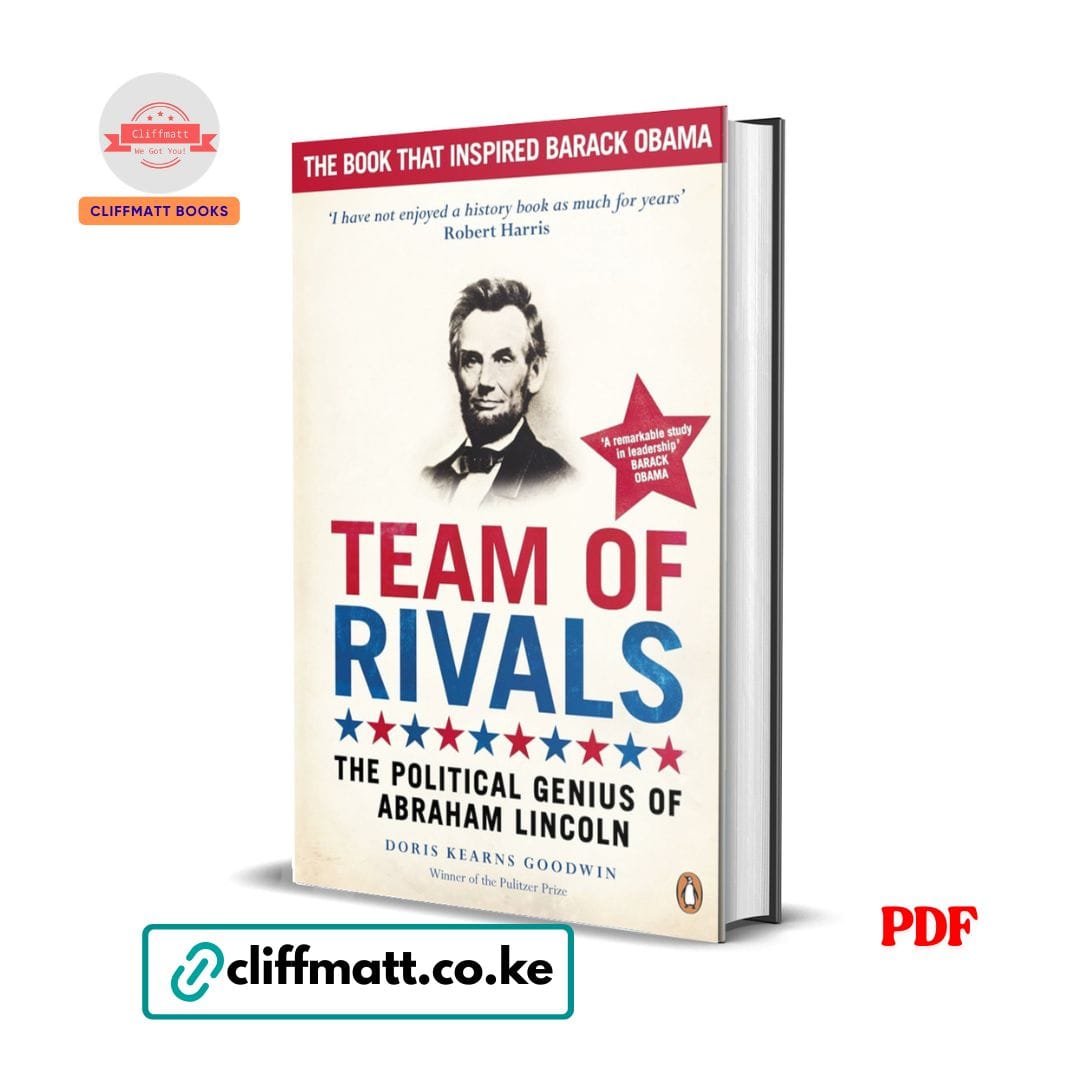
Team of Rivals: The Political Genius of Abraham Lincoln by Doris Kearns Goodwin — winner of the Pulitzer Prize, published by Penguin, and called “a remarkable study in leadership” by Barack Obama (the book that inspired his own governing philosophy and that he carried with him into the White House) — is the most celebrated political biography of the twenty-first century. It is simultaneously the finest account of Lincoln’s presidency, the most penetrating analysis of the specific leadership qualities that held the Union together through the Civil War, and the most instructive study of coalition-building, emotional intelligence, and the management of ego and ambition in high-stakes governance available in any format at any price.
“I have not enjoyed a history book as much for years” — Robert Harris
What This Book Covers:
The Four Men — Before Lincoln:
- One of the most extraordinary structural choices in political biography — Goodwin opens not with Lincoln but with all four men simultaneously, following their parallel lives, their parallel ambitions, and their parallel journeys toward the 1860 Republican nomination that only one of them would win
- William H. Seward — the most prominent Republican in the country; the governor of New York, the senator, the eloquent abolitionist orator who was so universally expected to win the nomination that his campaign headquarters in Chicago were already celebrating before the balloting began; the specific humiliation of his defeat and the specific grace with which Lincoln transformed that humiliation into the most consequential Secretary of State in American history
- Salmon P. Chase — the brilliant, morally driven, personally vain Secretary of the Treasury whose presidential ambitions never ceased, who schemed against Lincoln throughout the administration, and whom Lincoln kept in his cabinet anyway because Chase’s financial genius was genuinely irreplaceable during the specific fiscal demands of funding a war
- Edward Bates — the elder statesman of Missouri, the compromise candidate whose geographical significance and judicial temperament made him Attorney General; the specific role he played in moderating the cabinet’s more radical impulses and in providing Lincoln with the legal framework for his most consequential wartime decisions
- Abraham Lincoln — seen fresh, without the reverence that familiarity has deposited over his historical image; the specific impoverished childhood, the specific self-education that produced one of the most remarkable literary minds ever to occupy the White House, the specific emotional suffering of his depression and his personal losses, and the specific journey from frontier lawyer to the most consequential president in American history
The Team — Cabinet Politics and Governance:
- How Lincoln managed a cabinet of genuinely powerful, genuinely ambitious, and genuinely rivalrous personalities without allowing any one of them to dominate, without allowing their mutual hostilities to paralyse governance, and without losing any of the specific talents that each brought to the administration
- The specific techniques Lincoln used to manage Seward’s initial belief that he, not Lincoln, should be the effective head of the administration — the specific, firm, entirely gracious letter that established the boundaries of Lincoln’s authority without humiliating Seward, and that produced the most loyal and effective Secretary of State the administration could have had
- How Lincoln managed Chase’s persistent presidential scheming — the specific combination of genuine appreciation for Chase’s work, strategic tolerance of his ambitions, and the specific moment when Lincoln finally accepted Chase’s fourth resignation offer; the specific timing of that acceptance, immediately followed by Chase’s nomination to the Supreme Court, that revealed Lincoln’s complete mastery of the political chessboard
- The specific cabinet meetings — the debates, the disagreements, the specific occasions on which Lincoln overruled his entire cabinet (the Emancipation Proclamation being the most consequential) and the specific occasions on which he deferred to collective judgment; the portrait of a leader who was neither autocrat nor committee chairman but something more subtle and more effective than either
Lincoln’s Leadership Genius — The Specific Qualities:
- Emotional intelligence — the specific capacity to understand what motivated each member of his cabinet, each general in his army, each political adversary and potential ally, and to deploy that understanding in service of the specific outcomes the nation required; Goodwin’s account of Lincoln’s emotional intelligence is the most detailed and most instructive available in political biography
- Empathy without sentimentality — Lincoln’s specific ability to feel what others felt, to see the world from their perspective, and to use that understanding instrumentally without being paralysed by it; the specific way his empathy for both sides of the slavery debate shaped his approach to the war and to eventual reconciliation
- The management of criticism — how Lincoln responded to the specific, often vicious criticism of his cabinet members, his generals, the press, and the public; the specific equanimity, the specific wit, and the specific refusal to personalise political disagreement that allowed him to maintain relationships with people who publicly questioned his competence
- Patience as strategy — the specific political patience that allowed Lincoln to wait for the right moment for the Emancipation Proclamation, to wait for the right moment to replace McClellan, and to wait for the right moment to present his peace terms; the specific wisdom that understands timing as an element of leadership as important as decision
- The use of storytelling — Lincoln’s specific use of anecdote, parable, and humour as instruments of leadership; how his stories both communicated complex ideas with disarming simplicity and diffused the specific tensions that accumulated in the cabinet room during the most terrible crisis in American history
- Magnanimity — perhaps the most remarkable quality in Goodwin’s portrait; the specific greatness of character that allowed Lincoln to feel genuine gratitude toward people who had dismissed him, genuine forgiveness toward people who had betrayed him, and genuine respect for people who had competed against him; the specific quality of moral largeness that made it possible to build a team from rivals
The Civil War — History at Its Most Consequential:
- The specific military and political decisions of the Lincoln administration across four years of war — the choice of generals, the management of Radical Republican pressure for immediate emancipation, the handling of border state politics, the navigation of European diplomatic threats, and the specific moments when the Union’s survival was genuinely in doubt
- The Emancipation Proclamation — its specific political history; the cabinet meeting in July 1862 when Lincoln first presented it; Seward’s specific counsel to wait for a military victory before issuing it; the battle of Antietam and the specific political calculation that made September 22, 1862 the right moment; why it was issued as a war measure rather than a moral proclamation, and why that specific framing was Lincoln’s most careful political choice
- The management of generals — the specific parade of McClellan, Burnside, Hooker, and Meade before the eventual partnership with Grant that finally produced the military leadership the Union required; Lincoln’s specific patience with failure, his specific criteria for what he needed in a commanding general, and the specific qualities he eventually recognised in Grant
- The 1864 election — the specific moment when Lincoln himself believed he would lose the presidency, when the war was going badly and the Democratic peace platform offered an escape from carnage that the Union electorate might accept; the specific military developments (Atlanta, Mobile Bay) that changed the political calculus weeks before the vote; what Lincoln’s re-election meant for the final conduct of the war
The Second Inaugural — Lincoln’s Greatest Speech:
- The specific composition and meaning of the Second Inaugural Address — the most theologically sophisticated, the most morally serious, and the most historically consequential speech ever delivered at an American presidential inauguration; Goodwin’s account of its reception, its meaning, and its specific place in the Lincoln legacy
- “With malice toward none, with charity for all” — the specific political philosophy of reconciliation that Lincoln had arrived at after four years of governing through catastrophic conflict; what it meant, what it required, and what it promised for the reconstruction that Lincoln would not live to see
The Assassination — The Specific Tragedy:
- The evening of April 14, 1865 — five days after Lee’s surrender at Appomattox, with the war effectively won and Lincoln’s most magnanimous reconstruction plans about to be implemented; the specific historical tragedy of losing the one leader whose specific combination of political genius and moral largeness might have produced a genuinely different Reconstruction
- The specific responses of Seward, Chase, and Bates to Lincoln’s death — three men who had spent years believing they were more qualified than him, and who now understood exactly what had been lost
The Obama Connection — Why This Book Matters Now:
- Barack Obama — the Kenyan-American president whose father was born in Kenya, whose story is specifically meaningful to Kenyan readers — carried this book into the White House, cited it repeatedly as the most instructive leadership text he had read, and explicitly modelled his own cabinet formation on Lincoln’s team-of-rivals philosophy
- The specific connection between Lincoln’s leadership approach and Obama’s own — the deliberate appointment of Hillary Clinton as Secretary of State, the specific management of a diverse and ambitious cabinet, and the specific governing philosophy that Goodwin’s book both described and helped produce
- Why Team of Rivals is the leadership book that has influenced the most consequential political leaders of the modern era — and why its lessons about coalition-building, emotional intelligence, and the management of ambition are directly applicable to Kenyan leadership in every sector
Why Kenyan Readers Are Buying This Book: Lincoln’s specific challenges — governing a fractured nation through existential crisis, managing brilliant but rivalrous subordinates, building coalitions across profound disagreements — are not historically remote. They are the specific challenges that every Kenyan leader at every level faces: in politics, in business, in community, and in the specific work of building the institutions and the consensus that Kenya’s next chapter requires.
The book that Barack Obama — the president whose father was Kenyan — called the most instructive leadership study he had ever read is a book that Kenya’s own leaders, Kenya’s own professionals, and Kenya’s own engaged citizens have specific reason to read with particular attention.
At Ksh 100, this is Pulitzer Prize-winning political biography and leadership instruction of the highest order.
Who This Book Is For:
- Every Kenyan who cares about leadership — political, organisational, communal, or personal — and wants the most deeply researched, most compellingly written, and most practically instructive account of leadership genius in crisis ever published
- Political science and history students at Kenyan universities for whom this is the definitive text on American political history and presidential leadership
- Kenyan leaders and public servants who want the most instructive historical study of coalition-building, emotional intelligence, and the management of talent in service of a national mission
- Business leaders and organisational builders who want the specific lessons of Lincoln’s team management applied to the specific challenges of leading ambitious, talented, and rivalrous people toward a shared goal
- Every reader who has read Dreams from My Father (Obama) and The Audacity of Hope (Obama) and wants the book that shaped Obama’s own understanding of leadership to complete their presidential reading library
- Every reader of How to Lead (Rubenstein), Long Walk to Freedom (Mandela), Leaders Eat Last (Sinek), and Dare to Lead (Brown) who wants the most historically grounded and most narratively compelling leadership masterclass available
📖 Author: Doris Kearns Goodwin (Pulitzer Prize Winner) 🏢 Publisher: Penguin 📄 Format: PDF eBook (instant download via WhatsApp or email) 💰 Price: Ksh 100 only 🚀 Delivery: Instant after M-Pesa payment confirmation
👉 Order now on cliffmatt.co.ke — Pay via M-Pesa, receive your PDF instantly.







Reviews
There are no reviews yet.