
Description
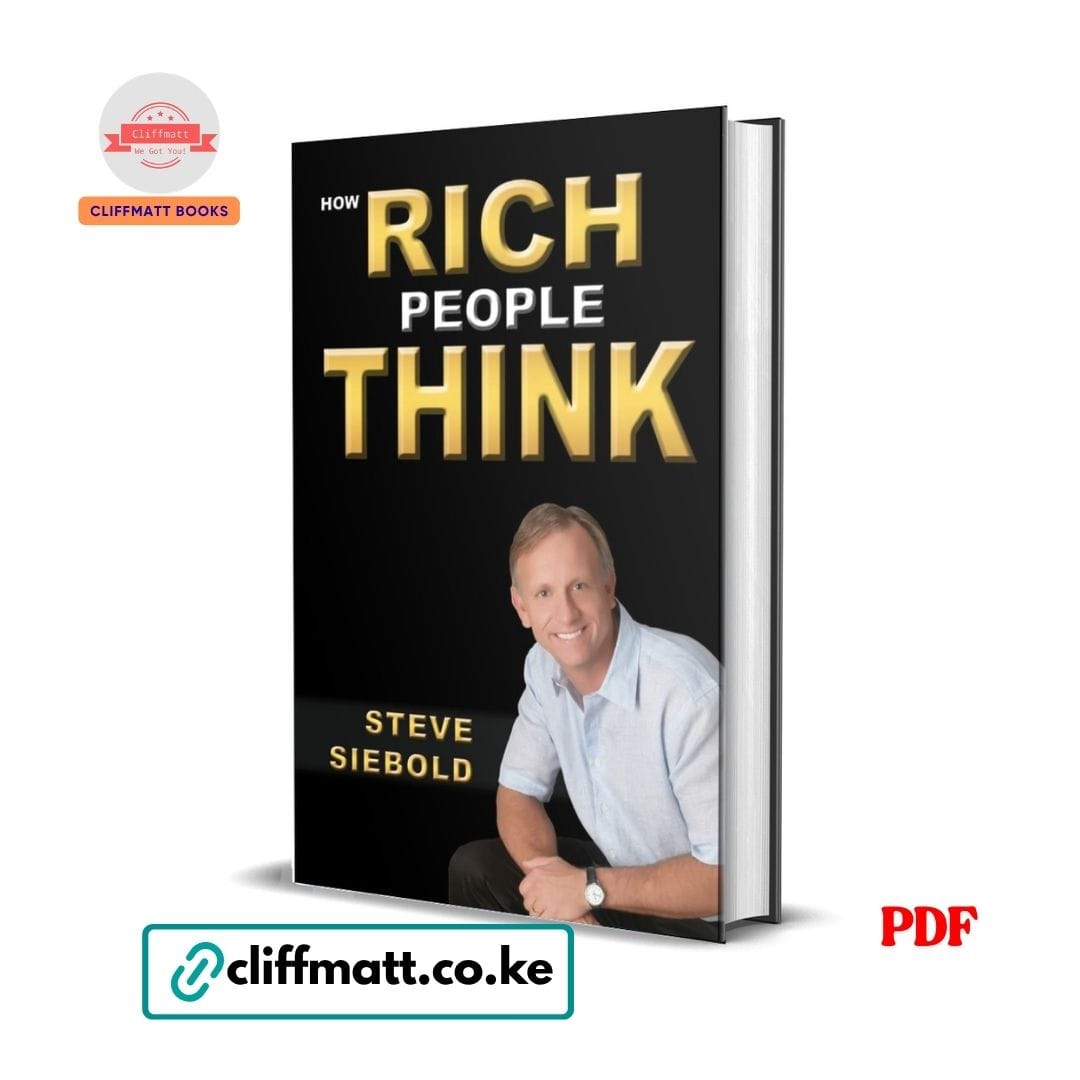
The gap between the wealthy and everyone else is not primarily a gap of opportunity, of education, or of effort. It is a gap of thinking.
That is the single most important conclusion Steve Siebold reached after spending 30 years interviewing more than 1,200 of the world’s wealthiest self-made individuals — CEOs, entrepreneurs, investors, and billionaires across industries and continents. What he found was not that rich people work harder, get luckier, or start with more than everyone else. What he found was that they think differently — about money, about risk, about failure, about time, about themselves, and about the specific relationship between wealth and the rest of life — in ways that are specific, learnable, and directly responsible for the specific financial results that separate the wealthy from everyone else.
How Rich People Think is not a motivational book. It is not a book of affirmations or of generic success principles. It is the specific, often uncomfortable, consistently illuminating account of the precise mental differences that Steve Siebold documented across 30 years of access to the world’s wealthiest people — and the specific invitation to every reader to examine, challenge, and deliberately upgrade the specific thinking patterns that their own financial results most directly reflect.
At Ksh 100, the 30 years of wealth mindset research that Kenyan entrepreneurs and professionals have been waiting for.
What This Book Covers:
The Central Premise — Thinking Is the Root:
- The specific argument that undergirds every chapter of this book — that the primary difference between the wealthy and the middle class is not circumstantial but mental; that the specific financial results any person produces are the direct and inevitable consequence of the specific thoughts they think most consistently about money, opportunity, risk, and their own potential; and that changing those results therefore requires first and most fundamentally changing those thoughts
- The specific difference between world-class thinking and middle-class thinking — Siebold’s consistent framing of the contrast not as a moral judgement but as a descriptive observation; the particular mental patterns he documented in the wealthiest people he interviewed that are categorically different from the mental patterns of the average person, not because rich people are better but because they think differently about the specific variables that financial success most directly depends on
- Why this book is uncomfortable — the specific challenge that How Rich People Think consistently poses to the reader’s existing beliefs about money, about wealth, about what rich people are like, and about what is and is not possible; why Siebold’s most important finding is that the beliefs most Kenyans hold about wealth are the specific beliefs most guaranteed to prevent them from achieving it
How Rich People Think About Money — The Core Contrasts:
On the Source of Wealth:
- Middle-class thinking: money comes from a salary, from a job, from an employer — the specific belief that exchanging time for money is the primary and most reliable path to financial security; why this belief produces the specific financial ceiling that most employed people never break through
- Rich thinking: money comes from ideas, from the specific value that original thinking creates, from solving specific problems at specific scale — why the world’s wealthiest people consistently think of money as a consequence of value creation rather than a reward for time spent; and why this distinction produces categorically different financial results
On Financial Goals:
- Middle-class thinking: financial goals are defined by comfort — enough to pay bills, enough to take a holiday, enough to retire modestly; the specific limitation of goals calibrated to not-enough rather than to genuine abundance
- Rich thinking: financial goals are defined by freedom — the specific level of wealth that makes every life choice genuinely free; why Siebold’s research consistently found that the wealthiest people set goals that the average person considers unrealistic and that this specific unrealism is one of the primary mechanisms of their wealth
On Getting Rich:
- Middle-class thinking: getting rich is largely a matter of luck, of inheritance, of being in the right place at the right time — the specific external attribution of wealth that removes it from the category of things that can be deliberately pursued
- Rich thinking: getting rich is a learnable process that begins with a specific decision and proceeds through specific mental disciplines, specific habits, and specific actions; why Siebold’s 1,200 wealthy interviewees consistently described their wealth as the result of a specific mental commitment made at a specific moment
How Rich People Think About Work and Success:
On Their Relationship with Money:
- The specific emotional relationship with money that distinguishes rich thinkers from middle-class thinkers — the particular comfort with wealth, with earning, and with the specific pursuit of financial abundance that most people have been taught is selfish, materialistic, or spiritually dangerous; how the specific money beliefs instilled in childhood consistently shape adult financial results; and what Siebold’s research reveals about the specific mental work required to replace limiting money beliefs with abundance-oriented ones
On Problems and Solutions:
- Middle-class thinking: problems are obstacles — the specific avoidance mentality that treats every difficulty as a reason to stop, to retreat, or to settle for less
- Rich thinking: problems are opportunities — the specific entrepreneur’s mentality that every unsolved problem represents a specific market of people willing to pay for a specific solution; why the world’s wealthiest people consistently describe their fortunes as the specific consequence of solving specific problems at specific scale
On Failure:
- Middle-class thinking: failure is shameful, to be avoided, a sign of inadequacy — the specific risk-aversion that keeps most people safely within the boundaries of what they already know how to do
- Rich thinking: failure is data — the specific experimental mentality that treats every failed attempt as the specific information required to find the approach that works; why virtually every wealthy person Siebold interviewed described a history of specific, significant, and sometimes catastrophic failures that preceded their specific success
On Time:
- Middle-class thinking: time is a commodity to be traded for money — the specific employment mentality that values hours worked over value created
- Rich thinking: time is the scarcest resource — the specific delegation, automation, and leverage mentality of the wealthy person who pays others to do what they can do and focuses exclusively on what only they can do
How Rich People Think About Themselves:
On Self-Belief:
- The specific difference in self-concept between world-class thinkers and average thinkers — why the wealthy person’s specific belief in their own capacity, their own ideas, and their own right to financial abundance is not arrogance but the specific prerequisite of the specific actions that produce wealth; why the specific self-doubt, the specific comparison with others, and the specific imposter syndrome that characterise middle-class thinking are the most expensive mental habits any Kenyan entrepreneur can possess
On Formal Education:
- Middle-class thinking: formal education is the primary path to success — the specific qualification mentality that equates academic credentials with professional capability and financial potential
- Rich thinking: formal education is one tool among many — the specific observation, consistent across Siebold’s research, that the world’s wealthiest people are often not the most academically credentialed; the specific distinction between the specific knowledge that schools teach and the specific wisdom about people, markets, value, and human behaviour that wealth most directly requires
On Mentors and Models:
- The specific rich thinker’s orientation toward those who have achieved what they want to achieve — the particular willingness to learn from the wealthiest people available, to seek out their counsel, to study their methods, and to adopt their specific mental patterns; the specific middle-class discomfort with wealth and wealthy people that prevents the specific learning that proximity to success most efficiently produces
How Rich People Think About Kenya’s Specific Wealth Opportunity:
For the specific Kenyan entrepreneur building a business in the Silicon Savannah, for the specific Kenyan professional managing their salary between the NSE and the SACCO, for the specific Kenyan who has absorbed a lifetime of messages that money is scarce, that ambition is dangerous, and that contentment with less is a virtue — How Rich People Think is a direct, respectful, and consistently challenging invitation to examine whether the specific thoughts you think most consistently about money are the specific thoughts most likely to produce the specific financial results you most want.
Kenya’s extraordinary entrepreneurial energy — the M-Pesa innovation, the Silicon Savannah tech ecosystem, the MSME sector that drives the majority of economic activity, the specific Kenyan appetite for self-employment and business ownership that distinguishes Kenya’s economic culture across East Africa — is the specific environment where the specific mental upgrade that this book provides produces its most immediate and most tangible financial returns.
At Ksh 100, 30 years of wealth mindset research — available to every Kenyan.
Who This Book Is For:
- Every Kenyan entrepreneur who wants to understand the specific thinking patterns that separate the businesses that scale from the businesses that plateau — and who is willing to be genuinely challenged about whether their current thinking is serving their financial goals
- Kenyan professionals and salary earners who want the specific mental framework that consistently transforms earned income into invested assets and invested assets into genuine financial freedom
- Kenyan young people in their twenties and thirties who are still forming their beliefs about money, wealth, and what is financially possible — and who want to form those beliefs around the specific thinking of the world’s wealthiest people rather than the specific thinking of the financially average
- Kenyan business school students and MBA candidates who want the specific wealth mindset research that no formal curriculum covers but that their eventual financial results will most directly reflect
- Every reader of The Psychology of Money (Housel), Rich Dad Poor Dad (Kiyosaki), Think and Grow Rich (Hill), The Richest Man in Babylon (Clason), and Think Like a Billionaire who wants the most directly comparative and most research-grounded wealth mindset study to complete their financial thinking library
📖 Author: Steve Siebold
📄 Format: PDF eBook (instant download via WhatsApp or email)
💰 Price: Ksh 100 only
🚀 Delivery: Instant after M-Pesa payment confirmation
👉 Order now on cliffmatt.co.ke — Pay via M-Pesa, receive your PDF instantly.








Reviews
There are no reviews yet.