

Description
What separates children who thrive emotionally from those who struggle? What is the difference between a child who handles setbacks with resilience and one who is overwhelmed by them? What gives some children deep friendships, strong self-esteem, and the ability to succeed academically — while others with equal intelligence and similar circumstances fall short? The answer, according to one of the world’s most respected researchers on human relationships, is not talent, not privilege, and not luck. It is one specific parenting skill that most parents have never been taught — and that changes everything when they learn it.
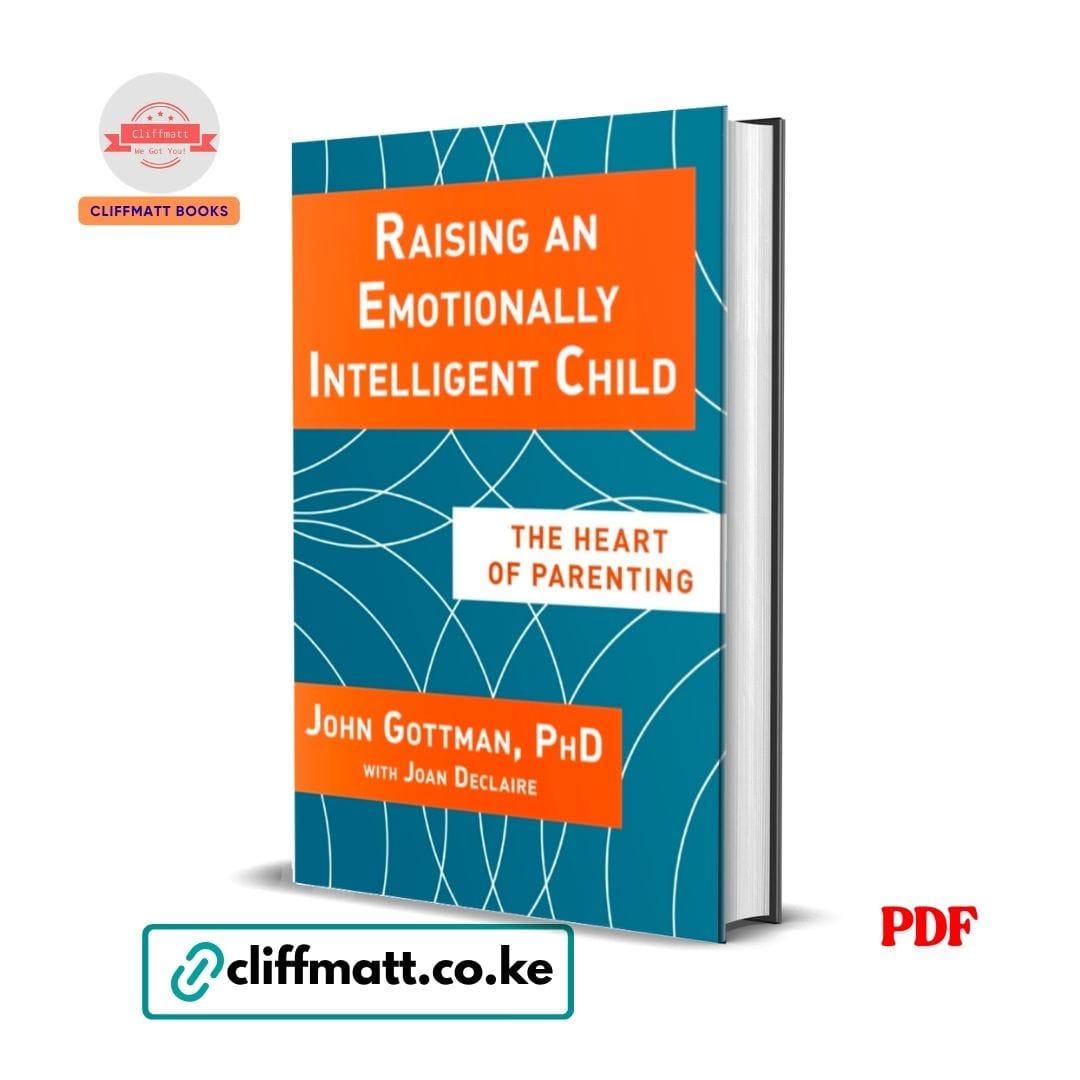
In Raising an Emotionally Intelligent Child: The Heart of Parenting, Dr John Gottman — the researcher whose decades of scientific study of marriages and families has made him one of the most cited psychologists in the world — reveals that skill with the clarity, warmth, and practical depth that only he could bring. And with a Foreword by Daniel Goleman, author of Emotional Intelligence, this is the definitive scientific and practical guide to raising children who are genuinely emotionally equipped for life.
The Central Discovery: Gottman’s research identified a specific parenting approach — which he calls Emotion Coaching — that consistently produces children with higher academic achievement, better physical health, stronger friendships, fewer behavioural problems, and greater resilience than children raised without it. The difference is not how much parents love their children. It is how parents respond to their children’s negative emotions — the moments of anger, sadness, fear, and frustration that every child experiences every day.
Most parents, Gottman found, respond to children’s negative emotions in one of three ways — all of which are understandable, all of which are well-intentioned, and all of which inadvertently undermine their child’s emotional development. Emotion Coaching is the fourth way — and this book teaches it completely.
What This Book Covers:
The Five Parenting Styles:
- The Dismissing Parent — who minimises children’s emotions, telling them not to cry, not to be angry, and to cheer up — and why this approach, however loving, teaches children that their feelings are wrong
- The Disapproving Parent — who criticises children for having negative emotions — and the specific damage this causes to self-esteem and emotional regulation
- The Laissez-Faire Parent — who accepts all emotions but provides no guidance or limits — and why permissiveness without structure fails children in a different but equally significant way
- The Emotion Coach — who acknowledges, validates, and guides children through their emotions — and why this single difference produces measurably better outcomes across every dimension of a child’s development
The Five Steps of Emotion Coaching:
- Step 1 — Be aware of your child’s emotions — how to tune in to the emotional content beneath your child’s behaviour
- Step 2 — Recognise the emotion as an opportunity for intimacy and teaching — the mindset shift that transforms a meltdown into a moment of connection
- Step 3 — Listen with empathy and validate your child’s feelings — the specific language and posture of genuine emotional validation
- Step 4 — Help your child label their emotions — why naming feelings reduces their intensity and builds long-term emotional vocabulary
- Step 5 — Set limits while helping the child solve the problem — how Emotion Coaching combines empathy with appropriate boundaries
The Research Behind the Results:
- What Gottman’s longitudinal research found when he followed Emotion-Coached children over years — the specific measurable advantages they showed over their peers
- Why children whose emotions are validated rather than dismissed have better academic outcomes — the connection between emotional regulation and learning capacity
- How Emotion Coaching protects children from the effects of family stress, parental conflict, and difficult life events
- Why emotional intelligence in childhood predicts adult relationship quality, career success, and physical health more accurately than IQ
Emotion Coaching in Specific Situations:
- How to Emotion Coach during tantrums, meltdowns, and explosive anger
- How to handle children’s sadness, grief, and disappointment with Emotion Coaching
- How to address fear and anxiety — the specific approach that builds courage rather than avoidance
- How to Emotion Coach siblings in conflict — turning sibling rivalry into emotional learning
- How to maintain Emotion Coaching discipline — firm, consistent limits that do not undermine emotional validation
Fathers and Emotion Coaching:
- Gottman’s specific research on fathers — and why a father’s Emotion Coaching has an especially powerful impact on children’s social competence
- How fathers can develop Emotion Coaching even when their own upbringing did not model it
- The specific ways fathers and mothers tend to Emotion Coach differently — and why both styles are valuable
Marital Conflict and Children’s Emotional Health:
- What Gottman’s research found about the impact of marital conflict on children’s emotional development — and what it means for how couples handle disagreement in front of their children
- Why how parents treat each other is as important as how they treat their children for the child’s emotional development
- How to have marital conflict in ways that do not damage your children’s sense of security
Who This Book Is For:
- Parents of children at any age — from toddlers to teenagers — who want to raise emotionally healthy, resilient, and socially capable human beings
- Expectant parents preparing their parenting philosophy before their child arrives — this is one of the most important books to read before you become a parent
- Teachers, school counsellors, and early childhood educators who want the scientific foundation for Emotion Coaching in educational settings
- Therapists and family counsellors wanting a research-based resource to recommend to parents
- Every reader of The Yes Brain (Siegel & Bryson) and Building Emotional Intelligence (Lantieri) — this book is the scientific foundation beneath both of those practical guides
- Any parent who has ever responded to their child’s tears or anger in a way they later regretted — and wants to learn a better way
Why Kenyan Parents Are Buying This Book: Kenya’s traditional parenting culture has enormous strengths — strong family bonds, clear expectations, deep community involvement in child-raising. But the specific skill of Emotion Coaching — responding to children’s negative emotions with empathy and guidance rather than dismissal or disapproval — is not part of most Kenyan parents’ inherited parenting toolkit. The research Gottman presents is culture-independent: children everywhere benefit from having their emotions acknowledged, named, and guided. And at Ksh 100, this is the most affordable scientific parenting education available in Kenya today.
With your own first child arriving in May, this is one of the books that will matter most personally — and that you can recommend most authentically.
Book Details:
- 📖 Author: John Gottman Ph.D. with Joan DeClaire
- 📖 Foreword: Daniel Goleman — Author of Emotional Intelligence
- 📄 Format: PDF eBook (instant download via WhatsApp or email)
- 💰 Price: Ksh 100 only
- 🚀 Delivery: Instant after M-Pesa payment confirmation
👉 Order now on cliffmatt.co.ke — Pay via M-Pesa, receive your PDF instantly.







Reviews
There are no reviews yet.