


Description
Every parent wants a confident child. But most parents have been given entirely the wrong map for getting there. They have been told to praise their children constantly, to protect them from failure, to tell them they are special and brilliant and capable of anything — and they have watched this specific approach produce children who are fragile, who crumble at the first difficulty, who cannot tolerate the specific ordinary challenges of friendship, of academic challenge, and of the specific setbacks that every childhood inevitably includes.
The specific problem is not the desire for a confident child. The specific problem is the misunderstanding of what genuine confidence actually is and how it is actually built.
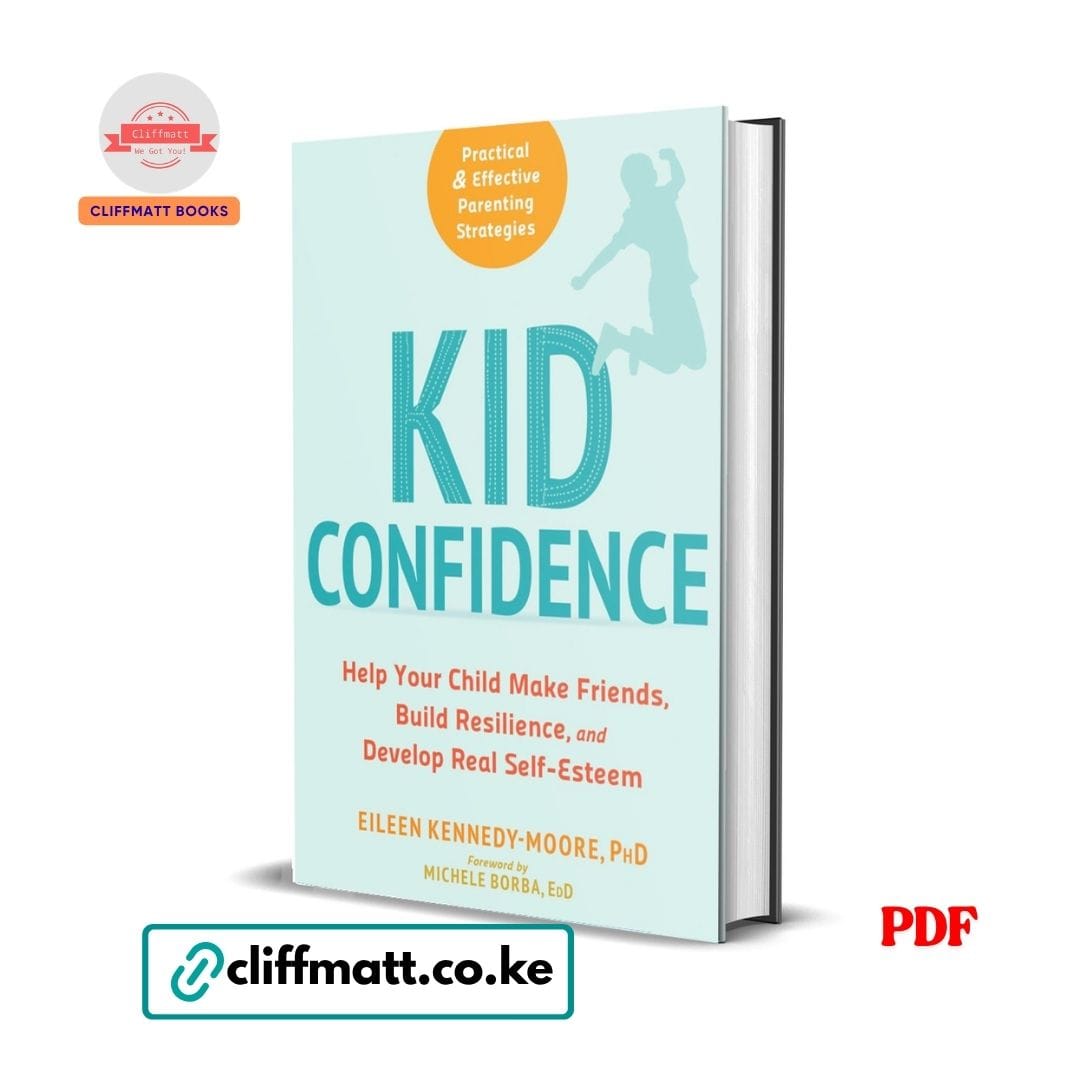
Eileen Kennedy-Moore PhD — psychologist, author, and one of the most trusted voices in child emotional development — wrote Kid Confidence as the most research-grounded, most practically structured, and most immediately applicable correction to that misunderstanding available anywhere. With a foreword by Michele Borba, EdD — one of America’s most respected educational psychologists — and the specific badge of Practical & Effective Parenting Strategies, this is the complete guide to the specific parenting approaches that build the specific genuine confidence that produces genuinely thriving children.
What This Book Covers:
Understanding Real Confidence — What It Actually Is:
- The specific distinction between genuine confidence (the specific, earned, experience-grounded belief in one’s own capacity to navigate challenge) and false confidence (the specific, praise-inflated, fragile self-image that collapses at the first genuine difficulty)
- Why the specific parenting approaches most commonly associated with building confidence — constant praise, protection from failure, comparison to other children’s achievements — consistently produce the opposite of genuine confidence; the specific psychological mechanism by which each well-intentioned approach undermines the specific development it is meant to support
- The five sources of genuine confidence that Kennedy-Moore identifies as the specific foundations from which real self-esteem grows — the specific mastery experiences, the specific social belonging, the specific contribution to others, the specific physical competence, and the specific character values that together constitute the genuine inner resources of a truly confident child
- Why genuine confidence is domain-specific — the specific evidence that no child is globally confident or globally unconfident; that every child is more confident in some areas than others; and that the specific parenting task is not to make children feel generally wonderful but to support genuine competence and genuine belonging in the specific areas that most affect their daily experience
Helping Your Child Make Friends — The Social Confidence Dimension:
Understanding Children’s Friendships:
- The specific developmental stages of children’s friendship capacity — from the parallel play of toddlers through the loyalty and exclusivity of middle childhood to the increasingly intimate and increasingly complex friendships of pre-adolescence; what parents can realistically expect at each stage and what they should be concerned about
- Why friendship skills are learnable — the specific evidence that the social capacities required for genuine friendship (entering a group, maintaining conversation, resolving conflict, managing rejection) are not innate traits but specific skills that children develop through specific experience and specific guidance; what parents can do to support that development
- The specific friendship challenges that most frequently affect Kenyan children — navigating group dynamics in school settings, managing the specific social hierarchies of peer culture, and the specific impact of school transitions on established friendships; how parents can provide the specific support that helps rather than hinders
Teaching Social Skills:
- How to help a child enter a peer group — the specific research on what works (observation, waiting for the right moment, joining the group’s activity rather than trying to redirect it) and what consistently fails (announcing yourself, asking to join directly, trying to immediately become the centre); the specific scripts and the specific coaching that parents can provide
- The specific skill of conversation maintenance — how to teach children the specific back-and-forth of genuine conversation; the specific practices of asking questions, of responding to what the other person says, and of the specific shared interest focus that sustains friendship-building interaction beyond the first exchange
- How to help children navigate conflict with friends — the specific conflict resolution skills (stating your own feelings without attacking the other person, listening to understand rather than to win, finding solutions that work for both parties) that distinguish children who maintain friendships through difficulty from those whose friendships consistently break at the first disagreement
- Managing rejection and exclusion — the specific guidance for helping children process the specific pain of social rejection without either catastrophising it or suppressing it; the specific perspective-giving conversations and the specific self-compassion practices that Kennedy-Moore identifies as most helpful
Building Resilience — The Failure and Challenge Dimension:
The Gift of Difficulty:
- The specific research on productive struggle — how the experience of genuine challenge, genuine difficulty, and genuine failure produces the specific neural development, the specific coping skill acquisition, and the specific earned confidence that ease and success cannot produce; why the parent who protects their child from all difficulty is protecting them from the specific experiences that build the specific resilience they most need
- Why mistakes are essential — not in the motivational-poster sense but in the specific developmental sense: the specific neurological and psychological evidence that the child who is allowed to make mistakes, to experience their consequences, and to recover and try again is building the specific internal resources that the protected child is not
- The specific growth mindset development practices — how to respond to children’s failures, setbacks, and challenges in ways that build the specific belief that effort and strategy produce improvement; the specific language choices (praising effort and strategy rather than ability) that Kennedy-Moore identifies as most consistently developing genuine resilience
Responding to Setbacks:
- The specific parental response to failure that builds resilience versus the responses that undermine it — the specific difference between empathising with the child’s disappointment (which validates their experience) and joining the child in catastrophising it (which amplifies it); between helping the child identify what they could try differently (which builds efficacy) and doing the problem-solving for them (which communicates that they cannot)
- How to help children tolerate frustration — the specific practice of staying with difficulty long enough to discover that it is manageable; the specific graduated exposure to challenge that builds the specific distress tolerance that comfortable children chronically lack
- The specific guidance for school performance setbacks — how to respond when a child fails an exam, struggles with a subject, or underperforms relative to their own or their parents’ expectations; the specific conversations that build the specific academic resilience that Kenyan educational culture’s high-pressure environment particularly requires
Developing Real Self-Esteem — The Identity Dimension:
What Real Self-Esteem Is:
- The specific psychological definition of genuine self-esteem — not the specific inflated self-assessment that praise-based parenting produces but the specific stable, grounded sense of oneself as a person of worth whose value does not depend entirely on performance, approval, or comparison
- Why the self-esteem movement’s legacy — the specific cultural emphasis on constantly telling children they are wonderful, special, and exceptional — has produced the specific epidemic of fragile narcissism rather than the robust confidence that its advocates intended; the specific research evidence for this specific outcome
- The specific character strengths approach to self-esteem — how helping children identify and develop their specific genuine strengths (curiosity, kindness, perseverance, creativity, fairness) builds the specific identity-grounded self-esteem that performance-based praise cannot produce; why knowing who you are is more stabilising than knowing how well you did
Avoiding the Praise Trap:
- The specific research on praise — the counterintuitive finding that children praised for intelligence (“You’re so smart”) consistently perform worse on subsequent challenges and persist less than children praised for effort (“You worked really hard at that”); the specific mechanism by which the wrong kind of praise produces the specific fragility it was meant to prevent
- The specific effective praise practices — the particular language, the particular timing, and the particular specificity that make parental encouragement genuinely confidence-building rather than confidence-undermining; what to say instead of “You’re amazing”
- How to respond to children’s self-critical statements — “I’m the worst at football”, “Nobody likes me”, “I’m so stupid” — with the specific combination of empathy and realistic perspective that neither dismisses the feeling nor confirms the catastrophising
Helping Children Find Their Strengths:
- The specific practices for identifying each child’s specific genuine strengths — the particular observation, the particular conversation, and the particular opportunity provision that help children discover what they are specifically good at and specifically drawn to
- How to support mastery experiences — the specific graduated challenge design that gives children the experience of genuine earned achievement in the specific areas where their confidence most needs building; why the mastery experience produced by genuine effort is more confidence-building than the easiest version of any task
- The specific role of contribution in confidence building — how helping others, being responsible for something that matters, and experiencing oneself as genuinely useful to the family and community produces the specific confidence that inward-focused self-development cannot
Specific Kenyan Contexts:
- The specific challenges of building confidence in Kenya’s high-pressure educational environment — where examination performance is the dominant measure of child value and where the specific anxiety of academic competition can undermine the broader confidence that children need
- The specific role of extended family and community in Kenyan children’s confidence development — how the specific relational richness of Kenyan communal life provides the specific belonging and the specific contribution opportunities that are genuine confidence resources; how to actively leverage these resources
- The specific gender dimensions of confidence in Kenyan children — the particular confidence challenges that Kenyan girls face in academic and leadership settings; the particular social pressure on Kenyan boys to perform stoic invulnerability; and the specific parenting approaches that support genuine confidence rather than gender-role performance
Why Kenyan Parents Are Buying This Book: Kenya’s parents are among the most invested in their children’s futures of any parents in the world — investing in education, in extracurricular development, and in every opportunity their resources allow. Kid Confidence gives those parents the specific psychological knowledge to ensure that the specific confidence their children need to succeed in the specific opportunities being provided for them is actually being built — through the specific relationships, the specific challenges, the specific skills, and the specific self-knowledge that genuine confidence requires.
At Ksh 100, this is the most research-grounded and most practically structured guide to raising a genuinely confident Kenyan child available anywhere.
Who This Book Is For:
- Every Kenyan parent of a school-age child who wants to build the specific genuine confidence that produces social success, academic resilience, and the specific wellbeing that allows children to thrive
- Parents whose children are struggling socially — who have trouble making friends, who are excluded or bullied, or who avoid the specific social situations that their peers navigate more easily — and who want the most practically structured guide to helping
- Parents whose children are academically anxious — who crumble at setbacks, who avoid challenge, or whose self-criticism is disproportionate to their actual performance — and who want the specific resilience-building guidance that Kennedy-Moore provides
- Primary school teachers and school counsellors who want the most research-grounded and most immediately applicable guide to supporting children’s social-emotional development in the specific Kenyan school context
- Every reader of Out of Control (Tsabary), Dads & Daughters (Dobson), The Fatherhood Principle (Munroe), and Raising an Emotionally Intelligent Child (Gottman) who wants the most specifically confidence-focused and most practically structured child development guide to complete their parenting library
📖 Author: Eileen Kennedy-Moore PhD (Foreword by Michele Borba, EdD) 📄 Format: PDF eBook (instant download via WhatsApp or email) 💰 Price: Ksh 100 only 🚀 Delivery: Instant after M-Pesa payment confirmation
👉 Order now on cliffmatt.co.ke — Pay via M-Pesa, receive your PDF instantly.








Reviews
There are no reviews yet.