


Description
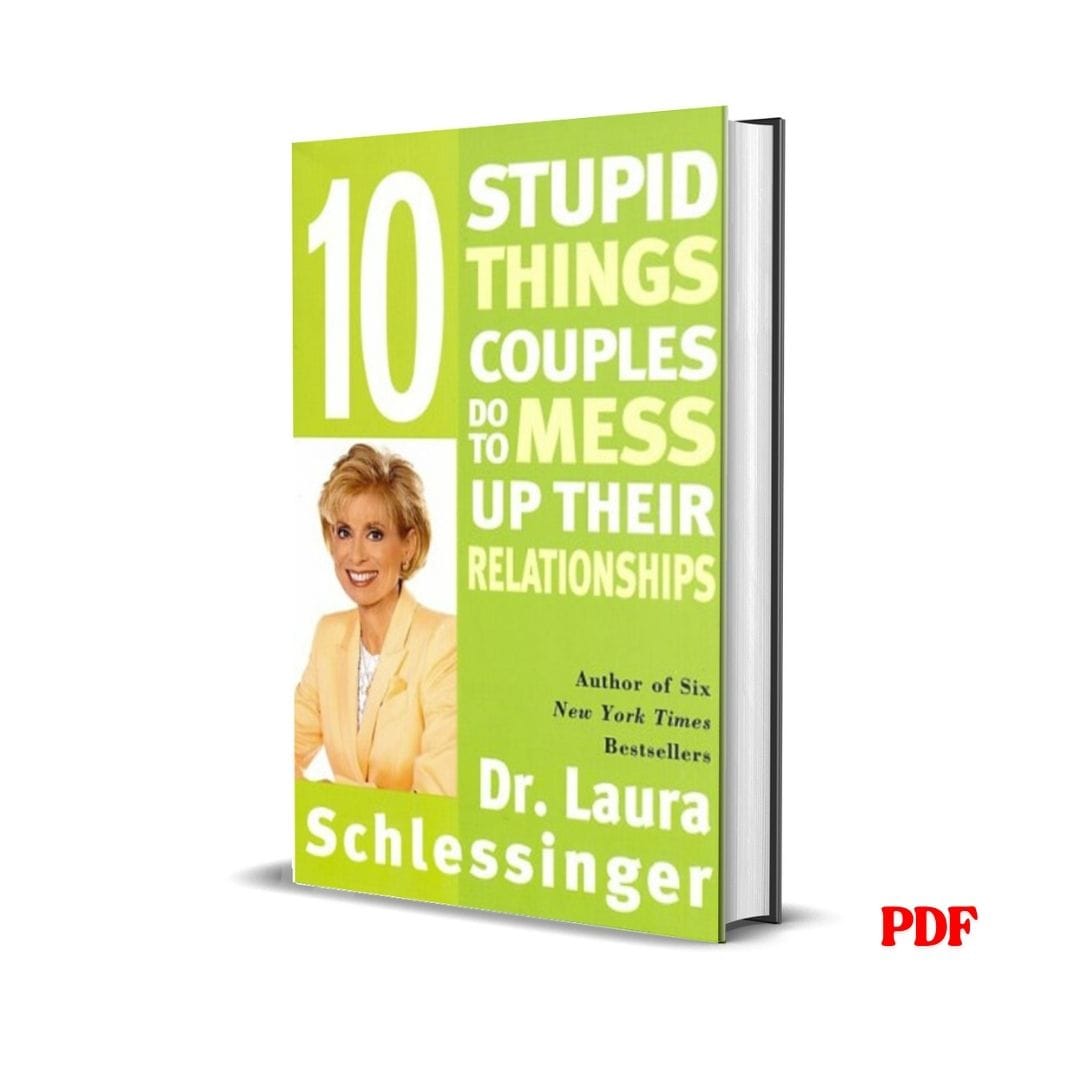
Most relationships do not end because two people are fundamentally incompatible. They end because two people who were fundamentally compatible consistently did the specific ten things that Dr. Laura Schlessinger has spent her career documenting — the specific behaviours, the specific attitudes, the specific choices that couples make, often without realising they are making them, that gradually and then suddenly destroy the specific love, the specific trust, and the specific commitment that brought them together.
Dr. Laura Schlessinger — author of six New York Times Bestsellers; one of the most widely listened-to relationship voices in the world through her decades of radio counselling — is not a therapist who affirms. She is a counsellor who challenges. Her specific approach to relationship guidance is built on the specific conviction that the specific problems in most relationships are not mysterious, not complex, and not the result of fundamental incompatibility — they are the specific predictable consequences of the specific stupid things that the specific couples who are sitting in front of her, calling her show, and writing her letters have been doing, often for years, without the specific honest mirror that genuine help requires.
10 Stupid Things Couples Do to Mess Up Their Relationships is that mirror. It is direct. It is occasionally uncomfortable. And it is the specific most practically useful relationship book available to any Kenyan couple who wants to understand not just that something is wrong but specifically what it is and specifically what to change.
What This Book Covers:
The Foundation — Why Couples Mess Up Good Relationships:
- The specific Dr. Laura philosophy — the particular understanding that the specific quality of a couple’s relationship is primarily the result of the specific daily choices that each partner makes about how to treat the other, how to communicate, how to handle conflict, and how to prioritise the relationship against the specific competing demands of career, family, friendships, and personal desires; why the specific relationship is not something that happens to people but something that people build or destroy through the specific accumulation of specific daily choices
- The specific honest accountability framework — how Dr. Laura’s approach consistently refuses the specific comfortable narrative that assigns the specific relationship problems to circumstances, to childhood wounds, to gender differences, or to the other partner’s behaviour alone; why the specific first question in any relationship difficulty is always “What am I doing that is contributing to this?” rather than the specific more comfortable “What is my partner doing wrong?”
- The specific relevance to the Kenyan context — how the specific ten destructive patterns that Dr. Laura documents are not culturally specific but appear with the specific same frequency and the specific same consequences in Kenyan marriages, Kenyan dating relationships, and Kenyan committed partnerships as in the specific American relationships that her radio counselling experience drew from; why the specific honesty, the specific respect, and the specific genuine commitment that healthy relationships require are the same in Nairobi as in New York
The Ten Stupid Things — The Complete Framework:
Stupid Thing 1 — Choosing Badly:
- The specific pattern — how couples consistently choose partners who are fundamentally unsuitable for the specific relationship they want, often because the specific physical attraction, the specific exciting chemistry, or the specific fantasy projection of what the specific person could become overrides the specific honest assessment of who they actually are; why the specific “I can change them” narrative is the specific most reliably relationship-destroying self-deception available
- The specific honest partner assessment — what Dr. Laura consistently argues every person should be genuinely evaluating in a potential partner before the specific commitment of marriage or serious relationship; the particular character qualities, the specific demonstrated behaviours (not the specific stated intentions), and the specific compatibility factors that the specific attraction-obsessed early relationship consistently makes it most difficult to assess honestly
- The specific Kenyan application — how the particular pressure of family expectations, the specific cultural pressure to be married by a certain age, and the specific financial considerations that Kenyan relationships sometimes involve can produce the specific same “choosing badly” dynamic through different but equally powerful mechanisms
Stupid Thing 2 — Lying:
- The specific lying pattern in relationships — not the specific dramatic lies of infidelity (which Dr. Laura addresses separately) but the specific everyday relationship dishonesty: the particular pretending to agree when you don’t, the specific hiding of feelings to avoid conflict, the particular telling your partner what they want to hear rather than what they need to hear, and the specific gradual accumulation of small dishonesties that produces the specific emotional distance and the specific loss of genuine intimacy that couples consistently mistake for the natural cooling of early love
- The specific connection between honesty and intimacy — how the particular genuine vulnerability of honest self-disclosure is the specific foundation of the specific genuine intimacy that both partners in every good relationship are seeking; why the specific relationship where both partners always say what they mean, mean what they say, and trust that the other will receive it with love is the specific most intimately connected relationship available; how to create the specific safety that honest communication requires
Stupid Thing 3 — Cowardice:
- The specific relationship cowardice — the particular failure to have the specific difficult conversations, to set the specific necessary boundaries, to address the specific recurring problems, and to make the specific hard decisions that every healthy long-term relationship consistently requires; how the specific short-term avoidance of discomfort through the specific silence, the specific backing down, and the specific pretending-everything-is-fine produces the specific long-term accumulation of unaddressed issues that becomes the specific most common presenting problem in relationship counselling
- Why the specific courage to be honest is simultaneously the specific most loving and the specific most difficult gift one partner can give another; the particular distinction between the specific hurtful honesty that expresses frustration and the specific loving honesty that expresses genuine care for the other person’s wellbeing and the relationship’s health
Stupid Thing 4 — Selfishness:
- The specific relationship selfishness — how the particular prioritisation of personal needs, personal comfort, personal preferences, and personal convenience over the specific needs and specific wellbeing of the partner and the relationship consistently produces the specific resentment, the specific loneliness within the relationship, and the specific eventual withdrawal that selfishness always generates; why the specific person who enters a relationship primarily focused on what they will get from it is the specific most reliable predictor of the relationship’s failure
- The specific giving orientation — how Dr. Laura’s consistent argument that the specific most satisfying relationships are built not on the specific 50-50 negotiation of mutual obligation but on the specific 100-100 orientation where each partner is genuinely focused on the specific wellbeing of the other produces the specific paradox that the specific most giving partner is almost always the specific most satisfied partner; why the specific Kenyan couple that genuinely applies this orientation produces the specific most resilient and the specific most genuinely joyful partnership available
Stupid Thing 5 — Cheating:
- The specific infidelity analysis — Dr. Laura’s characteristically direct examination of why the specific person who cheats is not primarily a victim of the specific bad marriage or the specific inadequate partner but the specific person who has made the specific choice — the specific moral choice, the specific character choice — to seek outside the specific commitment what should be sought within it or addressed within it
- The specific infidelity prevention — how the specific daily investment in the specific marriage, the specific attention to the specific partner’s emotional and physical needs, and the specific honest communication about the specific unmet needs within the relationship before they become the specific vulnerability that infidelity exploits constitutes the specific most effective infidelity prevention available; why the specific best protection against infidelity is not the specific dramatic recommitment ceremony but the specific consistent, daily, unglamorous investment in the specific partner one has
Stupid Thing 6 — Whining:
- The specific complaining and nagging pattern — how the particular repetitive expression of the specific grievances, the specific criticisms, and the specific disappointments without the specific constructive proposal for change consistently produces the specific defensiveness, the specific withdrawal, and the specific resentment that makes the specific problem it is complaining about worse rather than better; why the specific person who has been nagging for years about the same specific issues is the specific most reliable evidence that nagging does not work
- The specific constructive communication alternative — how to transform the specific complaint into the specific request; how to raise the specific recurring issue in the specific way that invites genuine response rather than the specific defensive shutdown; the particular tone, the particular timing, and the specific framing that makes the specific difficult conversation the specific most likely to produce the specific genuine change that both partners want
Stupid Thing 7 — Controlling:
- The specific control dynamic in relationships — the particular jealousy, the specific possessiveness, the specific micromanagement of the partner’s friendships, activities, and personal choices, and the specific emotional manipulation (guilt, anger, withdrawal) that the specific controlling partner uses to maintain the specific dominance that their specific insecurity requires; how the specific controlling behaviour consistently produces either the specific submission that destroys the partner’s genuine selfhood or the specific rebellion that destroys the relationship
- The specific trust and security alternative — how the particular genuine security that a healthy relationship provides comes not from the specific control of the partner but from the specific genuine trustworthiness of both partners; why the specific jealous and controlling partner is almost always the specific partner whose own trustworthiness is most in question; the particular work of building the specific inner security that makes controlling behaviour unnecessary
Stupid Thing 8 — Prioritising Work and Friends Over Partners:
- The specific relationship deprioritisation pattern — how the particular busyness of career ambition, the specific demands of friendships and social life, and the specific convenience of treating the partner as the specific relationship that can most easily be deferred consistently produces the specific loneliness, the specific resentment, and the specific emotional disconnection that is the specific most common complaint of the specific partner who feels they have become the specific lowest priority in the specific person they married
- The specific intentional prioritisation — how to consistently demonstrate to the specific partner through the specific daily actions (not the specific occasional grand gestures) that the specific relationship is the specific most important commitment; why the specific Kenyan couple navigating the specific competing demands of the specific ambitious professional life consistently needs the specific deliberate, scheduled, protected time together that the specific relationship requires to remain genuinely connected
Stupid Thing 9 — Throwaway Relationships:
- The specific commitment-avoidance pattern — how the particular treatment of relationships as the specific provisional, the specific contingent, and the specific easily replaceable — the specific “I’ll stay as long as it’s good” orientation — consistently prevents the specific development of the specific genuine depth, the specific genuine trust, and the specific genuine intimacy that only the specific unconditional commitment produces; why the specific relationship that both partners know is contingent on continued satisfaction is the specific relationship that produces the specific most anxiety and the specific least genuine peace
- The specific commitment as the foundation of genuine love — Dr. Laura’s consistent argument that the specific genuine love is not the specific feeling that precedes commitment but the specific choice that produces the specific conditions in which the deepest feeling can grow; why the specific Kenyan couple that marries with the specific full intention of permanence is the specific couple most likely to do the specific work that permanent marriage requires
Stupid Thing 10 — Not Forgiving:
- The specific unforgiveness pattern in relationships — the particular holding of the specific grievances, the specific keeping of the specific score, and the specific weaponising of the specific past mistakes in the specific current argument that prevents the specific genuine healing that every long-term relationship occasionally requires; how the specific couple that cannot forgive is the specific couple that is permanently living in the specific past rather than the specific present
- The specific forgiveness as the relationship’s immune system — how the particular genuine forgiveness — not the specific forgetting, not the specific minimising, but the specific genuine release of the specific legitimate grievance in the specific service of the specific relationship’s future — is the specific single most important capacity that any long-term couple can develop; why the specific Kenyan couple that has genuinely mastered forgiveness has mastered the specific most important relationship skill available
Why Kenyan Couples Are Buying This Book: The specific ten stupid things that Dr. Laura documents are as present in Kenyan relationships as in any other — and as destructive. The specific Kenyan couple who wants to stop arguing about the same things, stop feeling the specific growing distance between partners who started as best friends, and stop wondering why the specific marriage they committed to is producing less joy than they expected will find in this book the specific honest, practical, immediately applicable guidance that genuine relationship improvement requires.
At Ksh 100, the most directly useful and most honestly delivered relationship guide available to any Kenyan couple.
Who This Book Is For:
- Kenyan married couples who recognise one or more of the specific ten patterns in their relationship and want the specific honest guidance for addressing them before they cause irreversible damage
- Kenyan dating couples who want to identify and break the specific destructive patterns before they carry them into marriage
- Kenyan singles who want to understand the specific relationship dynamics they have experienced in past relationships before they repeat them in future ones
- Kenyan marriage counsellors, pastors, and church marriage enrichment programme leaders who want the specific practically grounded and most honestly delivered relationship guide for the specific couples they are working with
- Every reader of Men Are from Mars Women Are from Venus (Gray), Love & Respect (Eggerichs), His Needs Her Needs (Harley), The Man God Has For You, and War Room (Fabry/Kendrick) who wants the most direct and most practically challenging relationship guide to complete their marriage and relationship library
📖 Author: Dr. Laura Schlessinger 📄 Format: PDF eBook (instant download via WhatsApp or email) 💰 Price: Ksh 100 only 🚀 Delivery: Instant after M-Pesa payment confirmation
👉 Order now on cliffmatt.co.ke — Pay via M-Pesa, receive your PDF instantly.









Reviews
There are no reviews yet.