

Description
English-medium academic writing is one of the most specific and most demanding communication forms that Kenyan university students are required to master. It has specific structural conventions that differ from secondary school essay writing. It has specific citation and referencing requirements that differ from professional report writing. It has specific vocabulary patterns, specific sentence structures, and specific genre expectations that a student who has not been specifically taught them will consistently violate — and will consistently be marked down for violating — without necessarily understanding why.
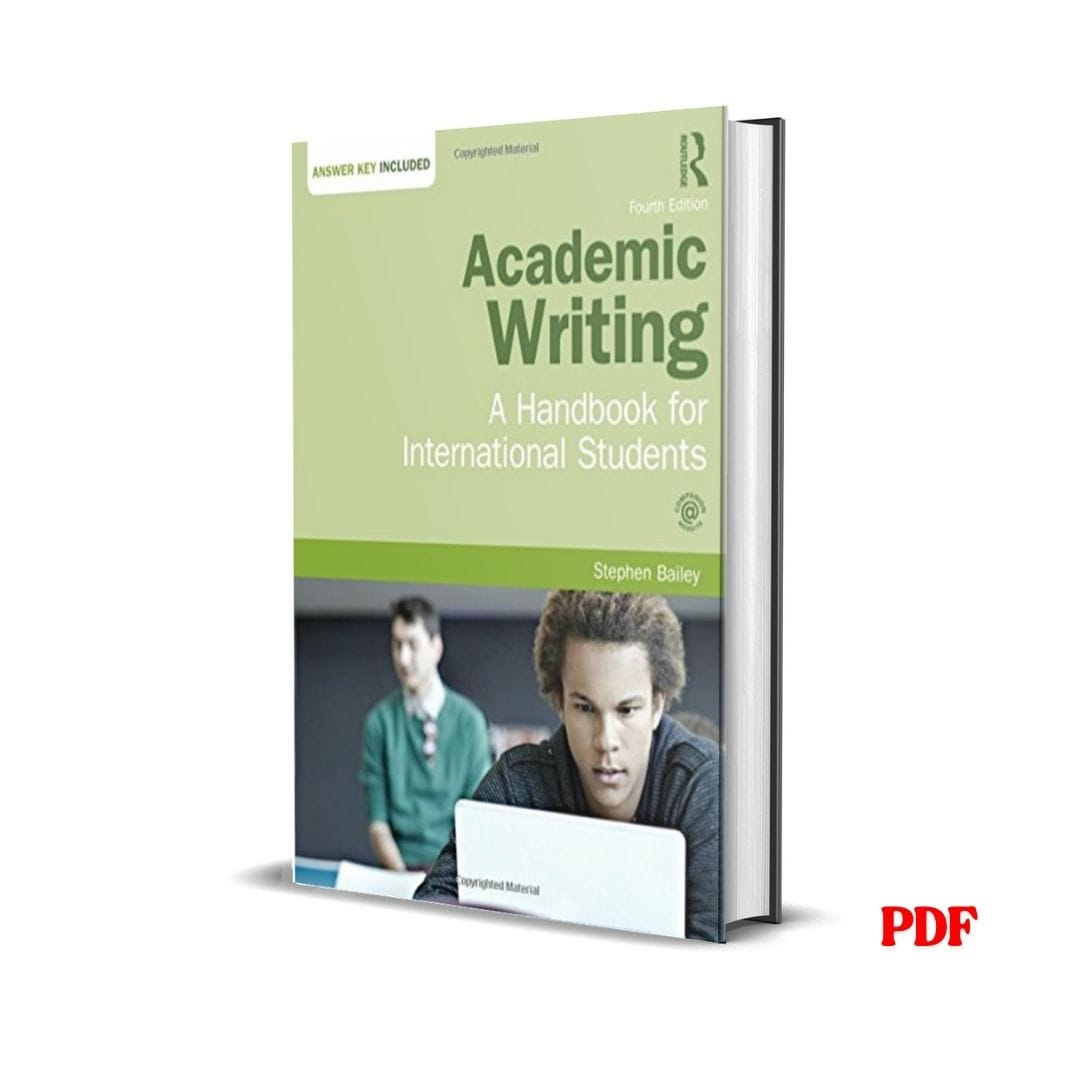
Stephen Bailey’s Academic Writing: A Handbook for International Students — published by Routledge, one of the world’s most respected academic publishers; now in its Fourth Edition; with an Answer Key included — is the most comprehensive, most practically structured, and most widely used guide to English academic writing for students whose educational background has not fully prepared them for the specific conventions that English-medium university writing requires.
Designed specifically for international students — which in its most practically relevant sense means every Kenyan student writing academic English who learned English as a second or additional language and who was educated in a system whose writing conventions differ from the specific conventions that British and American universities (and Kenyan universities modelled on them) expect — this is the handbook that addresses every dimension of academic writing from the sentence level through the paragraph level through the complete essay, report, literature review, and dissertation.
What This Book Covers:
Academic Writing Foundations — Understanding the Task:
- The specific conventions of academic writing — why academic English has specific rules about formality, about objectivity, about citation, about hedging, and about the specific structural patterns that mark a piece of writing as academically competent; why these conventions are not arbitrary but reflect the specific values (evidence, qualification, attribution, logical structure) that academic knowledge production requires
- The specific differences between academic and non-academic writing — the particular features (contractions, colloquialisms, personal anecdote, unsupported assertion) that are appropriate in informal and professional writing and inappropriate in academic writing; the specific calibration of register that academic writing requires
- The specific academic reading-writing connection — how academic writing is always a response to academic reading; why the ability to read critically is the specific prerequisite for the ability to write well; the specific practices of critical reading that develop the specific writing capabilities that academic work requires
- Why this book is specifically designed for international students — the particular challenges that students whose academic background is in non-English educational systems face when writing academic English; why the specific conventions of English academic writing are not universal but cultural, and why understanding this makes navigating them both easier and more intellectually honest
Vocabulary — The Language of Academic Writing:
Academic Vocabulary:
- The specific Academic Word List — the specific 570 word families that research has identified as the most frequently occurring vocabulary in academic texts across disciplines; why systematic learning of this vocabulary produces more immediate improvement in academic writing quality than almost any other vocabulary investment
- The specific academic vocabulary patterns — the particular collocations (words that consistently appear together), the particular word forms (noun, verb, adjective, adverb from the same root), and the specific register distinctions that make some words appropriate in academic writing and their synonyms inappropriate
- The specific discipline-specific vocabulary — how vocabulary requirements vary across disciplines; why the specific vocabulary expectations of a social science essay differ from those of a natural science lab report or a business case study; how to identify and learn the specific vocabulary of your specific discipline
Hedging Language:
- The specific hedging vocabulary and structures — the particular modal verbs (may, might, could, would), the particular reporting verbs (suggests, indicates, appears to, tends to), and the specific adverbs (perhaps, probably, generally, typically) that qualify claims appropriately rather than asserting them with the specific overconfidence that academic evidence rarely justifies
- Why hedging is not weakness but accuracy — the specific academic value of precisely calibrated claims; how the specific language of appropriate qualification communicates not uncertainty but the specific intellectual honesty that academic writing most values
- The specific hedging calibration — knowing when to hedge and when not to; the specific difference between the claim that requires qualification (based on limited evidence or contested among scholars) and the claim that does not (established fact, logical conclusion from premises); the specific mistake of over-hedging that makes writing seem tentative and under-hedging that makes it seem overconfident
Linking Language:
- The specific discourse markers that structure academic argument — the particular words and phrases that signal addition (furthermore, moreover, in addition), contrast (however, nevertheless, in contrast), cause and result (therefore, consequently, as a result), exemplification (for example, for instance, such as), and the specific summary and conclusion language that academic writing uses to guide readers through its logical structure
- The specific cohesion devices — reference (pronouns and demonstratives pointing back to previous content), substitution, ellipsis, and lexical chains — that create the specific connectedness between sentences and paragraphs that makes academic writing cohere rather than fragment
- The specific sentence-level connection practices — how to begin sentences in ways that show their specific logical relationship to the preceding sentence; the specific revision practice of checking every sentence for its clear logical connection to the sentence that precedes it
Writing Skills — Sentence to Text:
Paragraphs:
- The specific paragraph structure — topic sentence, supporting sentences, and the specific concluding or transitional sentence that closes one paragraph and prepares the reader for the next; why the topic sentence is the most important sentence in any academic paragraph and how to write it
- The specific paragraph unity — every sentence in the paragraph addressing the specific topic stated in the topic sentence; the specific revision practice of checking every sentence for its clear relevance to the paragraph’s stated topic and removing or relocating those that fail the test
- The specific paragraph development — the particular patterns of support (definition, example, data, expert testimony, contrast, cause and effect) that develop topic sentences into complete, well-supported academic arguments; when each pattern is most appropriate
Essay Structure:
- The specific introduction structure — background, specific thesis statement, and the specific essay map that tells the reader what is coming; what makes an academic introduction effective and the specific common introduction mistakes that Kenyan students most consistently make
- The specific body paragraph sequencing — the particular logical orders (chronological, importance, problem-solution, comparison) that make the specific arrangement of body paragraphs feel natural rather than arbitrary; how to choose the right sequence for the specific essay task
- The specific conclusion structure — the specific synthesis of the essay’s main points, the specific restatement of the thesis in light of the evidence presented, and the specific closing move (implication, recommendation, further research) that is appropriate in different academic contexts; what distinguishes a genuine conclusion from a mere summary
Longer Texts:
- The specific literature review — one of the most distinctively academic writing tasks; the specific skills of critically synthesising multiple sources, identifying themes and patterns across multiple studies, and constructing the specific argument about a body of literature that a literature review requires; the specific difference between annotation (summarising each source separately) and genuine literature review (synthesising sources thematically)
- The specific research report structure — Introduction, Methods, Results, Discussion (IMRD) — and what each section specifically requires; the specific language patterns of each section (past tense for methods and results, present tense for general claims and discussion); how to write the specific sections that most Kenyan science and social science students find most challenging
- The specific dissertation and thesis structure — the extended academic text that most postgraduate Kenyan students must produce; the specific chapter structure, the specific genre requirements of each chapter, and the specific transition from essay-length to dissertation-length academic argument
Using Sources:
- The specific paraphrasing and summarising skills — the specific practices of expressing another writer’s ideas in your own words while accurately representing their meaning; the specific difference between genuine paraphrase (restructured and reworded at the level of both sentence structure and vocabulary) and disguised copying (changing only a few words) that most Kenyan students have never been explicitly taught but that constitutes academic dishonesty regardless of intention
- The specific quoting practices — when to quote directly, how to integrate quotations grammatically, and the specific punctuation and attribution requirements of quoted material; the specific over-quoting problem that most student writers default to and that signals insufficient engagement with the source material
- The specific citation and referencing systems — APA, Harvard, MLA, Chicago — the specific formats for in-text citation and for the reference list; why accurate citation is not optional bureaucracy but the specific academic practice that makes the specific claims of scholarship verifiable and the specific intellectual heritage of ideas traceable
The Answer Key:
- The specific included Answer Key — the particular value of an academic writing handbook that allows students to check their own work against correct answers; the specific self-directed learning that the Answer Key enables; why the Answer Key makes this handbook as effective for independent study as for classroom use
- How to use the Answer Key productively — the specific practice of completing exercises before consulting the answers; the specific revision practice of understanding why your answer differs from the Answer Key’s answer before moving to the next exercise
Why Kenyan Students Are Buying This Book: Every Kenyan university student writing in English-medium institutions is navigating the specific conventions of a writing system that was not explicitly taught to them in the same way that their secondary education taught them the conventions of their specific examination essay formats. Academic Writing: A Handbook for International Students is the most comprehensive and most specifically appropriate guide for making that navigation explicit, systematic, and immediately applicable to the specific academic writing tasks that Kenyan university life consistently requires.
At Ksh 100, the most widely used academic writing handbook for international students — with Answer Key — available to every Kenyan student.
Who This Book Is For:
- Kenyan undergraduate students in English-medium universities who want the most comprehensive and most practically structured guide to the specific academic writing conventions their degree programmes require
- Kenyan postgraduate students preparing for masters and doctoral work who want to systematically develop the specific academic writing skills that postgraduate work demands
- Kenyan university lecturers who teach academic writing or who advise students on their written work and who want the most comprehensive and most practically structured reference for the specific skills they are developing
- Kenyan professionals in research, policy, and development who produce written work for academic and semi-academic audiences and who want the specific handbook that addresses every dimension of that writing systematically
- Every reader of Stylish Academic Writing (Sword), SPSS Statistics for Dummies (McCormick), and Data Analysis in Management with SPSS Software (Verma) who wants the most comprehensively structured academic writing skills handbook to complement their research and writing development library
📖 Author: Stephen Bailey 🏢 Publisher: Routledge 📄 Format: PDF eBook (instant download via WhatsApp or email) 💰 Price: Ksh 100 only 🚀 Delivery: Instant after M-Pesa payment confirmation
👉 Order now on cliffmatt.co.ke — Pay via M-Pesa, receive your PDF instantly.










Reviews
There are no reviews yet.