
Description
Africa gained its independence. The colonisers left. And then — in country after country, decade after decade — something went wrong. The soldiers took power. The civilians who replaced them forgot who they served. The dreamers became tyrants. The friends who once shared a vision found themselves on opposite sides of a gun. And the people — the ordinary, enduring, suffering, singing people — were left to make sense of what their liberation had become.
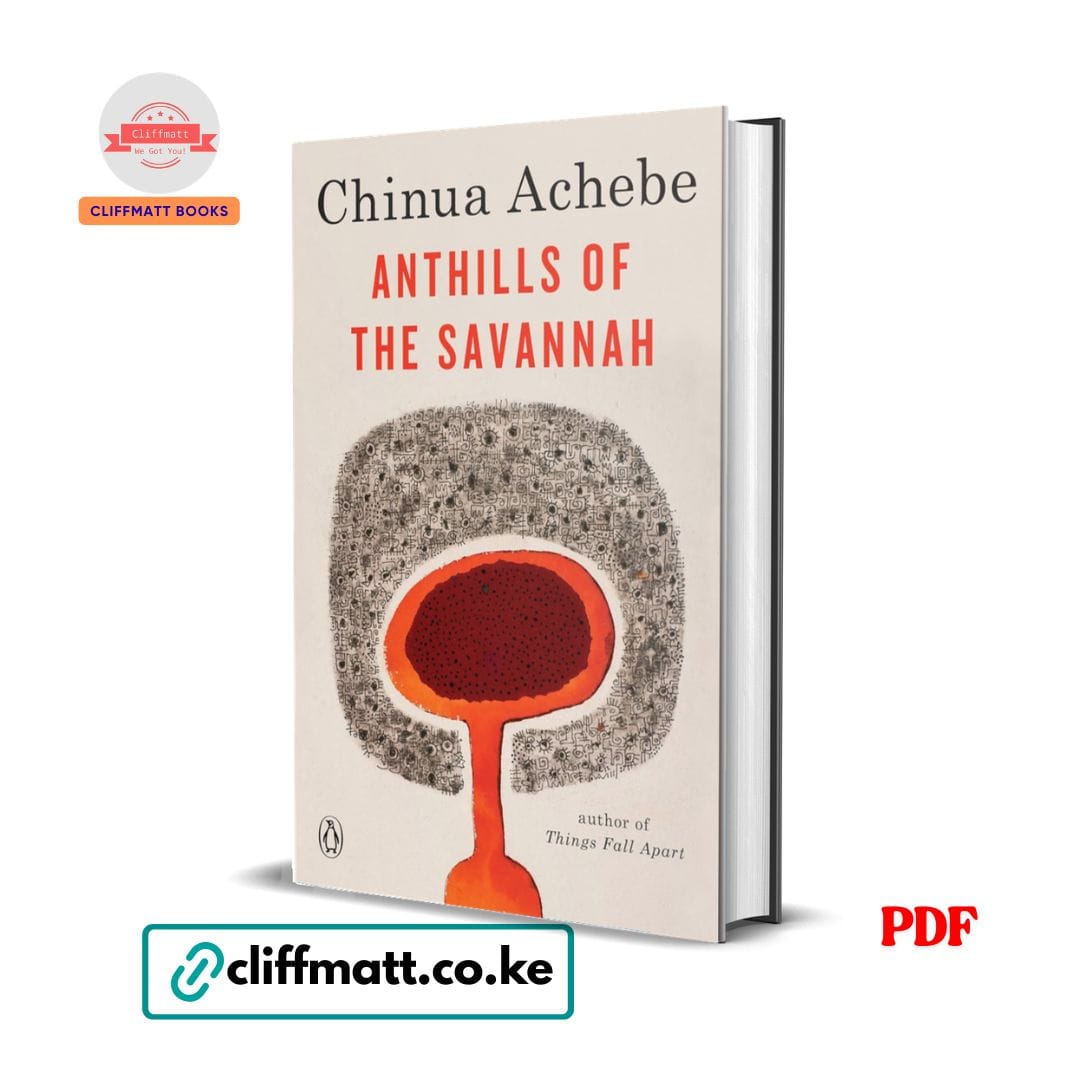
Chinua Achebe watched all of this. He lived through it. And in Anthills of the Savannah, he wrote the definitive literary reckoning with it — a novel so precise in its diagnosis, so extraordinary in its craft, and so devastating in its human truth that it was shortlisted for the Booker Prize and immediately recognised as one of the greatest works of African fiction ever written.
From the author of Things Fall Apart — the most widely read African novel in history, the book that changed what the world understood about African storytelling — Anthills of the Savannah is the work that proved Achebe’s genius was not a single achievement but a sustained, deepening, lifelong commitment to telling Africa’s truth in Africa’s own voice.
The Story:
In the fictional West African nation of Kangan, a military coup has brought one of three childhood friends to power as Head of State. Sam — now His Excellency — has done what power always does to men who are not prepared for it: it has made him afraid, suspicious, and dangerous. Around him, his two oldest friends navigate the impossible terrain of loyalty, conscience, and survival.
Chris Oriko — Commissioner for Information, Sam’s closest intellectual companion — finds himself increasingly unable to reconcile his proximity to power with his conscience. Ikem Osodi — editor of the national newspaper, poet, radical, the most honest voice in the country — refuses to be silent when silence is the only safe option. And Beatrice Okoh — the brilliant, independent woman who loves Chris and sees more clearly than either man the forces that are building toward catastrophe — becomes, in Achebe’s hands, the most important character of all: the one through whom the novel’s deepest truths are spoken.
What follows is a novel of friendship destroyed by power, of conscience tested to breaking point, of a nation that gained independence and then had to face the harder question of what to do with it.
What Makes This Novel Essential:
On Power and Its Corruption:
- Achebe’s portrait of Sam — the Head of State — is one of the most psychologically precise studies of how power corrupts available in African fiction; not a cartoon villain but a frightened man whose fear has made him monstrous
- The mechanics of authoritarian rule in post-independence Africa — the sycophancy, the paranoia, the cabinet meetings where no one says what they actually think, the newspapers that print only what they are permitted — rendered with the authority of a man who witnessed it directly
- Why Anthills of the Savannah feels as relevant to the Kenya of today as it did to the Nigeria of 1987 — because the patterns Achebe describes are not Nigerian patterns; they are African patterns; they are human patterns
On Friendship and Betrayal:
- The three-way friendship at the heart of the novel — Chris, Ikem, and Sam — and the shattering tragedy of watching men who once shared everything find that power has made genuine friendship impossible
- How Achebe traces the specific, incremental ways that proximity to power erodes the honesty, the equality, and the mutual accountability that genuine friendship requires
- Why the friendship between Chris and Ikem — two men who still speak truth to each other when truth has become dangerous — is one of the most moving portraits of male friendship in African literature
On Women and Vision:
- Beatrice Okoh is Achebe’s most fully realised female character and one of the great women of African fiction — a character who sees, understands, and ultimately survives in ways the men around her cannot
- Achebe’s argument — made through Beatrice — that African women carry a quality of endurance, perception, and renewal that the continent’s male-dominated political culture consistently ignores to its own destruction
- Why the novel’s ending, centred on Beatrice and a naming ceremony, is simultaneously its most painful and its most hopeful moment — and what Achebe is saying about where Africa’s regeneration must come from
On Storytelling and Resistance:
- The novel’s central meditation: what is the role of the writer, the poet, the storyteller in a society where truth is dangerous? Ikem Osodi’s answer — and the price he pays for it — is Achebe’s most direct statement about the writer’s responsibility to their society
- Why the anthill of the title — the structure that survives the burning of the savannah and preserves the seeds of new life — is Achebe’s image for what storytelling does in a society under pressure
- The relationship between Achebe’s own life — his experience of the Biafran war, of Nigerian politics, of African independence — and the novel’s urgent, personal, prophetic voice
On Language and Form:
- Achebe’s prose in Anthills of the Savannah is his most sophisticated — shifting registers between the formal English of government, the Pidgin of the street, the lyrical voice of poetry, and the direct voice of political argument; a novel that performs, in its own language, the argument it is making about voice and power
- The multiple narrative perspectives — Chris, Ikem, Beatrice, and others — that build a picture of Kangan from multiple angles, refusing the single authoritative voice of dictatorship in favour of the chorus of democracy
- Why this novel is studied in every serious African literature curriculum and why every Kenyan student of literature, politics, or history needs to have read it
Why Kenyan Readers Need This Novel:
Kenya’s post-independence history — its coups avoided and attempted, its one-party decades, its political assassinations, its journalists imprisoned, its writers exiled — is the same history Achebe is writing about. The patterns he identifies in Kangan are patterns every Kenyan recognises. The questions he asks — Who holds power? Who speaks truth to it? Who pays the price? Who survives? — are questions Kenya has been asking since 1963.
Anthills of the Savannah does not offer easy answers. It offers something more valuable: the clarity that comes from seeing your own situation rendered in the most precise, most beautiful, most unsparing literary language available. For Ksh 100, it is the most important work of African political fiction you will ever read.
Who This Book Is For:
- Kenyan literature lovers who have read Things Fall Apart and want Achebe’s mature masterwork — the novel he considered his most important
- University students of literature, political science, history, and African studies for whom this is essential curriculum reading
- Every Kenyan who has watched a promising leader become a dangerous one and wanted the literary language to understand how and why it happens
- Readers of Ngũgĩ wa Thiong’o (Decolonising the Mind, The River Between), Long Walk to Freedom (Mandela), Dreams from My Father (Obama), and Kenya Between Hope and Despair (Branch) who want the greatest work of post-independence African political fiction to complete their African library
- Book clubs seeking a title that generates genuine, serious, personally resonant discussion about power, justice, friendship, and the African condition
- Teachers, academics, journalists, lawyers, politicians, and every Kenyan professional who believes that literature illuminates what analysis alone cannot reach
📖 Author: Chinua Achebe — Author of Things Fall Apart 📄 Format: PDF eBook (instant download via WhatsApp or email) 💰 Price: Ksh 100 only 🚀 Delivery: Instant after M-Pesa payment confirmation 👉 Order now on cliffmatt.co.ke — Pay via M-Pesa, receive your PDF instantly.




Reviews
There are no reviews yet.