

Description
What Is Attached About?
Why do some relationships feel effortless and safe — while others feel like a constant cycle of anxiety, withdrawal, pursuit, and pain? Why does the same person who desperately wants closeness find themselves pushing away the one who offers it? Why does the partner who claims to want love consistently sabotage it when it gets too close?
The answer, according to over twenty-five years of relationship science, is not compatibility, not communication style, and not the specific personal history of two specific people. The answer is attachment — the specific biological and psychological system that governs how every human being seeks, experiences, and responds to closeness in romantic relationships.
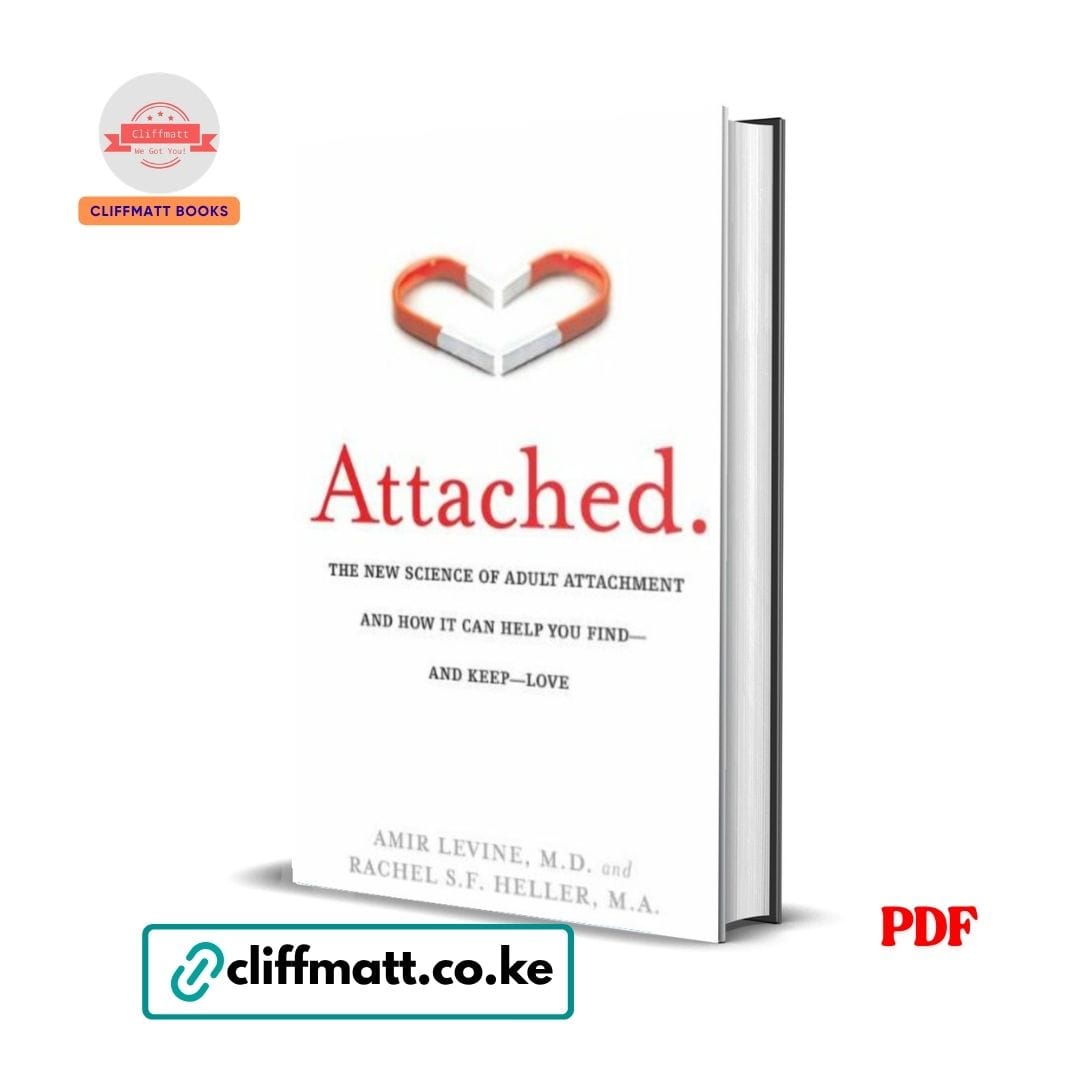
Attached: The New Science of Adult Attachment and How It Can Help You Find—and Keep—Love by Amir Levine M.D. (Associate Professor of Psychiatry and Director of the SecureLab at Columbia University, adult, child, and adolescent psychiatrist and neuroscientist) and Rachel S.F. Heller M.A. (psychologist) is the most accessible, most thoroughly researched, and most practically applicable guide to adult attachment theory ever produced for a general readership.
Attached reveals how an understanding of attachment theory — the most advanced relationship science in existence today — can help us find and sustain love. Attachment theory forms the basis for many bestselling books on the parent-child relationship, but there has yet to be an accessible guide to what this fascinating science has to tell us about adult romantic relationships — until now.
The three attachment styles that Attached identifies and explains have become part of the vocabulary of everyone who has encountered them. Understanding which of the three you are — and which your partner is — is not merely interesting self-knowledge. It is the specific framework that makes sense of every relationship pattern you have ever experienced, explains the specific dynamics that have produced the specific frustrations of every close relationship in your life, and equips you with the specific tools to build the specific genuinely secure relationship that the science consistently identifies as the most achievable and the most satisfying outcome for every attachment style.
The Three Attachment Styles — The Core Framework
The central insight of Attached is one that decades of research have consistently confirmed: human beings are not designed to be alone. Our need to be in a close relationship with one or more individuals is embedded in our genes. The question is not whether you need closeness — you do, as does every other human being regardless of how convincingly they perform independence. The question is how your specific attachment system has been wired to seek, respond to, and regulate that closeness.
The Anxious Attachment Style
The anxious person lives with a sixth sense for danger in relationships — the particular hypervigilance to signs of potential abandonment, the specific pattern of reading a delayed text message as relationship threat, the exhausting cycle of reassurance-seeking that temporarily calms the anxious nervous system only to require repetition when the next ambiguous signal arrives.
The anxious person does not choose this. It is the specific wiring of a nervous system that has learned — usually through early relationship experiences where closeness was inconsistently available — to treat the possibility of relationship loss as a survival-level threat. The result is the specific pattern that every anxious person recognises in themselves even when they cannot explain it: the disproportionate intensity of the response to the specific partner’s withdrawal; the specific inability to concentrate on anything else when the relationship feels threatened; the specific desperate quality of the need for reassurance that, paradoxically, often drives away the very partner whose reassurance is most needed.
For anxious partners in particular, the validation that needing closeness is not a weakness — it is part of being human — can be a relief. Attached gives the anxious reader not just that validation but the specific understanding of why they are wired the way they are and the specific strategies for finding and building the specific secure relationship that their attachment system is genuinely designed for.
The Avoidant Attachment Style
The avoidant person keeps love at arm’s length — the specific pattern of emotional unavailability that is not cruelty but self-protection; the particular discomfort with closeness that does not reflect an absence of the need for connection but the specific learned response to a nervous system that has associated closeness with loss of autonomy, loss of self, or anticipated disappointment.
The avoidant person consistently sends the specific mixed signals that make their partners most confused: the intense initial attraction followed by the specific pulling away when closeness intensifies; the genuine warmth at a distance that becomes genuine discomfort when the specific partner seeks the specific depth of intimacy that the avoidant person’s actions have seemed to promise. The avoidant person does not understand why they do this any more than their partner does.
For avoidant partners, the book offers a gentle invitation to reconsider the defences that keep intimacy at bay. Not a demand that they fundamentally change who they are, but the specific understanding — supported by twenty-five years of science — of why the specific defences they have built are costing them the specific closeness that even the most avoidant person, at the deepest level, genuinely needs.
The Secure Attachment Style
The secure person gets comfortably close. They are comfortable with intimacy. They neither fear abandonment nor feel suffocated by closeness. They communicate needs directly and respond to their partner’s needs consistently. They navigate conflict without catastrophising. They are the specific attachment style that every other style most benefits from partnering with — and the specific attachment style that every person, regardless of their current wiring, can move toward through the specific understanding and the specific practices that Attached provides.
The secure person is not rare. Research consistently shows that approximately 50% of the population has a secure attachment style. The specific reason that anxious and avoidant people consistently find each other rather than the specific available secure partners is one of the most practically important insights in the entire book — and the one that most directly changes who the reader will look for the next time they enter a relationship.
What Does Attached Cover? (Structure and Content)
Introduction — The New Science of Adult Attachment
The scientific foundation: Attachment theory owes its inception to British psychologist and psychoanalyst John Bowlby, who in the 1950s examined the tremendous impact that our early relationships with our parents or caregivers has on the people we become. Levine and Heller show how Bowlby’s foundational work has been extended — through decades of rigorous peer-reviewed research — into the specific understanding of adult romantic attachment that Attached translates into the most practically applicable relationship guide available.
Chapters 1 & 2 — Decoding Relationship Behaviour / Dependency Is Not a Bad Word
The foundational reframe that the entire book builds on: in a culture that often romanticises independence and self-sufficiency, Levine and Heller reassure readers that desiring connection and reassurance isn’t a weakness — it’s part of being human. Chapter 2 is perhaps the most immediately liberating chapter in the book: the specific scientific case that the specific human need for closeness, security, and consistent availability in a romantic relationship is not needy, not pathological, and not a sign of emotional immaturity — it is the specific biological design of a species that evolved in the context of pair-bonding and consistent close community.
Part One — Your Relationship Toolkit: Deciphering Attachment Styles
The two diagnostic chapters — identifying your own attachment style and identifying your partner’s. The specific self-assessment questionnaires, the specific behavioural indicators, and the specific case studies that make the attachment style identification immediately practical rather than merely theoretical. For readers currently in a relationship, Chapter 4 (cracking your partner’s code) is the specific most immediately applicable chapter in the book: the particular behavioural patterns that reliably indicate each style; how to read the specific signals you have always noticed but never had a framework for interpreting.
Part Two — The Three Attachment Styles in Everyday Life
The three in-depth chapters on each attachment style as they actually manifest in real relationships: the specific daily experiences of the anxious person in a relationship, the specific daily experiences of the avoidant person, and the specific daily experiences of the secure person. These chapters are where most readers will experience the specific shock of recognition that Attached consistently produces — the particular moment of “this is exactly what I do and I have never had words for it before.”
Part Three — When Attachment Styles Clash
The most practically important section of the book for readers currently in difficult relationships:
The Anxious-Avoidant Trap — the specific most common and most painful relationship dynamic that adult attachment research has identified. The anxious person’s need for closeness activates the avoidant person’s need for distance, which activates the anxious person’s need for reassurance, which intensifies the avoidant person’s withdrawal, which intensifies the anxious person’s anxiety — a cycle that self-perpetuates indefinitely unless both partners understand what is happening at the attachment level. Adult attachment is an overarching theory of romantic affiliation that allows for the development of useful applications for people in all stages of their romantic life — for people who are dating, those in early stages of relationships, and those who are in long-term ones, for people going through a breakup or those who are grieving the loss of a loved one.
Escaping the Anxious-Avoidant Trap — the specific strategies for the specific couple caught in this specific dynamic; how understanding the attachment roots of the cycle changes what each partner can do about it; the specific communication approaches, the specific security-building practices, and the specific individual work that both the anxious and avoidant partner can do to move the relationship toward the specific greater security that both — at the level of their genuine attachment needs — actually want.
Who Are Amir Levine and Rachel Heller?
Amir Levine M.D. is an Associate Professor of Psychiatry and the Director of the SecureLab at Columbia University. He is an adult, child, and adolescent psychiatrist and a neuroscientist. In his private practice, he supervises and trains therapists in novel attachment neuroscience-based treatments aimed at helping people become more secure. Rachel S.F. Heller M.A. is a psychologist whose work focuses on translating the science of attachment into accessible, actionable guidance for individuals and couples.
The specific credibility of Attached rests on two things that most popular relationship books cannot offer simultaneously: the rigour of twenty-five years of peer-reviewed academic research and the accessibility of a guide written for the person who wants to understand their own relationships rather than study psychology. Levine and Heller provide both.
Frequently Asked Questions (FAQ)
What are the three attachment styles in Attached?
The three attachment styles identified in Attached are Anxious (characterised by fear of abandonment and hypervigilance to relationship threats), Avoidant (characterised by discomfort with closeness and emotional withdrawal), and Secure (characterised by comfort with intimacy, consistent availability, and direct communication of needs).
How do I know my attachment style?
Attached includes specific self-assessment questionnaires in Chapter 3 that allow readers to identify their own attachment style based on their specific patterns of thinking, feeling, and behaving in romantic relationships.
Is Attached for singles or people in relationships?
Both. The book explicitly addresses people who are dating and looking for a partner, those in early relationships, those in long-term relationships, and those recovering from a breakup. The attachment framework is useful at every stage of romantic life.
What is the Anxious-Avoidant Trap?
The Anxious-Avoidant Trap is the specific relationship dynamic where an anxious person and an avoidant person are in a relationship together. The anxious person’s need for closeness activates the avoidant person’s withdrawal, which intensifies the anxious person’s anxiety, which intensifies the avoidant person’s withdrawal — a self-perpetuating cycle that Attached explains and provides specific strategies for breaking.
How does Attached relate to other relationship books like Men Are from Mars, Women Are from Venus?
Men Are from Mars, Women Are from Venus focuses on gender differences in communication and emotional expression. Attached focuses on the deeper neurological and psychological wiring that determines how any person — regardless of gender — seeks and responds to closeness. John Gray (author of Men Are from Mars) endorsed Attached as “a groundbreaking book that redefines what it means to be in a relationship.” The two books complement each other powerfully — find Men Are from Mars, Women Are from Venus here.
Why Kenyan Readers Are Buying This Book
The specific patterns that Attached documents are not culturally specific. The anxious person who sends the extra message they told themselves they would not send. The avoidant person who genuinely wanted closeness until the moment it arrived. The specific confusion of the couple who love each other genuinely and cannot understand why being together consistently feels like this much work. These experiences are as familiar in Nairobi as they are in New York — and the science that explains them is as applicable in the specific Kenyan relationship context as in any other.
The greatest strength of Attached is its accessibility. The authors take complex research findings and distil them into straightforward categories without drowning the reader in jargon. For every Kenyan reader who has ever been in a relationship that felt confusing — who has been called “too needy” or “too cold” without understanding why those words felt both painful and oddly accurate — Attached is the specific book that provides the specific understanding that changes everything.
At Ksh 100, twenty-five years of the most advanced relationship science available — translated into the most practically useful relationship guide ever written.
Who This Book Is For:
- Every Kenyan single adult who wants to understand their own relationship patterns before they enter the next relationship — and to understand what kind of partner they are most likely to genuinely thrive with
- Kenyan couples in established relationships who want the specific scientific framework for understanding the specific dynamics they experience — the specific distance, the specific pursuit, the specific emotional unavailability — and the specific tools for moving toward greater security
- Kenyan readers who have experienced the specific pain of the anxious-avoidant relationship and want both the understanding of what happened and the guidance for avoiding it in the future
- Kenyan counsellors, therapists, pastors, and church leaders who provide relationship and marriage support and want the most thoroughly researched and most practically applicable framework available
- Every reader of Men Are from Mars, Women Are from Venus (Gray), His Needs Her Needs (Harley), Love & Respect (Eggerichs), God Where Is My Boaz? (Labossiere), and Quiet (Susan Cain) who wants the most scientifically rigorous and most personally illuminating account of why we love the way we love to complete their relationships and human psychology library
📖 Authors: Amir Levine M.D. and Rachel S.F. Heller M.A.
🏢 Publisher: Jeremy P. Tarcher / Penguin
📄 Format: PDF eBook (instant download via WhatsApp or email)
💰 Price: Ksh 100 only
🚀 Delivery: Instant after M-Pesa payment confirmation
👉 Order now on cliffmatt.co.ke — Pay via M-Pesa, receive your PDF instantly.








Reviews
There are no reviews yet.