
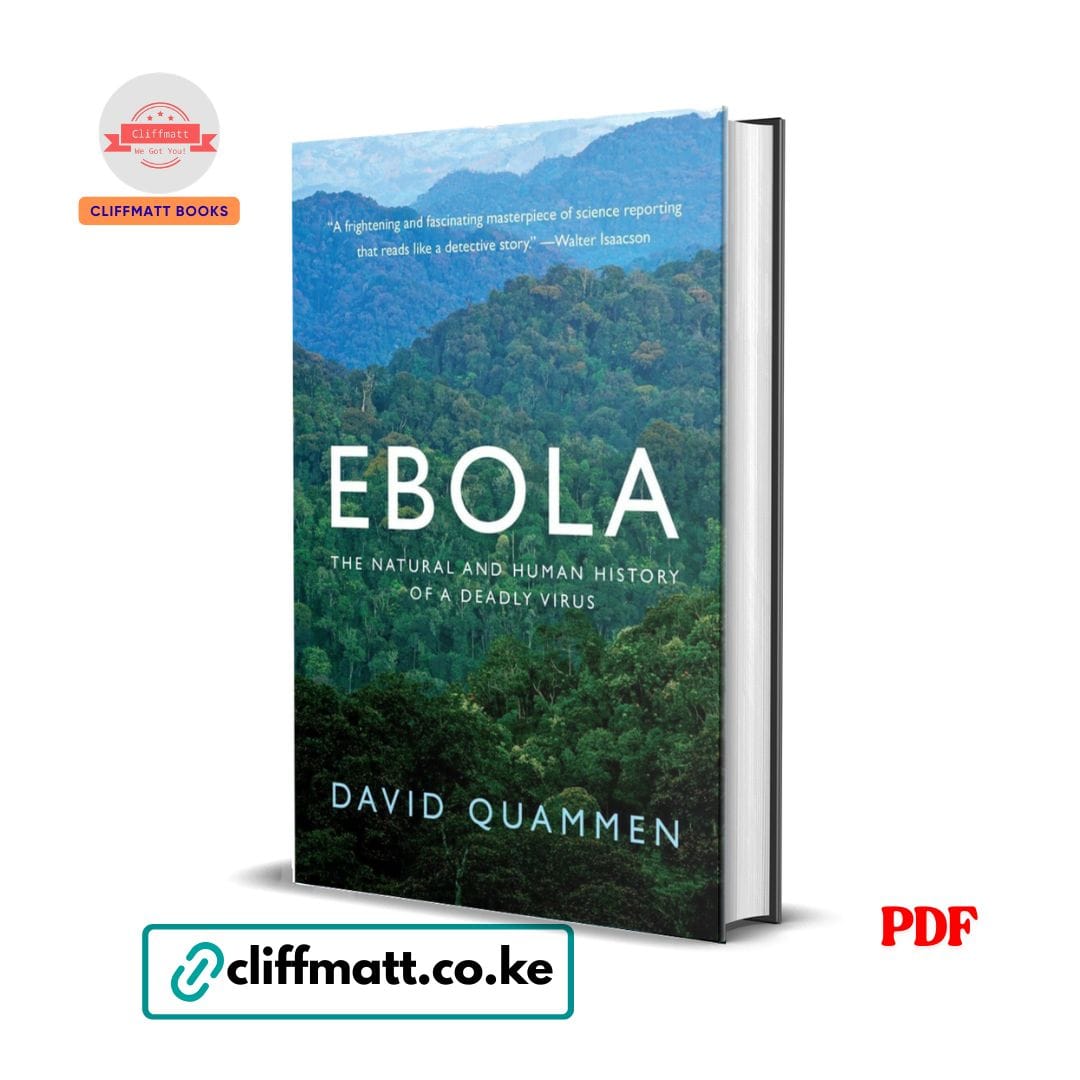


Description
Ebola is the virus that the world fears most. With a case fatality rate that can exceed 90%, with no reliable treatment for decades, and with outbreaks that have devastated communities from the Democratic Republic of Congo to Sierra Leone to Uganda — Ebola has earned its reputation as one of the most dangerous pathogens known to science. It has also remained, for most of its known history, one of the most mysterious.
David Quammen — author of Spillover and the world’s most trusted narrative science writer on zoonotic disease — has written the most complete, most compellingly readable account of Ebola available to the general reader. Ebola: The Natural and Human History of a Deadly Virus traces the virus from its first known outbreak in 1976 through the successive epidemics that have followed, following the scientists who have dedicated their careers to finding its reservoir, understanding its transmission, and developing the tools to stop it.
You now stock two David Quammen titles — giving Cliffmatt the most complete collection of the world’s foremost popular science writer on pandemic disease on any Kenyan digital platform. Available now for only Ksh 100.
What This Book Covers:
The Virus — What Ebola Actually Is:
- The specific biology of the Ebola virus — its structure, its mechanism of infection, the specific way it disables the human immune system and produces the devastating haemorrhagic fever that makes it so feared
- The filovirus family — the specific viral family to which Ebola belongs; its relationship to Marburg virus; the specific biological characteristics that make filoviruses so dangerous and so difficult to treat
- The different Ebola species — Zaire, Sudan, Bundibugyo, Taï Forest, Reston — their geographic distributions, their different fatality rates, and what those differences reveal about viral evolution and host adaptation
- For Kenyan healthcare professionals: the specific clinical presentation of Ebola — the progression from fever and fatigue through haemorrhagic manifestations — and the specific infection control measures that protect healthcare workers during outbreaks; Kenya sits within the region where Ebola outbreaks have occurred and where future outbreaks are possible
The Outbreaks — The Human Story:
- 1976 — The beginning: The simultaneous outbreaks in Zaire (DRC) and Sudan that gave Ebola its name; the specific scientific response that identified and characterised the new virus for the first time
- The Kikwit outbreak (1995): The largest Ebola outbreak to that point; the specific epidemiological detective work that traced its source and contained it; what Kikwit taught about outbreak response
- The Ugandan outbreaks: Ebola in East Africa — the specific proximity to Kenya; the lessons learned for the region’s healthcare systems
- The West African epidemic (2014-2016): The most devastating Ebola outbreak in history; why this outbreak broke all previous containment models; what the specific failures of international response reveal about global pandemic preparedness
- For Kenyan readers: the geographic proximity of these outbreaks — particularly in Uganda and DRC — makes this history directly relevant to Kenya’s own public health preparedness and to the clinical knowledge of every Kenyan healthcare professional
The Search for the Reservoir:
- Why finding Ebola’s animal reservoir host — the species in which the virus persists between human outbreaks — is one of the most important and most elusive problems in disease ecology
- The bat hypothesis — the specific evidence pointing to fruit bats (Pteropus and others) as the most likely reservoir; the specific field research conducted in Central African forests pursuing that evidence
- Why Ebola’s reservoir matters for prevention — understanding where the virus hides between outbreaks is the key to predicting and preventing future spillover events
- The specific human behaviours — bushmeat hunting, forest encroachment, handling dead animals — that create the conditions for spillover; and the specific community education and behaviour change approaches that reduce outbreak risk
The Scientists — The Detective Story:
- The virologists and disease ecologists who responded to the first Ebola outbreaks in 1976 and who have continued working on the virus for five decades; their specific contributions to understanding it
- The fieldwork — following Quammen into the forests and laboratories where the science of Ebola has been conducted; the specific dangers, the specific uncertainties, and the specific intellectual excitement of virus hunting in some of the world’s most remote and challenging environments
- The race for a vaccine — the specific scientific and commercial dynamics of Ebola vaccine development; why a vaccine that was known to be achievable for decades was not prioritised until the 2014 West Africa epidemic made the cost of that neglect catastrophically clear
- For Kenyan healthcare professionals: understanding the scientists and the institutions working on Ebola provides context for the public health guidance, the clinical protocols, and the international response frameworks that govern how Kenya would respond to an Ebola outbreak
Ebola and COVID — What the History Teaches:
- Why Ebola and Spillover together form the most complete popular science education on pandemic disease available; the specific lessons from Ebola’s history that apply directly to understanding COVID-19 and preparing for the next pandemic
- The containment lessons — what the specific successful Ebola containment efforts (and the specific failures) teach about what works in outbreak response
- The One Health framework — the specific approach to human health, animal health, and ecosystem health as interconnected systems; why addressing pandemic risk requires working at all three levels simultaneously
- For Kenyan public health: Kenya’s One Health initiative and its specific application to the wildlife-human interfaces of the Maasai Mara and other ecosystems gives this framework immediate local relevance
Why Two Quammen Titles Give Cliffmatt a Unique Position:
Spillover provides the broad framework — how animal viruses become human pandemics across multiple pathogens and ecosystems. Ebola provides the deep dive — one virus, fully examined, in the geographic region most directly relevant to Kenya. Together they form the most complete popular science library on zoonotic disease and pandemic risk available on any Kenyan digital platform. And no other Kenyan digital bookstore stocks both.
Who This Book Is For:
- Every Kenyan nurse, doctor, and healthcare professional who wants the most complete, most readable account of Ebola’s biology, history, and outbreak dynamics
- Public health students and practitioners who want the narrative context behind the clinical and epidemiological frameworks they study
- Biology and medical students whose coursework covers infectious disease, virology, or epidemiology and who want the readable, field-based complement to their textbooks
- Every Kenyan who wants to understand one of Africa’s most feared diseases from the ground up — its origins, its history, and its future
- Readers of Spillover (Quammen) who want the focused companion volume on Africa’s most feared pandemic pathogen
📖 Author: David Quammen 📄 Format: PDF eBook (instant download via WhatsApp or email) 💰 Price: Ksh 100 only 🚀 Delivery: Instant after M-Pesa payment confirmation 👉 Order now on cliffmatt.co.ke — Pay via M-Pesa, receive your PDF instantly.













Reviews
There are no reviews yet.