





Description
There is a specific kind of Christian who is genuinely devout, genuinely committed, genuinely active in church — who prays, who serves, who gives, who leads — and who simultaneously carries unhealed wounds, unexamined patterns, unresolved anger, and the specific emotional immaturity that produces repeated relational failure, leadership dysfunction, and the specific hollow exhaustion of a faith that is working very hard and producing very little genuine transformation.
Peter Scazzero was that Christian. He was also the pastor of a growing New York church — and the day his wife told him she was leaving the church because of his emotional state was the specific crisis that cracked open the specific question that this book answers:
How can someone be spiritually active and emotionally stunted simultaneously?
And the answer — the specific answer that has transformed more than 500,000 readers across the world — is as uncomfortable as it is liberating:
It’s impossible to be spiritually mature while remaining emotionally immature.
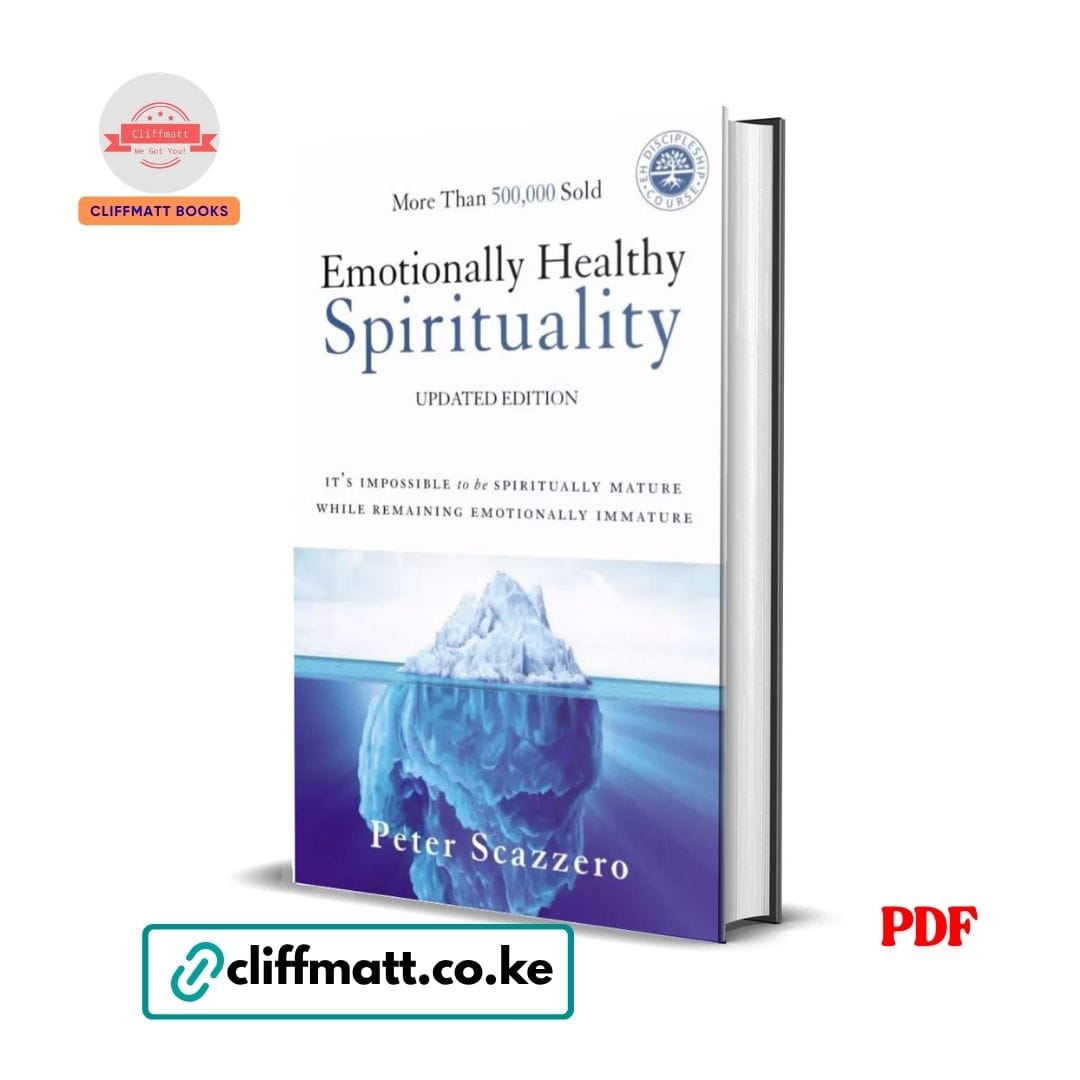
Emotionally Healthy Spirituality: It’s Impossible to Be Spiritually Mature While Remaining Emotionally Immature (Updated Edition) — part of the EH Discipleship Course — is the book that names the specific problem most clearly, traces it most honestly to its specific roots, and provides the most practically structured and most spiritually grounded path toward the specific integration of emotional health and genuine spiritual maturity that produces the transformation that religious activity alone consistently fails to produce.
What This Book Covers:
The Problem — Emotionally Unhealthy Spirituality:
- The specific signs of emotionally unhealthy spirituality — the ten specific patterns that Scazzero identifies as the most common expressions of the specific disconnect between spiritual activity and emotional health; each one will be immediately recognisable to every Kenyan believer who reads it
- Using God to run from God — the specific pattern of religious activity as avoidance of genuine encounter; how busyness in ministry, in service, and in spiritual disciplines can be the specific mechanism by which a person avoids the specific inner encounter with God that genuine transformation requires
- Ignoring the emotions of anger, sadness, and fear — the specific teaching in many African Christian contexts that negative emotions are incompatible with genuine faith; how the suppression of legitimate emotional experience produces the specific emotional pressure that erupts destructively in the specific relationships where the suppressed material most consistently surfaces
- Dying to the wrong things — the specific confusion between genuine Christian self-denial (the surrender of the ego’s demand for its own way) and the specific unhealthy self-denial that suppresses legitimate needs, legitimate feelings, and legitimate boundaries in the name of service; why this confusion produces not saints but emotionally depleted people who eventually explode or collapse
- Denying the impact of the past on the present — the specific avoidance of family history, of childhood wounds, and of the specific generational patterns that shape adult behaviour more powerfully than most Christians acknowledge; why Scazzero argues that genuine discipleship must include genuine engagement with one’s own history
- Dividing life into sacred and secular — the specific split between the life one lives in church and the life one lives everywhere else; how this split prevents the specific integration that genuine spiritual maturity requires
The Iceberg — What Lies Beneath:
- The specific iceberg metaphor that is central to the book — the specific understanding that what is visible above the surface of any person’s life (their behaviour, their church activity, their stated beliefs) represents a small fraction of what is actually driving it; that the enormous mass beneath the surface (unhealed wounds, unexamined patterns, unmet emotional needs, unresolved family history) is the specific force that shapes their behaviour far more powerfully than any amount of surface-level religious instruction can
- Why the church’s almost exclusive focus on the part of the iceberg above the water — on behaviour, on belief, on service and spiritual disciplines — consistently produces the specific frustration of people who know what they should do, believe what they should believe, and do what they should do, and find themselves unchanged in the specific ways that matter most
- The specific invitation of Emotionally Healthy Spirituality — to go below the waterline; to engage honestly and courageously with the specific emotional, relational, and historical material that is driving the specific patterns of behaviour that surface-level discipleship cannot change
The Journey — Eight Marks of Emotionally Healthy Spirituality:
Mark 1 — Know Yourself That You May Know God:
- The specific relationship between self-knowledge and God-knowledge — how the specific interior life of the person seeking God is the specific medium through which God is known; why Scazzero argues, drawing on the contemplative tradition, that the person who does not know themselves consistently projects rather than perceives God
- The specific practices of self-knowledge — journalling, therapy, spiritual direction, and the specific honest conversations that create the specific space for genuine self-examination; why these practices are not self-indulgent but the specific prerequisite for the genuine encounter with God that self-ignorance consistently prevents
- The specific Enneagram introduction — Scazzero’s use of the Enneagram as a tool for the specific self-knowledge that spiritual growth requires; how understanding your specific type reveals the specific motivations, the specific fears, and the specific patterns that are driving your behaviour below the level of conscious awareness
Mark 2 — Going Back in Order to Go Forward:
- The specific invitation to explore family history — not as navel-gazing but as the specific discipleship practice of understanding the specific emotional, relational, and spiritual patterns that were formed in the family of origin and that are still operating in the present
- The genogram practice — the specific tool for mapping family history across three generations and identifying the specific patterns (emotional cutoff, triangulation, enmeshment, addiction, unresolved grief) that are most likely to be operating in the present; how the specific discovery of these patterns is the first step toward their specific interruption
- Why breaking family patterns is a specific form of discipleship — the specific spiritual work of choosing a different response to the specific triggers that activate inherited patterns; how this work is simultaneously psychological and deeply theological
Mark 3 — Living in Brokenness and Vulnerability:
- The specific counter-cultural invitation to lead from weakness — Scazzero’s argument, drawn from Paul’s theology of the thorn in the flesh (2 Corinthians 12), that the specific willingness to be genuinely broken and genuinely vulnerable in appropriate contexts is not a spiritual failure but the specific expression of the deepest spiritual maturity
- Why performance Christianity — the specific pressure to project spiritual success, emotional stability, and unwavering faith — is the specific enemy of the specific genuine community that authentic Christian life requires; and why the specific vulnerability of genuine confession, genuine admission of struggle, and genuine request for help produces the specific depth of community that performance consistently prevents
- The specific applications for Kenyan church leadership — how the specific cultural pressure on pastors and church leaders to project invulnerability produces the specific patterns of leadership failure, moral collapse, and congregational dysfunction that the church in Kenya consistently experiences and consistently fails to address
Mark 4 — Receiving the Gift of Limits:
- The specific theology of limits as gift — the counter-cultural argument that the specific boundaries of your capacity, your time, your energy, and your specific gifts are not obstacles to maximum service but the specific design of the Creator who intended human beings to be finite and interdependent rather than omnipotent and self-sufficient
- The specific application to Kenyan church overcommitment — the specific cultural and theological pressure on Kenyan believers to say yes to every request, to serve every need, and to give from every resource; how this pressure produces the specific burnout, the specific resentment, and the specific ministry exhaustion that is endemic in Kenya’s hardest-serving Christian communities
- The specific practice of saying no as spiritual discipline — how the specific decision to honour the specific limits of your specific design is an act of trust in God’s provision for the needs that you cannot meet rather than a failure of faith or service
Mark 5 — Embracing Grieving and Loss:
- The specific invitation to grieve well — the specific engagement with loss, disappointment, and death that most Christian cultures (especially in the African context where positive confession and victorious faith are the dominant frames) consistently suppress or abbreviate
- Why the Psalms of lament are among the most important texts in the Bible for emotionally healthy spirituality — how Israel’s willingness to bring genuine grief, genuine anger, and genuine confusion directly to God models the specific honest relationship with God that emotional health both requires and produces
- The specific Kenyan grief context — the specific losses (of loved ones, of economic dreams, of relational hopes) that Kenyan believers are navigating without the specific permission to grieve fully that emotionally healthy Christian community would provide; why genuine lament is not the absence of faith but one of its most authentic expressions
Mark 6 — Making Community a Priority:
- The specific theology of Christian community as spiritual formation — not the performance of togetherness but the specific crucible of genuine relationship where the specific patterns of emotional immaturity are both most visible and most specifically addressable
- The specific practices of emotionally healthy community — speaking directly rather than triangulating, sharing feelings in first-person statements, asking for what you need rather than hoping others will guess it, and the specific conflict resolution practices that produce genuine reconciliation rather than the specific false peace that most church communities mistake for Christian harmony
- How to build the specific community structures that support emotionally healthy spirituality — small groups, spiritual direction, accountability relationships — designed specifically to support the specific inner work that individual devotional practice alone cannot produce
Mark 7 — Slow Down for Loving Union with God:
- The specific invitation to contemplative spirituality — the specific recovery of the Christian contemplative tradition (the Desert Fathers, Julian of Norwich, John of the Cross, Thomas Merton) that Scazzero identifies as the specific corrective to the specific activity-addicted, production-oriented spirituality that most contemporary evangelical Christianity practises
- The daily office — the specific practice of structured daily prayer at regular intervals through the day; how this practice creates the specific rhythms of return to God that sustain the specific quality of divine-human union from which emotionally healthy spirituality grows
- The specific Sabbath practice — not merely a weekly rest but the specific theological statement about the specific nature of human beings as creatures who need to stop, who are loved apart from their productivity, and who encounter God in the specific stillness that busyness prevents
Mark 8 — Growing into an Emotionally Mature Adult:
- The specific developmental framework for emotional maturity — the specific stages from emotional infant through emotional child, emotional adolescent, and emotional adult; the specific characteristics of each stage and the specific practices that move a person from one stage to the next
- Why most Kenyan believers — including many who have been Christians for decades — are living at the emotional infant or emotional child stage in specific dimensions of their lives; the specific honesty of this assessment and the specific good news that emotional development at any stage is genuinely possible
- What an emotionally mature adult looks like in the specific relationships, the specific conflicts, and the specific challenges of Kenyan daily life; the specific behaviours, the specific communication patterns, and the specific inner life that the full integration of emotional health and spiritual maturity produces
Why Kenyan Believers Are Buying This Book: Kenya’s church is one of the most active, most generous, and most numerically impressive in the world — and one of the most consistently producing leaders who burn out, marriages that fail despite Christian commitment, and communities that look healthy and are often hiding profound individual dysfunction. Emotionally Healthy Spirituality is the most honest and most practically structured response to that specific gap available anywhere in contemporary Christian literature.
At Ksh 100, with more than 500,000 copies sold globally, this is the book that every Kenyan church leader, every Kenyan discipleship programme, and every Kenyan believer who wants their faith to produce genuine transformation rather than impressive religious activity needs most urgently.
Who This Book Is For:
- Every Kenyan believer who has been faithfully active in church and consistently frustrated that their faith is not producing the specific inner change and the specific relational health they expected it to produce
- Pastors and church leaders who want the most honest and most practically structured framework for discipleship programmes that address the emotional dimensions of spiritual growth that most church programmes consistently ignore
- Kenyan Christians in counselling or therapy who want the most biblically grounded framework for integrating their psychological and spiritual growth journeys
- Small group leaders who want the most accessible and most practically applicable emotionally healthy spirituality curriculum for the specific people they are walking alongside
- Every reader of The Awe of God (Bevere), Battlefield of the Mind (Meyer), The Fatherhood Principle (Munroe), Out of Control (Tsabary), and Getting the Love You Want (Hendrix) who wants the most theologically grounded and most emotionally honest Christian discipleship guide to complete their faith and wellbeing library
📖 Author: Peter Scazzero 📄 Format: PDF eBook (instant download via WhatsApp or email) 💰 Price: Ksh 100 only 🚀 Delivery: Instant after M-Pesa payment confirmation
👉 Order now on cliffmatt.co.ke — Pay via M-Pesa, receive your PDF instantly.









Reviews
There are no reviews yet.