
Description
You still love them. That part is not in question. What is in question — what is making every conversation difficult, every moment of distance painful, and every moment of closeness complicated — is whether you can trust them again. Whether trust, once broken in the specific way that yours was broken, can actually be rebuilt into something real rather than merely performed. Whether the specific relationship you have is worth the specific work that genuine trust restoration requires.
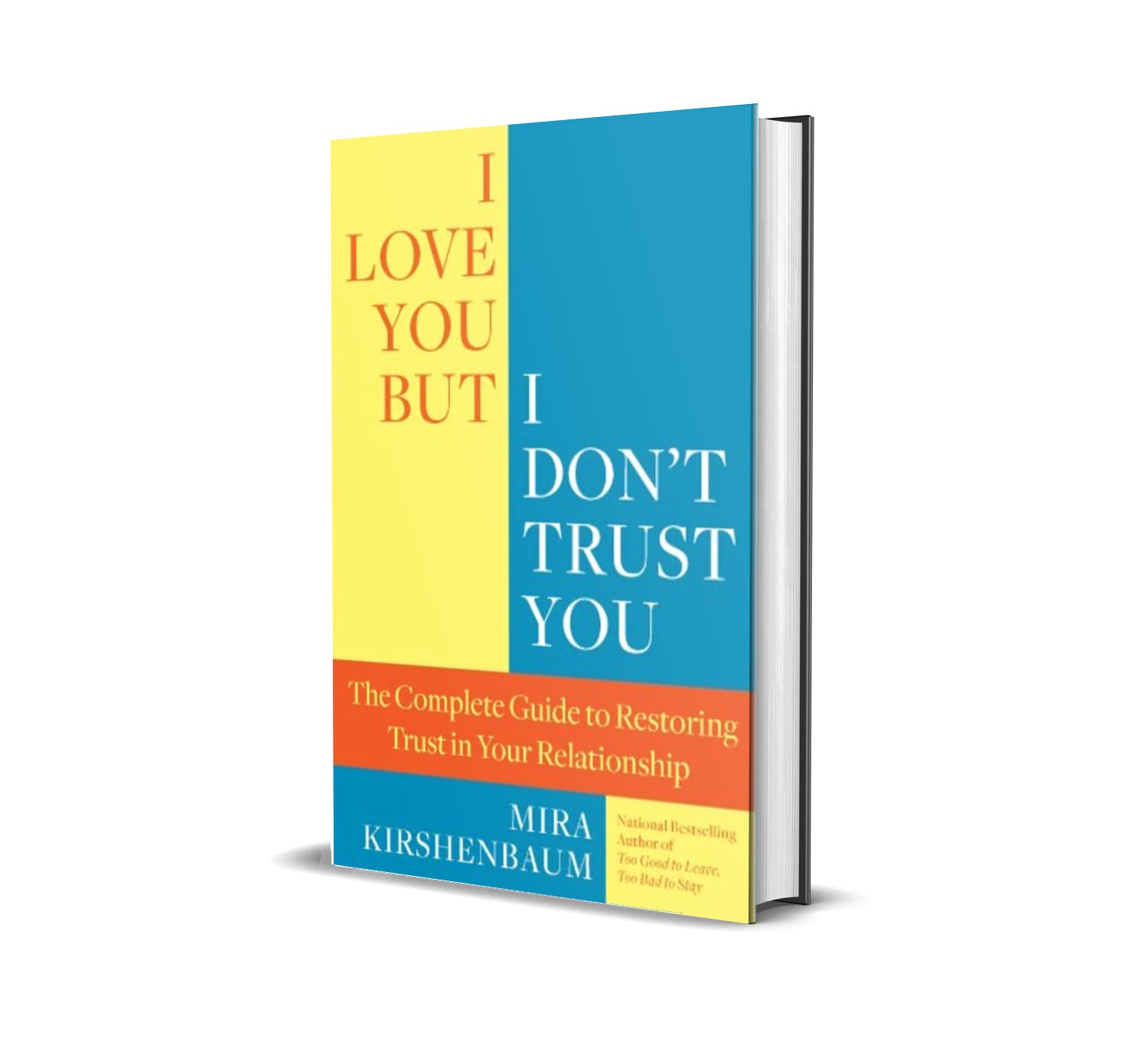
Mira Kirshenbaum — National Bestselling Author of Too Good to Leave, Too Bad to Stay and one of the most respected relationship therapists working today — has spent her career sitting with exactly this question. With couples who love each other and cannot trust each other. With individuals trying to decide whether to stay and rebuild or leave and begin again. With people who have been hurt in ways that feel unforgivable and who are not sure whether forgiveness is possible, necessary, or even desirable.
I Love You But I Don’t Trust You: The Complete Guide to Restoring Trust in Your Relationship is the most practically structured, most psychologically honest, and most compassionately written guide available to the specific work of trust restoration — covering every dimension of how trust is broken, what genuine restoration requires, and how to navigate the specific journey back to the specific intimacy that both love and trust together make possible.
What This Book Covers:
Understanding Trust — What It Actually Is and Why It Breaks:
- The specific psychological definition of trust in intimate relationships — not the naive assumption that someone will never hurt you but the specific, earned confidence that they are fundamentally committed to your wellbeing, that they will tell you the truth even when the truth is inconvenient, and that the specific vulnerabilities you have exposed in intimacy will be handled with care rather than exploited
- The specific anatomy of trust betrayal — why not all trust violations are equal; the specific spectrum from small inconsistencies and disappointments through medium-level betrayals to the specific major violations (infidelity, financial deception, sustained lying) that require the most significant and the most sustained restoration work
- Why love survives betrayal more often than trust does — the specific way that two people can remain genuinely attached to each other while trust between them has been completely destroyed; and why rebuilding the relationship requires specifically and deliberately rebuilding trust rather than simply relying on the surviving love to carry both
- The specific trust wounds — the particular types of betrayal that each produce their specific legacy of hypervigilance, of emotional withdrawal, of the specific involuntary checking behaviour that broken trust produces in the person who was hurt; why understanding the specific nature of the wound is the prerequisite for the specific treatment that heals it
The Three Types of Trust Problems — Knowing What You Are Dealing With:
Small Trust Violations — The Accumulated Disappointments:
- The specific category of small trust violations — the repeated small lies, the specific broken promises, the consistent inconsistency between what was said and what was done — that individually seem minor but that accumulate into the specific erosion of trust that eventually makes the relationship feel fundamentally unsafe
- Why small trust violations are often more damaging to long-term relationship health than single large ones — how the specific pattern of consistent small betrayals produces the specific expectation of betrayal that reframes every interaction through the lens of anticipated disappointment
- The specific restoration approach for small trust violations — the particular conversations, the particular behavioural changes, and the particular monitoring system that turns the specific pattern of disappointment into a specific, consistent new pattern of reliability
Medium Trust Violations — The Significant Breaches:
- The specific category of medium trust violations — significant lies about important matters, emotional affairs, financial deceptions, and the specific betrayals that are not the most catastrophic available but that have genuinely damaged the foundation of the relationship
- The specific emotional aftermath of medium trust violations — the particular combination of hurt, anger, confusion, and the specific hypervigilance that follows a significant betrayal; what each emotional response is communicating and what it specifically needs from the restoration process
- The specific restoration approach for medium trust violations — the particular transparency, the particular accountability structures, and the particular pace of rebuilding that medium violations require; why rushing this process consistently fails and why the specific slower timeline is not procrastination but appropriate respect for the specific depth of the wound
Major Trust Violations — The Catastrophic Breaches:
- The specific category of major trust violations — infidelity, sustained double lives, profound financial betrayal, and the specific revelations that fundamentally reframe the entire history of the relationship in the light of what was concealed
- Why major trust violations are simultaneously the most painful and the most genuinely restorable categories of betrayal — the specific evidence that couples who commit fully to the specific restoration process after major violations sometimes build relationships of greater depth and greater genuine intimacy than they had before the violation
- The specific restoration approach for major violations — the particular radical transparency, the particular sustained accountability, and the particular professional support that major trust restoration almost always requires; why attempting major trust restoration without qualified professional guidance is among the most common reasons it fails
What the Betrayed Person Needs — The Healing Journey:
Acknowledging What Happened:
- Why the specific, complete, honest acknowledgment of what happened — not minimised, not defensively contextualised, not buried under immediate apologies and forward-focused reassurances — is the most important first step the person who broke trust can take; why the betrayed person’s healing cannot begin until what happened has been fully and honestly named
- The specific validation that the betrayed person needs — not agreement that the violation was as catastrophic as their worst feelings suggest, but the genuine acknowledgment that their pain is real, their response is understandable, and that the specific thing that was done to them was genuinely wrong regardless of whatever context the person who did it would offer
- Why minimisation — “It wasn’t as bad as you think”, “You’re overreacting”, “It was a long time ago” — is the specific response that most consistently prevents trust restoration; the specific way that minimisation communicates that the betrayed person’s experience of the violation is itself not trustworthy
Processing the Pain:
- The specific emotional processing that trust betrayal requires — the particular grief, the particular anger, the particular loss of the specific version of the relationship that existed before the betrayal became known; why this processing cannot be rushed and why the person who broke trust must be willing to be present with this pain rather than trying to accelerate past it
- The specific intrusive thoughts and checking behaviours — the involuntary mental replaying of the betrayal, the specific need to check phone messages, locations, and the specific surveillance behaviours that hypervigilance produces; why these responses are not pathological but the specific biological and psychological protection mechanisms of a nervous system that was genuinely hurt
- How long the healing timeline actually takes — the research evidence on how long genuine trust restoration requires after different categories of violation; why the timeline that feels like too long to the person who broke trust is usually the minimum that genuine healing requires for the person who was hurt
Rebuilding Safety:
- The specific safety behaviours that the person who broke trust must consistently demonstrate — the particular transparency, the particular proactive communication, the particular willingness to be accountable — that gradually convince the betrayed person’s nervous system that the environment is now genuinely safe
- The specific triggers that will activate the betrayed person’s pain and hypervigilance long after the violation — and the specific response to those triggers that heals rather than escalates; why the person who broke trust must be willing to respond to triggered pain with patience and presence rather than the specific frustration of “We’ve already dealt with this”
- The gradual trust ladder — Kirshenbaum’s specific framework for the incremental, tested, gradually expanding trust that genuine restoration builds; why trust is not restored in a single conversation or a single grand gesture but in the specific accumulation of small, consistent, reliable moments that gradually rebuild the specific confidence that was destroyed
What the Person Who Broke Trust Must Do:
Taking Full Responsibility:
- The specific difference between genuine responsibility (fully owning what was done, the specific impact it had, and the specific choice to do it) and the specific pseudo-responsibility that is actually damage control; why the betrayed person almost always knows the difference and why genuine responsibility is the specific prerequisite for genuine restoration
- The specific explanations without excuses — how to provide the honest account of what happened and why that the betrayed person needs to make sense of the violation, without that account becoming the specific minimisation and the specific deflection of responsibility that prevents healing
- Why remorse must be demonstrated not just declared — the specific behavioural evidence of genuine remorse that the betrayed person needs to see over time; why “I’m sorry” said once, however sincerely, is not sufficient for trust restoration
Sustained Transparency:
- The specific radical transparency that major trust restoration requires — proactive sharing of information rather than waiting to be asked; the specific openness about location, communication, and the specific areas where the betrayal occurred that gradually convinces the betrayed person that the concealment is over
- How long transparency must be sustained — why the specific timeline is determined by the betrayed person’s healing rather than the betraying person’s discomfort; why the person who broke trust must be willing to maintain the specific transparency for as long as the restoration genuinely requires
Deciding Whether to Stay or Go:
- The most honest section of the book — the specific framework for making the specific decision about whether the specific relationship is worth the specific work that genuine trust restoration requires
- The specific indicators that restoration is possible — the particular qualities of both people and both commitments that research and clinical experience most consistently associate with successful trust restoration
- The specific indicators that restoration is unlikely — the particular patterns, the particular character issues, and the particular fundamental incompatibilities that make trust restoration not impossible in theory but genuinely impractical in the specific relationship in question
- The specific questions that Kirshenbaum uses with her own clients to help them navigate this specific decision with the specific honesty and the specific self-knowledge that the decision deserves
Why Kenyan Couples Are Buying This Book: Trust betrayal is one of the most common and most painful experiences in Kenyan intimate relationships — yet it is also one of the most consistently under-resourced; most Kenyan couples who experience significant trust violations either separate without any attempt at restoration, or stay together without any genuine restoration taking place. I Love You But I Don’t Trust You gives every Kenyan couple the specific framework, the specific tools, and the specific honest guidance to navigate the specific work of genuine trust restoration — and to make the specific informed decision about whether their relationship deserves and can sustain that work.
At Ksh 100, this is the most complete trust restoration guide available anywhere in Kenya.
Who This Book Is For:
- Kenyan couples navigating the specific aftermath of infidelity, significant deception, or any trust violation that has damaged the foundation of their relationship and who want the most complete and most practically structured guide to restoration available
- The betrayed partner who wants to understand their own responses, to know what genuine restoration requires, and to make an informed decision about whether to invest in the restoration journey
- The person who broke trust who wants to understand what genuine restoration requires of them — not as performance but as the specific sustained behavioural change that genuine remorse produces
- Marriage counsellors, pastors, and church relationship support workers who want the most practically structured trust restoration reference available for the couples they walk alongside
- Every reader of Getting the Love You Want (Hendrix), 1001 Questions to Ask Before You Get Married (Leahy), Why Men Want Sex and Women Need Love (Pease), His Needs Her Needs (Harley), and Love & Respect (Eggerichs) who wants the most specifically trust-focused and most complete restoration guide to complete their relationship library
📖 Author: Mira Kirshenbaum 📄 Format: PDF eBook (instant download via WhatsApp or email) 💰 Price: Ksh 100 only 🚀 Delivery: Instant after M-Pesa payment confirmation
👉 Order now on cliffmatt.co.ke — Pay via M-Pesa, receive your PDF instantly.










Reviews
There are no reviews yet.