
Description
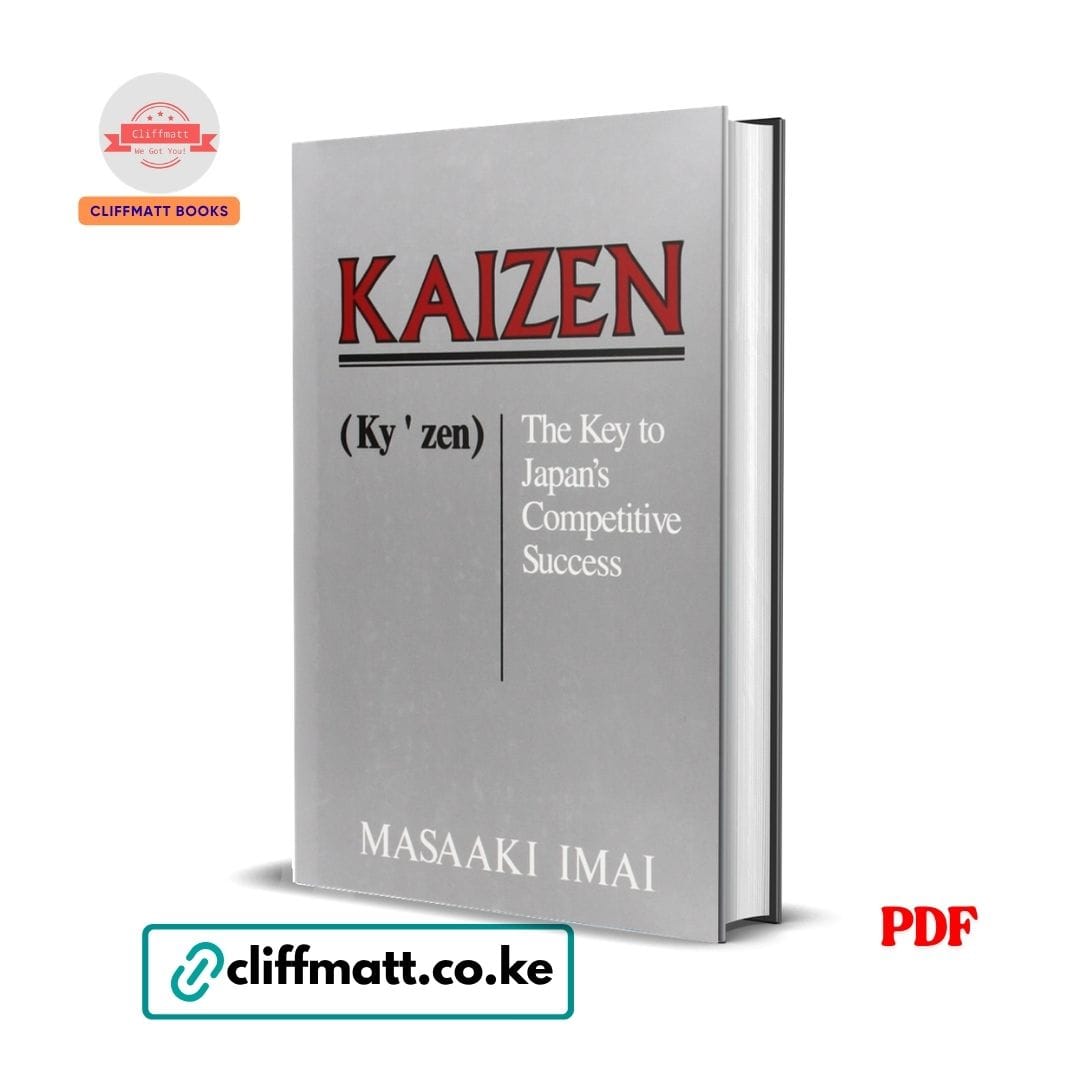
After World War II, Japan’s industry was devastated. By the 1980s, Japan had become the world’s most feared economic competitor — producing cars, electronics, and manufactured goods of extraordinary quality at extraordinary efficiency. What happened? The answer, Masaaki Imai argues, is Kaizen — the Japanese philosophy of continuous improvement that became the operating principle of every major Japanese corporation and that changed how the world thinks about quality, process, and the specific nature of competitive advantage.
Kaizen (pronounced Ky’zen) — translated as “change for the better” or “continuous improvement” — is not a technique or a tool. It is a philosophy: the specific conviction that every process, every product, every system, and every person can be improved; that improvement never ends; and that the accumulation of thousands of small improvements, made consistently over time, produces results that no single dramatic innovation can match.
Masaaki Imai — the consultant who introduced Kaizen to the Western world — wrote the foundational text that has influenced Toyota, Honda, Sony, and virtually every major quality and process improvement programme developed since its publication. Available now on Cliffmatt Books for only Ksh 100.
What This Book Teaches:
The Kaizen Philosophy — The Foundation:
- What Kaizen actually means — not the Western understanding of dramatic innovation but the Japanese conviction that small, consistent, incremental improvements, made by everyone at every level of an organisation every day, produce the most powerful competitive advantage available
- The Kaizen mindset versus the innovation mindset — why Western management has historically focused on breakthrough innovations while Japanese management focused on continuous incremental improvement; and why, in the long run, the Japanese approach consistently outperformed
- Why everyone owns Kaizen — from the CEO to the factory floor worker; the specific way Japanese companies involved every employee in the continuous improvement process; why this involvement is both the most effective management practice and the most fundamentally respectful approach to human capability
- For Kenyan organisations: the specific application of the Kaizen philosophy to Kenyan businesses, government institutions, hospitals, schools, and any organisation that wants to improve its performance systematically rather than sporadically
The Kaizen Umbrella — What It Covers:
- The comprehensive nature of the Kaizen approach — how it encompasses customer orientation, total quality control, robotics, quality circles, suggestion systems, automation, discipline in the workplace, and small-group activities simultaneously
- Why Kaizen is not a single technique but a complete management philosophy that integrates every improvement activity under a single coherent framework
- The specific relationship between Kaizen and other quality improvement methodologies — how it provides the foundational philosophy that makes Total Quality Management, Just-in-Time production, and statistical process control most effective
- For Kenyan managers: understanding how the Kaizen umbrella applies to service industries, healthcare, education, and government — not just manufacturing; the specific ways that continuous improvement principles translate across sector boundaries
Process vs Results Orientation:
- The fundamental difference between Western management’s results orientation and Japanese management’s process orientation — why focusing on the process that produces results is more effective than focusing on results alone
- How process-oriented thinking changes every management decision — from how you measure performance to how you respond to failure to how you design improvement initiatives
- The specific management practices that emerge from process orientation — daily observation of processes, systematic identification of waste, incremental process improvement before results improvement
- For Kenyan managers: the specific shift from results-focused management (which blames people when results are poor) to process-focused management (which improves the system that produces results); why this shift produces better outcomes and better morale simultaneously
The Three Foundations — Standardisation, 5S, and Elimination of Waste:
- Standardisation — why the first step of any improvement process is establishing the current best practice as a documented standard; why without standards, improvement is impossible to measure and impossible to sustain
- 5S — the five foundational workplace organisation principles: Seiri (sort), Seiton (set in order), Seiso (shine), Seiketsu (standardise), Shitsuke (sustain); the specific practices that create the physical foundation for every other improvement
- Elimination of waste (Muda) — the seven types of waste that Kaizen identifies in every process: overproduction, waiting, unnecessary transport, overprocessing, excess inventory, unnecessary movement, and defects; the specific approach to identifying and eliminating each
- For Kenyan organisations: identifying the specific forms of waste most common in Kenyan business and institutional processes; the specific 5S application to Kenyan office, hospital, school, and manufacturing environments
Quality Circles and Suggestion Systems:
- Quality circles — the small groups of workers who meet regularly to identify and solve problems in their work processes; how Japanese companies used quality circles to tap the collective intelligence of their entire workforce
- The suggestion system — the specific mechanisms Japanese companies developed for capturing and implementing employee improvement ideas; why the number of implemented suggestions per employee became a key performance metric
- How to build a culture of continuous improvement — the specific management behaviours, recognition systems, and organisational structures that sustain Kaizen long after the initial enthusiasm has faded
- For Kenyan organisations: implementing quality circles and suggestion systems in Kenya’s specific organisational culture; how to build the trust and psychological safety that make employees willing to suggest improvements
The Management of Kaizen:
- Top management’s Kaizen responsibilities — the specific commitments that senior leaders must make for Kaizen to become genuinely embedded rather than a passing initiative
- Middle management’s role — the specific translation function of converting Kaizen strategy into specific departmental and process improvements
- Frontline worker participation — how to create the conditions under which workers at every level actively contribute to continuous improvement rather than passively executing instructions
- Measurement and review — how to measure Kaizen progress; the specific metrics that reveal whether a continuous improvement culture is genuinely taking root
Why Kaizen Matters for Kenya:
Kenya’s most competitive aspiration — building world-class institutions, world-class businesses, and a world-class economy — will not be achieved by dramatic innovations alone. It will be achieved by the daily, systematic, disciplined improvement of every process, every system, and every standard across every organisation in the country. Kaizen is the philosophy that makes that aspiration achievable — not as a single event but as the cumulative product of millions of small improvements made by millions of people every day.
For Kenyan manufacturers in the EPZ, for Kenyan hospitals improving patient outcomes, for Kenyan schools improving learning results, for Kenyan service companies competing regionally and globally — Kaizen is the operating philosophy that separates organisations that improve continuously from those that plateau and decline.
Who This Book Is For:
- Kenyan managers and business owners who want the most influential management philosophy in industrial history applied to their specific improvement challenges
- Manufacturing and operations professionals who want the foundational text behind Lean, Six Sigma, TQM, and every quality improvement methodology used in world-class organisations
- Kenyan healthcare professionals who want the process improvement philosophy that has produced the world’s best hospital outcomes when applied in medical settings
- University business and industrial engineering students who want the foundational philosophy text that underpins their entire operations management curriculum
- Readers of Built to Last, 100+ Management Models, The Innovator’s Dilemma (Christensen), and The Startup Playbook (Kidder) who want the most influential operations philosophy to complete their management library
📖 Author: Masaaki Imai
📄 Format: PDF eBook (instant download via WhatsApp or email)
💰 Price: Ksh 100 only
🚀 Delivery: Instant after M-Pesa payment confirmation
👉 Order now on cliffmatt.co.ke — Pay via M-Pesa, receive your PDF instantly.











Reviews
There are no reviews yet.