


Description
Nearly two thousand years ago, the most powerful man on earth sat alone each morning and wrote to himself.
Not to posterity. Not to be published. Not to build a legacy or demonstrate wisdom to an audience. The specific Roman Emperor Marcus Aurelius — ruler of the largest empire the ancient world had known, commander of the most powerful military force of his era, administrator of the lives of millions of people across three continents — wrote these notes entirely and exclusively for himself. As a reminder. As a discipline. As the specific daily practice of the specific man who understood that ruling an empire was considerably easier than the specific task of ruling himself.
What he wrote became Meditations — the most widely read, most continuously in-print, and most personally transformative philosophical text of the last two millennia. Not because Marcus Aurelius intended it to survive. But because what he wrote in those private morning sessions — the specific wrestling with anger, with distraction, with the opinions of others, with the fear of death, with the specific temptation to use power unworthily — is the specific wrestling that every serious person in every serious position has been doing ever since, and finding in Marcus’s words the specific most honest and most practically wise companion available for that specific inner work.
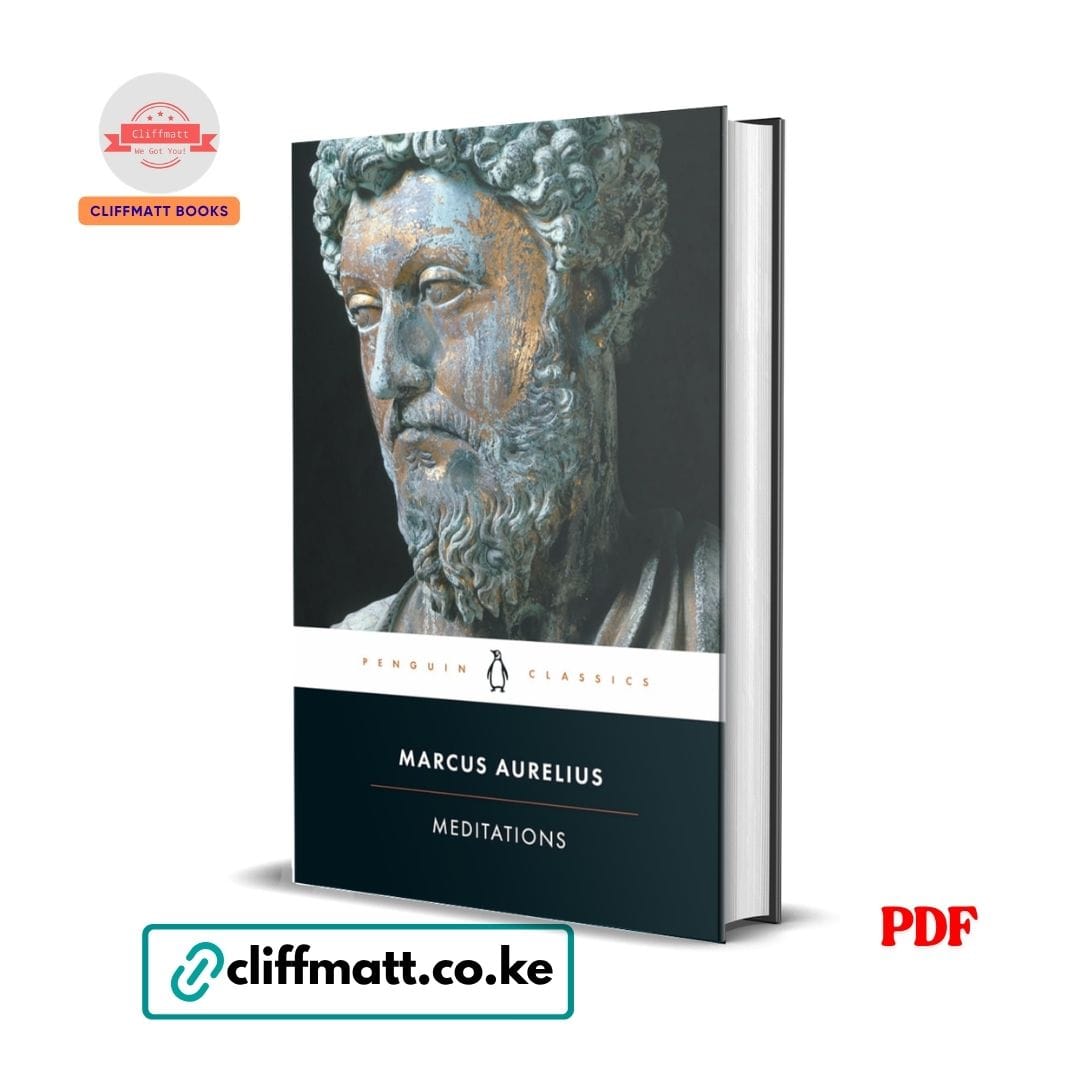
Meditations — Penguin Classics — is now available to every Kenyan for Ksh 100.
What This Book Covers:
The Man and His Context — Who Marcus Aurelius Was:
- The specific biographical context — Marcus Aurelius ruled Rome from 161 to 180 AD, a reign that spanned wars on multiple fronts, plague, political intrigue, the specific betrayal of trusted colleagues, and the specific relentless pressure of being the specific person on whom millions of lives most directly depended; the particular relevance of this context to the specific reader of the Meditations, who needs to understand that these words were not written in the comfort of philosophical retirement but in the specific camp tents and the specific palace rooms of a man managing genuine, high-stakes, life-and-death responsibility every single day
- The specific Stoic tradition — the particular philosophical school within which Marcus was trained and to which he remained committed throughout his reign; the specific lineage from Zeno of Citium through Epictetus (whose Discourses were Marcus’s primary philosophical influence) to Marcus himself; why Stoicism — with its specific emphasis on the dichotomy of control, on virtue as the only genuine good, on the specific discipline of desire and the specific management of emotion — was the specific most practically useful philosophical framework available to a man in Marcus’s specific position
- Why the Meditations survived — the particular historical accident of the manuscript’s transmission; the specific chain of copying and preservation that carried these private notes through the fall of Rome, through the medieval period, and into the modern world; why the specific survival of a book not intended for publication is one of the specific most fortunate accidents in the entire history of human thought
The Core Stoic Philosophy — What Marcus Actually Believed:
The Dichotomy of Control:
- The specific foundational Stoic insight — the particular distinction between the specific things that are “up to us” (our specific judgements, our specific desires, our specific aversions, and our specific voluntary actions — what Epictetus called the “things in our power”) and the specific things that are “not up to us” (our specific bodies, our specific reputation, our specific property, our specific political positions, and everything that depends on the specific actions of other people or the specific circumstances of the specific world we inhabit); why the specific person who has genuinely internalised this distinction is the specific most psychologically free person available, regardless of their specific external circumstances
- The specific application to Marcus’s life — how the specific Emperor who could not control plague, barbarian invasion, the weather on campaign, the loyalty of his generals, or the opinion of the Senate consistently found in the dichotomy of control the specific most practically liberating philosophical tool available; why the specific person reading these words in the specific pressures of the specific Kenyan professional, family, and economic life finds the same specific liberation in the same specific insight
- The specific Kenyan application — the particular combination of political uncertainty, economic variability, family obligation, and the specific environmental and social pressures that characterise the specific Kenyan life makes the specific Stoic dichotomy of control the specific most immediately practically useful philosophical framework available; why the specific Kenyan professional who has genuinely internalised what is and is not in their specific control is the specific most resilient and the specific most psychologically free Kenyan professional available
Virtue as the Only Good:
- The specific Stoic value framework — the particular conviction, central to all Stoic philosophy and most personally and most repeatedly expressed throughout the Meditations, that the specific only genuine good is virtue — the specific excellent use of the specific rational faculty that is the defining human capacity; that health, wealth, reputation, pleasure, and the specific other things that most people spend their lives pursuing are neither genuinely good nor genuinely bad in themselves but “preferred indifferents” — things that are reasonably pursued when available but that are not the specific source of the specific genuine flourishing that virtue alone can provide
- The specific four virtues — wisdom (the specific knowledge of what is genuinely good, genuinely bad, and genuinely indifferent), justice (the specific excellent treatment of other people), courage (the specific right response to genuinely fearful situations), and temperance (the specific right relationship with pleasure, pain, and the specific desires that pull most people away from the specific best version of themselves); how Marcus applies each of these virtues to the specific situations of his specific imperial life
- The specific relevance to the Kenyan Christian reader — the specific intersection of Stoic virtue ethics and biblical wisdom (the specific Proverbs tradition, the specific Pauline character formation language of Galatians 5 and Philippians 4) that makes Meditations not merely compatible with but genuinely complementary to a serious Christian reading life; why many of Kenya’s most serious Christian readers and most serious secular readers will find in Marcus the same specific practical wisdom expressed in a different but deeply resonant philosophical vocabulary
The Present Moment:
- The specific Stoic emphasis on the present — Marcus’s repeated insistence, throughout the Meditations, that the specific past is gone and cannot be changed, the specific future has not arrived and cannot be controlled, and that the specific only moment in which the specific rational person can actually act, choose, and be virtuous is the specific present moment that they are currently in; the particular application of this insight to the specific anxiety about the future and the specific regret about the past that consume most people’s present moments
- “Confine yourself to the present” — one of the most frequently quoted and most immediately practically useful lines in the entire Meditations; the specific application to the specific Kenyan professional who is managing the specific anxiety of Kenya’s economic uncertainty, the specific worry about children’s educational futures, and the specific political instability that the specific present moment of Kenyan life consistently includes; why the specific person who has genuinely confined themselves to the specific present is the specific most effective and the specific most psychologically peaceful person available in any of these specific circumstances
- The specific memento mori practice — the particular Stoic meditation on mortality (memento mori — “remember that you will die”) that Marcus returns to repeatedly throughout the Meditations; not as the specific morbid dwelling on death that most people assume but as the specific most powerful perspective-restoring, priority-clarifying, and gratitude-producing contemplation available; why the specific person who remembers each morning that this specific day may be their last is the specific person most likely to live it with the specific full presence, the specific genuine priorities, and the specific genuine gratitude that the specific person who takes their continued existence for granted never consistently produces
The Obstacle is the Way:
- The specific Stoic response to difficulty — the particular passage from Meditations Book 5 that Ryan Holiday’s bestseller The Obstacle Is the Way took as its foundational text: “The impediment to action advances action. What stands in the way becomes the way”; the specific Stoic understanding that the specific obstacles, setbacks, and difficulties of the specific life are not interruptions to the specific practice of virtue but the specific primary material through which the specific practice of virtue occurs
- The specific application to Kenyan adversity — the particular professional setback, the specific financial difficulty, the specific relational challenge, the specific health crisis, and the specific political disappointment that the specific Kenyan professional navigates as the specific daily context of their specific life; how the specific Stoic reframe of every obstacle as the specific most immediate opportunity for the specific virtue that it most specifically demands produces the specific psychological response that turns adversity from something that happens to you into something that happens for you
- The specific connection to Ego Is the Enemy (Holiday) — Meditations is the specific primary source text for much of Ryan Holiday’s Stoic trilogy; the specific reader who has read Ego Is the Enemy and been moved by it will find in Meditations the specific original voice from which Holiday drew the specific most important of his insights; promote them together as the ancient source and the modern application of the same specific wisdom
On Other People:
- Marcus on difficult people — the specific most immediately practically useful section of the Meditations for most readers; the particular passages in which Marcus addresses the specific challenge of dealing with the specific people who are dishonest, ungrateful, arrogant, and generally difficult in the specific ways that most people in most positions of responsibility most consistently encounter; the specific Stoic response (they are doing the best they can with the specific understanding they have; your job is to treat them justly regardless of how they treat you; their behaviour is in their control, your response is in yours)
- “When you wake up in the morning, tell yourself: the people I deal with today will be meddling, ungrateful, arrogant, dishonest, jealous, and surly” — the specific most practically immediately useful morning meditation in the entire book; how the specific person who begins each day with this specific realistic expectation about the specific people they will encounter is the specific least likely to be destabilised when those specific people behave in exactly the specific ways that the specific person who expected something better is most reliably destabilised by
- The specific Stoic cosmopolitanism — Marcus’s consistent, throughout-the-Meditations emphasis on the specific common humanity that connects him to every person he encounters, including the specific most difficult and the specific most apparently unlike him; the particular philosophical conviction that the specific rational faculty (logos) is the specific shared essence of every human being and that this shared essence is the specific ground of the specific obligation to treat every person — including the specific most apparently undeserving — with the specific justice and the specific decency that the specific shared humanity requires
On Time and Impermanence:
- Marcus on the brevity of all things — the specific recurring meditation on the specific impermanence of reputation, of achievement, of empire, and of the specific individual human life that runs through the entire Meditations like a persistent, sobering, ultimately liberating thread; the particular passages in which Marcus names the specific great men of history who were famous in their time and are now either forgotten or known only as names; why this specific meditation produces not despair but the specific liberation from the specific anxiety about reputation and legacy that consumes most people’s creative and professional energy
- “How many a Chrysippus, how many a Socrates, how many an Epictetus, have time already swallowed up?” — the specific most striking expression of the impermanence theme; the particular application to the specific Kenyan professional who is investing significant energy in the specific management of what other people think of them; the specific liberation that the specific genuine acceptance of impermanence produces in relation to reputation management
- The specific time management application — how the specific Stoic understanding of time’s finitude and time’s impermanence produces the specific most urgently focused relationship with the specific present moment that the specific most effective daily practice requires; why the specific reader of Meditations consistently reports experiencing the same specific motivational clarity about how to spend the specific present day that Die Empty (Henry) and Own the Day (Marcus) produce through the specific more modern productivity framework
The Twelve Books — A Reader’s Guide:
- Book 1 — the specific gratitude list; Marcus’s particular acknowledgement of every person from whom he has learned something important; the specific most personally revealing section of the entire Meditations and the specific section that most immediately establishes Marcus as a fully human, genuinely humble, and specifically grateful person rather than the specific remote philosopher-emperor figure that his reputation might suggest
- Books 2–4 — the specific core Stoic philosophy in its most concentrated and most immediately quotable form; the specific passages about the present moment, about the dichotomy of control, and about the specific character of the Stoic sage that have produced the specific most widely shared quotations in the entire text
- Books 5–9 — the specific application of Stoic principles to the specific daily challenges of Marcus’s life; the specific sections about dealing with difficult people, about managing anger, about facing death, and about maintaining the specific philosophical commitment in the specific most practically difficult circumstances of the specific most demanding life available
- Books 10–12 — the specific most personal and in some ways the specific most moving sections; the particular passages where Marcus is most explicitly wrestling with his own specific failings, most explicitly reminding himself of the specific principles he is failing to live up to, and most honestly acknowledging the specific ongoing, never-completed nature of the specific philosophical practice he has committed to
How to Read Meditations:
- The specific daily reading approach — Meditations is not a book to be read once through from cover to cover but the specific book to be read a few passages at a time, slowly, with the specific reflection that each specific passage most invites; the particular daily practice of reading one or two passages in the morning as the specific most immediately practically powerful use of the Meditations that two thousand years of readers have consistently discovered
- The specific translation question — this Penguin Classics edition uses one of the most widely respected and most accessible translations available; the specific quality of the translation matters more for Meditations than for almost any other text because the specific style of Marcus’s writing — compressed, personal, sometimes cryptic — requires a translation that captures the specific directness and the specific intimacy of the original without the specific archaic formality that makes some older translations feel distant
- The specific annotation approach — how to read alongside a commentary (Ryan Holiday’s The Daily Stoic is the specific most widely used modern companion to Meditations) that provides the specific historical context, the specific philosophical explanation, and the specific modern application that the specific first-time reader of Marcus most benefits from
Why Kenyan Readers Are Buying This Book:
Meditations has been read by emperors, soldiers, political leaders, philosophers, entrepreneurs, and ordinary people for nearly two thousand years. It has survived precisely because the specific challenges Marcus was writing to himself about — anger, distraction, the opinions of others, the temptation to use power unworthily, the fear of death, the struggle to be present in a demanding life — are not the specific challenges of the specific second century Roman Emperor but the specific challenges of every person who is trying to live well in the specific circumstances of whatever life they have been given.
The specific Kenyan professional managing the specific combination of ambition, pressure, family obligation, political uncertainty, and the specific daily temptation to react rather than respond will find in Marcus not a distant ancient philosopher but the specific most honest and most practically wise companion available for the specific inner work that the specific well-lived life most requires.
At Ksh 100, the most enduring personal development text in the history of human thought is available to every Kenyan.
Who This Book Is For:
- Every Kenyan professional, leader, and thinker who wants the most enduring, most personally honest, and most practically wise philosophical companion available for the specific inner work of becoming a better person in demanding circumstances
- Kenyan managers and executives who want the specific leadership philosophy of the specific most powerful and the specific most philosophically serious leader in the ancient world
- Kenyan readers who have been moved by Ryan Holiday’s Stoic trilogy (Ego Is the Enemy, The Obstacle Is the Way, Stillness Is the Key) and who want the specific primary source from which Holiday drew his most important insights
- Kenyan students of philosophy, history, classics, and the specific long tradition of practical wisdom writing who want the specific most important text in that tradition in the specific most accessible modern translation available
- Every reader of Ego Is the Enemy (Holiday), The 33 Strategies of War (Greene), Die Empty (Henry), Grit (Duckworth), and Essentialism (McKeown) who wants the specific ancient philosophical foundation from which the specific most important insights of the modern self-development tradition ultimately derive to complete their wisdom library
📖 Author: Marcus Aurelius
🏢 Publisher: Penguin Classics
📄 Format: PDF eBook (instant download via WhatsApp or email)
💰 Price: Ksh 100 only
🚀 Delivery: Instant after M-Pesa payment confirmation
👉 Order now on cliffmatt.co.ke — Pay via M-Pesa, receive your PDF instantly.









Reviews
There are no reviews yet.