


Description
Every parent knows the moment. The tantrum that will not end. The teenager who will not listen. The child who seems to push every boundary, defy every instruction, and resist every reasonable request — not because they are a bad child but because nothing you have tried is actually working. You have tried firmness. You have tried consequences. You have tried rewards, punishments, time-outs, and the specific approach your own parents used on you. And your child is still out of control.
Dr. Shefali Tsabary — clinical psychologist, New York Times bestselling author, and one of the most sought-after voices in conscious parenting globally — has a specific, research-grounded, profoundly uncomfortable answer to why none of those approaches have worked. And it begins with the question that most parents never ask:
What if the problem is not your child’s behaviour — but your response to it?
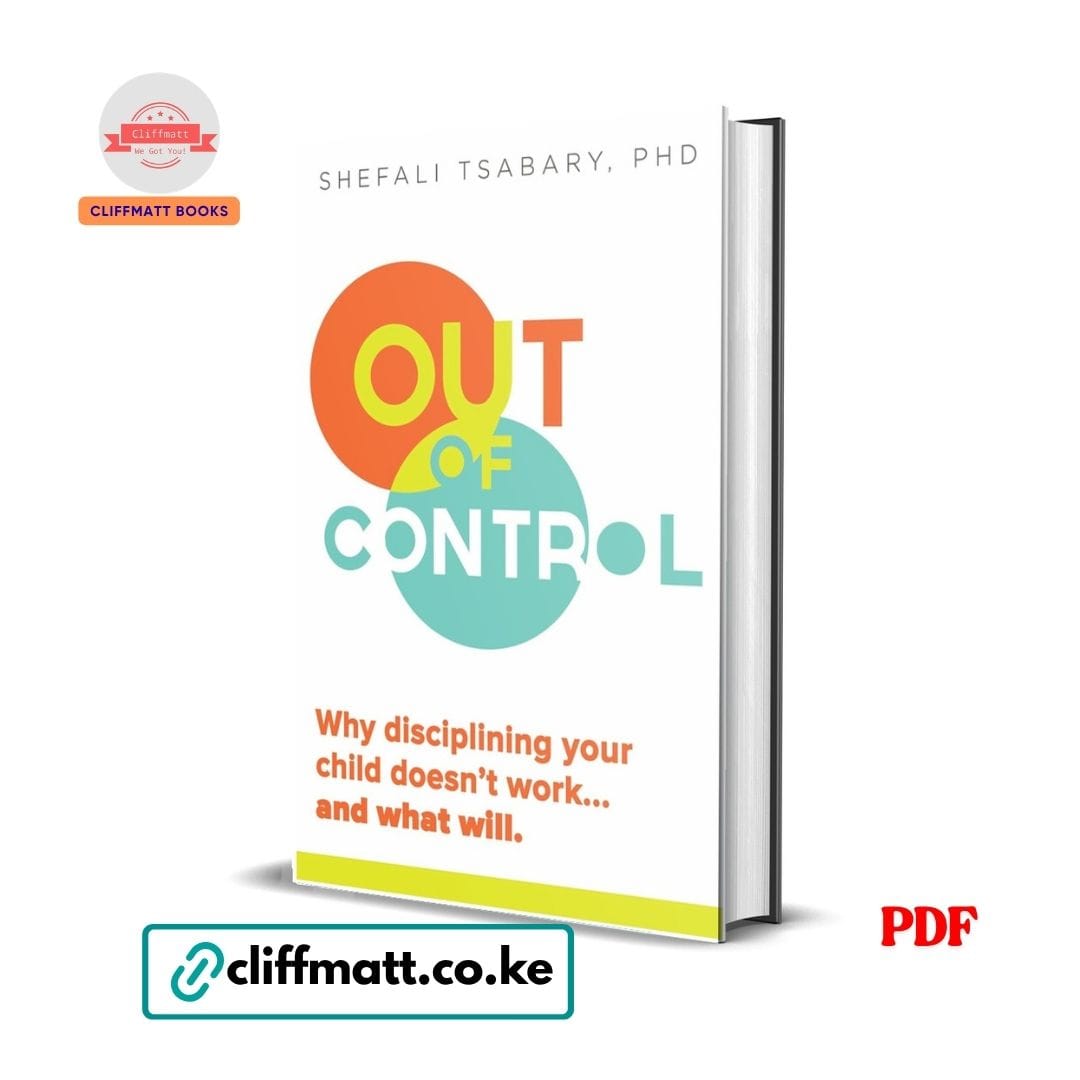
Out of Control: Why Disciplining Your Child Doesn’t Work…and What Will by Shefali Tsabary PhD is the book that fundamentally reframes the parent-child relationship — moving from the conventional model of control, compliance, and consequence to the specific, psychologically grounded, emotionally intelligent approach that produces the genuine cooperation, the genuine inner discipline, and the genuine wellbeing that every parent ultimately wants for their child.
This is not a book that says discipline is wrong. It is a book that says the discipline most parents practice — reactive, ego-driven, externally focused — consistently produces the opposite of what it intends. And it provides the specific alternative that actually works.
What This Book Reveals:
Why Conventional Discipline Fails — The Root Problem:
- The specific psychological mechanism that makes punishment, reward, and consequence-based discipline effective at producing short-term compliance and ineffective at producing long-term self-regulation — the critical distinction that explains why every parent who has successfully got their child to behave in the moment finds themselves having the same battle next week
- Why children’s misbehaviour is almost never simply defiance, laziness, or disrespect — the specific emotional and developmental needs that difficult behaviour is communicating, and why addressing those needs produces cooperation that threatening consequences never can
- The specific ways that a parent’s own unresolved emotional material — their own childhood wounds, their own ego needs, their own anxiety about how their child’s behaviour reflects on them — drives the specific reactive patterns that escalate rather than resolve conflict
- The ego trap — how parents’ desire to be respected, to be obeyed, to be seen as competent, and to produce a well-behaved child as evidence of their good parenting consistently hijacks the specific responses that would actually help their child
- Why most parenting conflicts are not actually about the child’s behaviour — they are about the parent’s internal experience of that behaviour; and why addressing that internal experience is the specific intervention that changes everything
Understanding Your Child — What They Are Actually Communicating:
- The specific developmental framework for understanding why children at different ages behave as they do — the specific cognitive, emotional, and neurological capacities that are and are not present at each developmental stage, and the specific unrealistic expectations that produce parent-child conflict when parents treat children as if they have capacities they do not yet possess
- The behaviour beneath the behaviour — how every challenging behaviour is a communication about an unmet emotional need; the specific translation from “my child is being defiant” to “my child is communicating that they feel unheard, powerless, disconnected, or overwhelmed” — and why that translation produces completely different parental responses
- The specific emotional needs that drive the most challenging childhood behaviours — the need for connection, for autonomy, for competence, for significance — and how understanding those needs transforms the parent’s experience of conflict from personal attack to communication request
- Why connection before correction is not merely a compassionate principle but a neurological one — the specific brain science of how a child who feels connected, safe, and genuinely seen is neurologically capable of the cooperation and self-regulation that a child in a stress response is not
- How children’s emotional development is shaped by the specific quality of parental presence — not the quality of parental discipline — and what that means for the specific investment of parental attention that produces the long-term outcomes parents are ultimately seeking
The Conscious Parent’s Approach — What Actually Works:
- Conscious parenting — Dr. Tsabary’s foundational framework; the specific shift from a child-management approach (focused on controlling the child’s external behaviour) to a relationship-centred approach (focused on building the specific quality of connection within which the child’s inner life can be genuinely understood and genuinely supported)
- Why the conscious parent’s primary work is not on their child but on themselves — the specific self-awareness, the specific emotional regulation, and the specific inner work that produces the specific quality of parental presence that children respond to with cooperation rather than resistance
- The pause — the specific practice of creating a moment between stimulus and response that allows the parent to choose their reaction rather than being driven by it; the specific technique that breaks the reactive cycle that most parent-child conflicts operate within
- Empathic listening in the parent-child relationship — the specific practice of genuinely receiving a child’s emotional experience before attempting to redirect, correct, or solve it; the specific language and the specific posture of genuinely empathic parental listening
- The difference between limits and control — why children genuinely need and benefit from clear, consistent limits, and why those limits are most effective when they emerge from the specific quality of connected, conscious parenting rather than from reactive control
Specific Challenging Behaviours — The Practical Application:
Tantrums and Emotional Dysregulation:
- The specific neuroscience of tantrums — why they are not manipulative performances but the specific neurological storm of a child whose emotional regulation capacity has been overwhelmed; what the child needs in that moment and what they most definitely do not need
- The specific parental response that shortens tantrums and builds emotional regulation capacity — not through permissiveness but through the specific combination of containment, empathy, and non-reactivity that gradually teaches the child’s nervous system to regulate itself
- How the parent’s own emotional response to tantrums — the shame, the frustration, the urgency to stop the scene — consistently amplifies rather than resolves the child’s dysregulation; and the specific internal work that produces the specific calm that actually helps
Defiance and Power Struggles:
- Why power struggles are almost always ego conflicts — both parent and child fighting for the specific experience of winning rather than either of them genuinely focused on the actual situation — and how identifying that dynamic changes what becomes possible
- The specific approach to defiance that preserves the child’s developing autonomy while maintaining the specific limits that their safety and development require; the conscious parenting alternative to the authoritarian demand and the permissive surrender that both produce the same long-term outcome
- How to offer genuine choice within genuine limits — the specific language and the specific structure that gives children the experience of agency and autonomy that their developmental need requires, within the boundaries that their developmental stage makes necessary
Sibling Conflict:
- The specific emotional dynamics that drive sibling conflict — competition for parental attention, the specific injustice of perceived differential treatment, and the normal developmental process of learning to negotiate shared space and shared resources
- How parents inadvertently escalate sibling conflict through the specific patterns of mediation (taking sides, identifying the aggressor, imposing solutions) that feel fair but consistently produce the opposite of what they intend
- The specific conscious parenting approach to sibling conflict that builds genuine relationship between siblings rather than simply ending the immediate argument
Screens and Technology:
- The specific parent-child dynamic around screens and technology — why battles about screen time are almost always about power and connection rather than about screens; how addressing the underlying connection need consistently reduces the specific compulsive quality of children’s technology use
- How to approach the genuinely real concerns about children’s technology use — the specific, evidence-based risks — with the specific consciousness and the specific connection that makes children genuinely receptive to parental guidance rather than simply resentful of parental control
Teenagers — The Specific Challenges of Adolescence:
- Why adolescence amplifies every dynamic in this book — the developmental mandate to individuate, the specific neurological changes that produce risk-taking and emotional intensity, and the specific ways that authoritarian parenting consistently backfires with teenagers in ways that produce the most serious long-term consequences
- The specific approach to teenagers that maintains connection through the developmental storm — the specific communication practices, the specific limit structures, and the specific willingness to evolve the parenting relationship that allows teenagers to become adults in the presence of their parents rather than in opposition to them
- Why teenagers who feel genuinely connected to their parents consistently make better decisions, experience better mental health, and navigate the specific risks of adolescence more successfully than those who do not — and what produces that connection
The Parent’s Inner Work — The Core of the Book:
- Why Out of Control is ultimately not about children but about parents — the specific invitation to every parent who reads it to examine their own unresolved emotional material, their own childhood wounds, and the specific ways those unexamined inner states drive their parenting patterns
- The specific practice of parental self-awareness — not as self-indulgence but as the specific prerequisite for the quality of conscious presence that children need; how a parent who understands their own triggers is a parent who can choose their responses rather than being driven by them
- The generational healing dimension — how the specific inner work of conscious parenting breaks the specific patterns that have been passed down from parent to child, generation to generation; why the parent who does this work is not just improving their relationship with their current child but changing what their child will bring to their own parenting decades hence
- Why conscious parenting is ultimately a spiritual practice — the specific way that the parent-child relationship becomes a mirror for the parent’s own growth; how the specific challenges children present are consistently the specific challenges the parent most needs to face
Why Kenyan Parents Are Buying This Book: Kenya’s parenting culture is deeply shaped by respect for authority, by communal child-rearing, and by the specific expectations of obedience that traditional African family structures have always embedded. Those structures carry genuine wisdom. But they also carry the specific patterns — of reactive control, of shame-based discipline, of the suppression of children’s emotional experience in the name of respect — that produce the specific adult outcomes (emotional suppression, anxiety, compliance without genuine inner authority) that no Kenyan parent ultimately wants for their child.
Out of Control is not a rejection of Kenyan parenting values. It is the most psychologically sophisticated, most compassionate, and most practically effective guide to pursuing the deepest of those values — raising children of genuine character, genuine inner discipline, and genuine emotional health — through the specific approach that actually produces those outcomes.
At Ksh 100, this is world-class child psychology and conscious parenting wisdom accessible to every Kenyan parent.
Who This Book Is For:
- Every Kenyan parent who has found themselves in repeated conflict with their child — and who is willing to consider that something in their own response might be part of the pattern
- Parents of toddlers who want to understand the specific emotional dynamics of early childhood before reactive patterns become entrenched
- Parents of teenagers who are navigating the specific disconnection that adolescence can produce and who want the specific approach that rebuilds rather than further fractures the relationship
- Single parents navigating the specific emotional demands of solo parenting without the specific support of a co-parent
- Couples who disagree about discipline and want a framework that grounds that conversation in genuine child development rather than in competing opinions
- Every reader of Raising an Emotionally Intelligent Child (Gottman), The Yes Brain (Siegel), Building Emotional Intelligence, Dads & Daughters (Dobson), and Praying the Scriptures for Your Children (Berndt) who wants the most psychologically sophisticated and most personally challenging parenting guide to complete their family library
📖 Author: Shefali Tsabary PhD 📄 Format: PDF eBook (instant download via WhatsApp or email) 💰 Price: Ksh 100 only 🚀 Delivery: Instant after M-Pesa payment confirmation
👉 Order now on cliffmatt.co.ke — Pay via M-Pesa, receive your PDF instantly.












Reviews
There are no reviews yet.