
Description
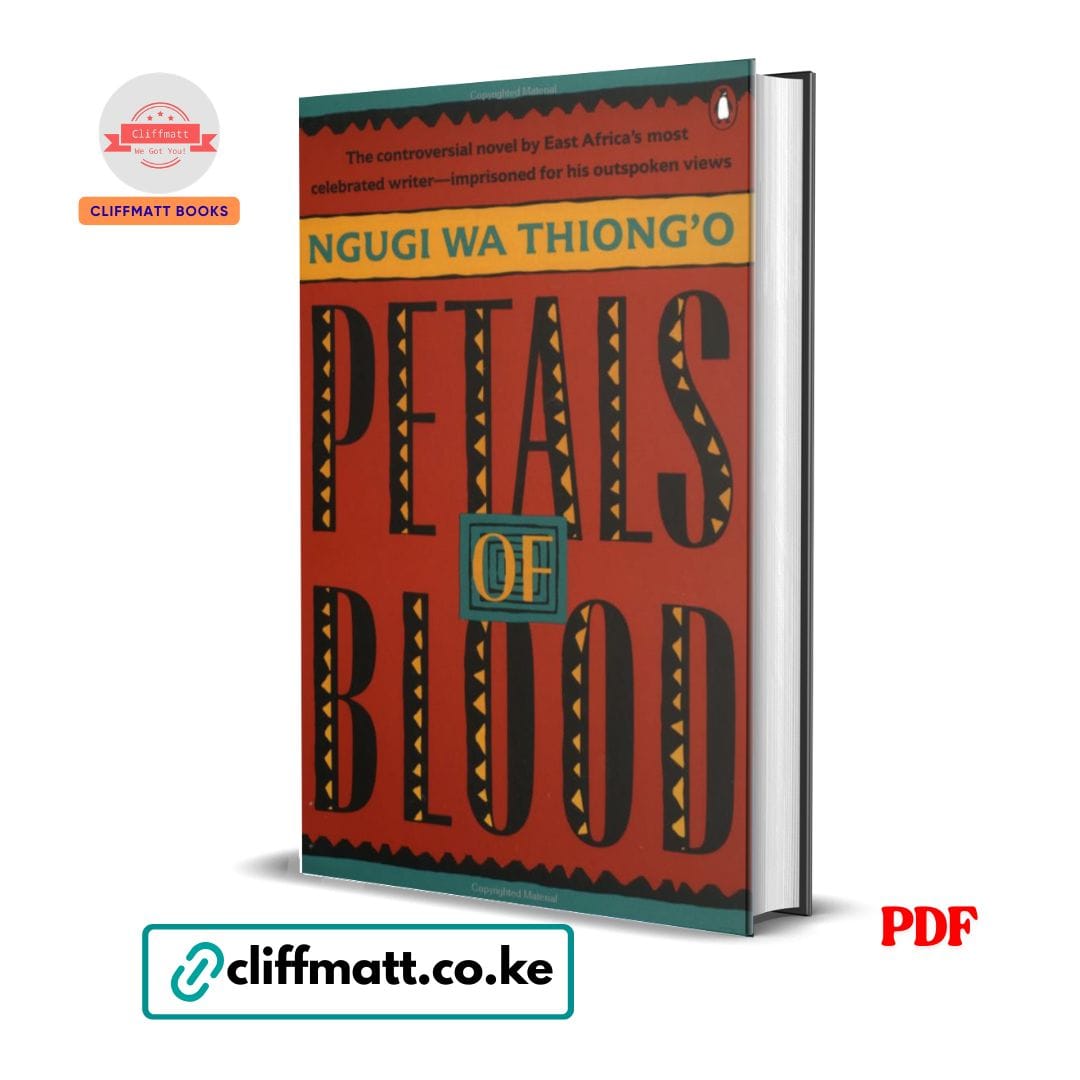
In 1977, Ngũgĩ wa Thiong’o published Petals of Blood. In 1978, the Kenyan government imprisoned him without trial. He spent a year in Kamiti Maximum Security Prison. The novel that caused his imprisonment has never been out of print. It has been studied in universities across the world. It is considered by many critics to be the greatest African novel of the 20th century. And it is the most important book ever written about Kenya — by the most important writer Kenya has ever produced.
Petals of Blood is Ngũgĩ’s most ambitious, most complex, and most fully achieved work — the novel in which his enormous literary gifts and his total commitment to telling the truth about his country come together in a book of extraordinary power. It is a murder mystery, a historical epic, a political indictment, and a love story — all at once, woven into a narrative that moves between present and past, between four protagonists whose lives intersect at the point of crisis, between the specific Kenyan village of Ilmorog and the larger story of a nation that won independence and then watched that independence be stolen by a new elite as rapacious as the colonists it replaced.
You now stock three Ngũgĩ wa Thiong’o titles — the most comprehensive Ngũgĩ collection on any Kenyan digital platform. Available now for only Ksh 100.
A Note Before Reading:
Petals of Blood is adult literary fiction of the highest order — serious, unflinching, and morally complex. It contains sexual scenes, graphic depictions of poverty and exploitation, strong political content, and a sustained critique of both political power and institutional religion in post-independence Kenya. It is not comfortable reading. It was not written to be comfortable. It was written to tell the truth. Every Kenyan who reads it will recognise that truth.
The Story:
Four people are arrested in connection with the murder of three prominent men — directors of a multinational brewery — in the town of Ilmorog. The investigation becomes the frame for a vast, sweeping narrative that moves between the present day and the history of Ilmorog over twelve years — from a forgotten, drought-stricken village to a town transformed by the arrival of development, investment, and all the specific corruptions that accompany them.
The four protagonists — Munira the schoolteacher, Abdulla the shopkeeper with a hidden revolutionary past, Karega the labour organiser, and Wanja the barmaid — are each, in their different ways, products of post-independence Kenya’s specific disappointments. Together their lives tell the complete story of what happened to the generation that was supposed to inherit the freedom that Mau Mau bled for.
What Ngũgĩ reveals through their stories is the specific mechanism of neo-colonial betrayal — how independence became the transfer of exploitation from foreign hands to Kenyan ones; how the educated elite used the rhetoric of development to serve their own accumulation; how the church, the school, and the state each played their roles in domesticating a population that should have been demanding the revolution it was promised.
What Makes Petals of Blood Essential:
The Literary Achievement:
- Why literary critics across the world consider this Ngũgĩ’s masterwork — the specific narrative complexity, the depth of characterisation, the range of the historical and political vision, and the quality of the prose that makes it the fullest expression of his extraordinary gifts
- The structure — the murder mystery frame that gives the novel its forward momentum while the deeper historical and political narrative gives it its weight; how Ngũgĩ manages the movement between timelines and perspectives with the control of a writer at the absolute peak of his powers
- The language — the specific quality of Ngũgĩ’s English in this novel; the way it carries the rhythms, the images, and the specific emotional textures of Gĩkũyũ oral tradition into literary English; why readers who know Kenyan English find something in the prose that readers of other backgrounds can only partially access
The Political Vision:
- The neo-colonialism argument — the specific way Ngũgĩ makes visible the specific mechanisms by which post-independence Kenya reproduced the structures of colonial exploitation with Kenyan faces in the positions previously held by British ones
- The class analysis — who owns the land, who controls the capital, who benefits from development, and whose labour produces the wealth that others accumulate; questions that are as live in 2025 Kenya as they were in 1977
- The betrayal of Mau Mau — the specific historical argument that the fighters who died for independence were betrayed by the politicians who inherited the state; the specific Kenyan wound that Ngũgĩ refuses to let heal over without being honestly examined
- For Kenyan readers: the specific recognition of reading a novel that describes your country from the inside — the specific landscapes, the specific social dynamics, the specific political patterns — with complete honesty; the specific experience of reading a Kenyan writer who loves Kenya enough to tell it the truth about itself
The Characters:
- Munira — the schoolteacher who retreats into religious fundamentalism as a way of avoiding the political and personal responsibilities his life has presented him
- Abdulla — the Mau Mau veteran who fought for freedom and received nothing; whose physical and economic diminishment is Ngũgĩ’s most direct embodiment of the independence generation’s betrayal
- Karega — the young labour organiser who represents the continuing possibility of genuine political consciousness and organised resistance; whose journey is the novel’s most hopeful narrative thread
- Wanja — one of the most complex and most powerful female characters in African fiction; a woman whose specific history of exploitation and survival represents the specific position of Kenyan women within the novel’s political landscape
The Imprisonment — The Proof of the Novel’s Power:
- Why Ngũgĩ’s imprisonment is not incidental biographical information but essential context for understanding what the novel achieved — the Kenyan state recognised the specific threat that honest literary truth poses to illegitimate power; and responded accordingly
- Why the fact of his imprisonment makes Petals of Blood essential reading for every Kenyan who believes that literature matters and that telling the truth about power is an act of courage rather than merely an aesthetic choice
- The specific political courage required to write this novel in Kenya in 1977 — with the Moi government consolidating power and dissent becoming increasingly dangerous — and what that courage means for how we read the book
Why Petals of Blood Completes Cliffmatt’s Ngũgĩ Collection:
You already stock Decolonising the Mind (Ngũgĩ’s political essay on language and cultural decolonisation) and The River Between (his early novel of colonial encounter and cultural conflict). Petals of Blood is the crown of the collection — the fully achieved masterwork in which everything Ngũgĩ has been building toward comes together. Together the three titles give Kenyan readers the complete Ngũgĩ experience: the early fiction, the political theory, and the mature novelistic achievement.
Who This Book Is For:
- Every Kenyan who wants to read the most important novel ever written about their country — by the most important writer their country has ever produced
- University students of African literature, Kenyan history, postcolonial studies, and political science for whom this is essential curriculum
- Kenyan readers who have read Decolonising the Mind and The River Between and want to complete the Ngũgĩ collection with his greatest achievement
- Readers who want to understand post-independence Kenya’s political history through the most powerful imaginative lens available
- Anyone who wants to understand why a government imprisoned a novelist — and what was in the novel that frightened them enough to do it
📖 Author: Ngũgĩ wa Thiong’o 📄 Format: PDF eBook (instant download via WhatsApp or email) 💰 Price: Ksh 100 only 🚀 Delivery: Instant after M-Pesa payment confirmation 👉 Order now on cliffmatt.co.ke — Pay via M-Pesa, receive your PDF instantly.





Reviews
There are no reviews yet.