

Description
The obstacle is not in the way. The obstacle is the way.
This is not motivational rhetoric. It is the specific philosophical insight — drawn from two thousand years of Stoic thought, from the lives of Marcus Aurelius, Theodore Roosevelt, Amelia Earhart, Steve Jobs, and dozens of others who built extraordinary lives precisely through the adversity that was supposed to stop them — that Ryan Holiday has distilled into the most practically applicable, most elegantly argued, and most personally transformative philosophy of resilience available in contemporary non-fiction.
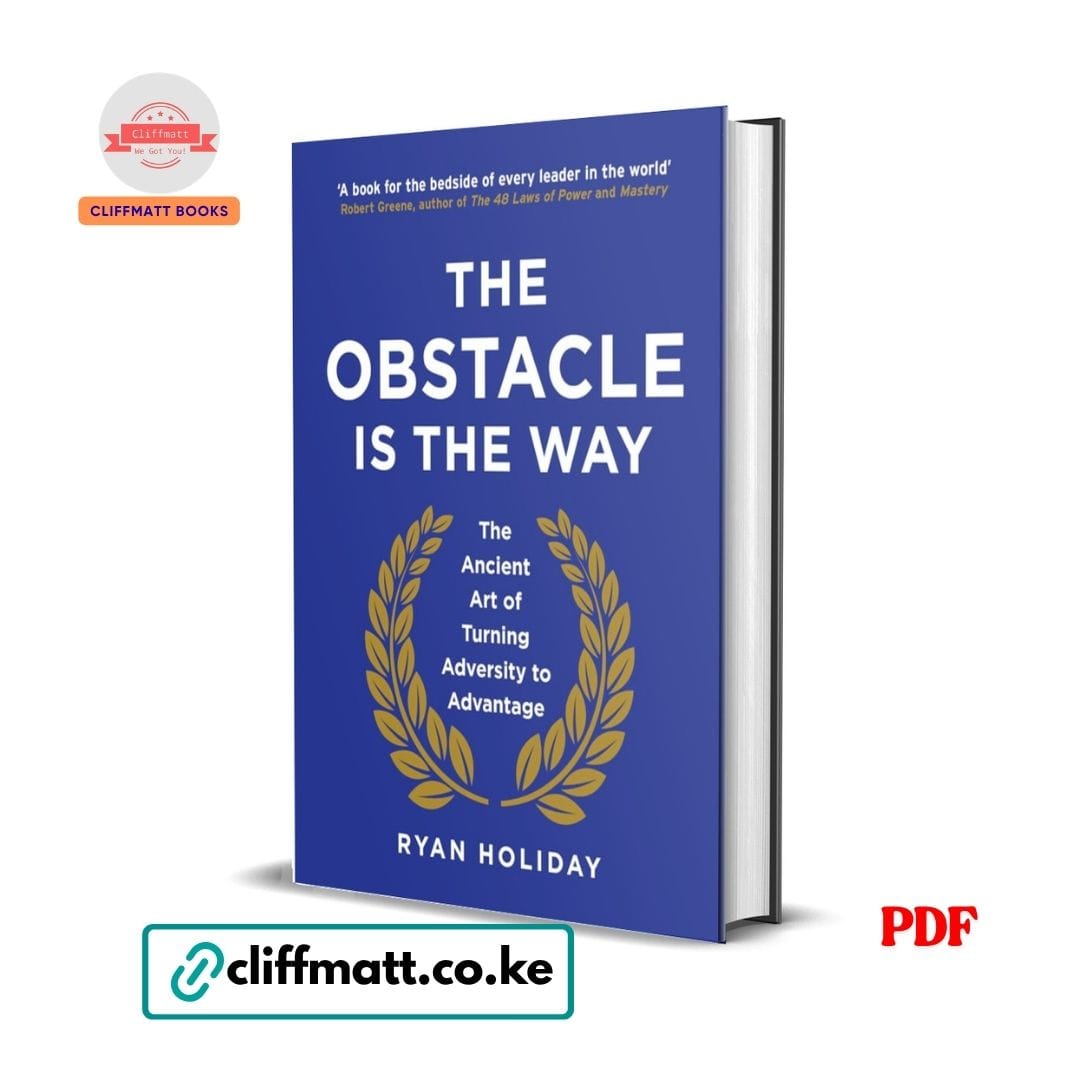
The Obstacle Is the Way: The Ancient Art of Turning Adversity to Advantage by Ryan Holiday — endorsed by Robert Greene as “a book for the bedside of every leader in the world” — takes the foundational Stoic principle attributed to Marcus Aurelius (“The impediment to action advances action. What stands in the way becomes the way.”) and builds from it a complete, practically structured philosophy for transforming every obstacle you will ever face into the specific raw material for the specific growth, the specific resilience, and the specific achievement that comfort and ease can never produce.
This is the book that NFL teams give to their players. That tech CEOs keep by their desks. That coaches, soldiers, athletes, and anyone who faces serious adversity seriously — which is everyone — returns to in their hardest moments. And it is now available to every Kenyan for Ksh 100.
What This Book Covers:
The Stoic Foundation — The Philosophy That Built Empires:
- The specific history of Stoicism — from its founding in Athens through its most celebrated practitioners (Marcus Aurelius, Epictetus, Seneca) to its modern revival as the philosophical framework of choice for the world’s most effective leaders, athletes, and performers
- Why Stoicism — unlike much ancient philosophy — is not primarily a theoretical system but a practical one; the specific tools, the specific mental exercises, and the specific daily practices that the Stoics developed for producing equanimity, effectiveness, and excellence under the specific conditions of uncertainty, adversity, and loss that every human life inevitably encounters
- The specific Stoic insight that changed everything — that the obstacle is not external to the path but constitutive of it; that every difficulty, every setback, and every apparently closed door contains within it the specific opportunity that only difficulty can create; and that the person who understands this does not merely endure adversity but is specifically empowered by it
- Why this ancient philosophy is as urgently relevant to contemporary Kenyan life — where adversity is often not an exception but a daily condition — as it was to the Roman emperors and Greek philosophers who developed it in the specific conditions of war, political instability, and personal loss that make their context recognisable across two millennia
Part One — Perception:
Recognize Your Power:
- The foundational Stoic distinction between what is within our control (our judgments, our responses, our character) and what is outside our control (circumstances, other people’s behaviour, outcomes) — the specific cognitive reframe that is simultaneously the simplest and the most life-changing insight in the entire Stoic tradition
- How the specific quality of your perception of any obstacle — not the obstacle itself — determines whether that obstacle defeats you or propels you; the specific neuroscience of how reframing changes both the emotional experience of difficulty and the cognitive capacity for creative problem-solving in the presence of difficulty
- Why the first and most important work in every obstacle is internal — the specific practice of perceiving clearly and calmly before acting; why the panicked, catastrophising, emotionally reactive response to difficulty consistently produces the specific choices that make difficult situations worse
Steady Your Nerves:
- The Stoic practice of equanimity — not the suppression of emotion but the specific cultivation of the stable, grounded, clear-eyed emotional state from which genuinely effective responses to adversity become possible
- Why composure under pressure is not a personality trait but a specific trainable skill — the specific mental exercises that the Stoics recommended and that modern performance psychology confirms produce the specific emotional regulation that adversity requires
- The specific role of anticipation in Stoic practice — the meditation on potential obstacles before they occur (premeditatio malorum) that reduces their psychological impact when they do; why the leader, the entrepreneur, and the athlete who has rehearsed adversity in their mind consistently performs better when it arrives in their life
Alter Your Perspective:
- How the specific reframe of perspective transforms the specific emotional experience of any obstacle — the practice of seeing difficulty from outside your own immediate emotional reaction; the specific techniques (historical context, comparative perspective, long-term orientation) that shrink the apparent size of any immediate problem
- The view from above — the Stoic exercise of mentally rising above the immediate situation to see it in its full context; how this perspective shift consistently reduces the emotional intensity of the experience and expands the range of creative responses available
- Why the specific question “What is this obstacle preparing me for?” is one of the most powerful reframes available to anyone facing difficulty — and why the historical evidence from the lives in this book consistently validates its use
Is It Up to You?:
- The specific discipline of identifying what is and is not within your control in any difficult situation — and the specific liberation of releasing everything outside your control while focusing complete energy on everything within it
- Why the attempt to control what cannot be controlled is the specific source of most human misery — and why the specific practice of releasing that attempt is simultaneously the most difficult and the most freeing act available to any person facing adversity
- The dichotomy of control applied to specific Kenyan contexts — the economic circumstances you cannot change, the political environment you did not create, the family history you did not choose — and the specific empowerment of focusing exclusively on the specific responses and choices that are genuinely yours
Part Two — Action:
Get Moving:
- The Stoic emphasis on action as the specific antidote to the paralysis that adversity most consistently produces — the specific practice of beginning, of doing the next available thing, even when the full path forward is not visible
- Why momentum is the specific quality that separates people who eventually overcome obstacles from those who are permanently stopped by them; how the specific small action, consistently taken in the direction of the goal, compounds into the specific trajectory that no single dramatic effort ever produces
- The Iterate and Improve approach — how to use each failed attempt not as evidence of inadequacy but as the specific data that refines the next attempt; the specific learning orientation toward failure that produces eventual success from the same circumstances that produce permanent defeat in those who lack it
Practice Persistence:
- The Stoic virtue of perseverance — the specific quality that is both the most common quality of extraordinary achievers and the most consistently undervalued quality in contemporary culture’s preference for talent, intelligence, and luck
- Why persistence is not simply continuing to try the same thing repeatedly — it is the specific combination of relentless forward movement and the creative flexibility to try different approaches when the current one is not working; the specific difference between stubborn repetition and disciplined persistence
- The historical examples Holiday draws — Theodore Roosevelt’s specific response to his physical weakness, Thomas Edison’s specific response to repeated failure, Ulysses Grant’s specific response to military defeat — and what each teaches about the specific quality of persistence that produces eventual extraordinary outcomes
Iterate:
- How every attempt — whether it succeeds or fails — contains the specific information needed for the next attempt; the specific practice of extracting maximum learning from every obstacle encountered
- The specific discipline of failing forward — using failure as data rather than verdict; the specific difference in response to failure between those who eventually succeed and those who remain permanently stopped
Part Three — Will:
Build Your Inner Citadel:
- The most profound section of the book — the Stoic concept of the inner citadel (the fortress of the self that no external adversity can breach); the specific cultivation of the inner resources — character, philosophical grounding, relationships, physical vitality — that make a person genuinely unconquerable regardless of external circumstances
- Why the inner citadel is not built in crisis but in the specific ordinary days of disciplined practice, of chosen difficulty, of the specific daily habits that build the specific inner strength that adversity eventually tests
- The specific practices that build the inner citadel — voluntary discomfort (cold, hunger, physical challenge), the regular contemplation of mortality, the deliberate cultivation of gratitude, and the specific philosophical reading that provides the mental framework for equanimity under any condition
Anticipate, Accept, and Amor Fati:
- Amor fati — the Stoic concept of loving one’s fate; not resigned acceptance of whatever happens but the specific active embrace of one’s circumstances as the specific raw material of one’s own growth and greatness
- The specific practice of negative visualisation — regularly contemplating what you could lose, what could go wrong, and how you would respond; how this practice produces both increased gratitude for present goods and reduced psychological devastation when those goods are lost
- Why the Stoics — and Holiday’s historical examples — consistently demonstrate that the specific quality of how one responds to fate is more determinative of the quality of one’s life than the specific content of what fate delivers
Love Everything That Happens:
- The culminating philosophical insight of the book — that the specific disposition of genuine acceptance of, and even gratitude for, every experience (including the worst) is not naïve or passive but the specific orientation of the most effective, most resilient, and most ultimately successful people across history
- Why the specific posture of “this happened for me, not to me” — far from being a platitude — is a genuine philosophical position with specific psychological, neurological, and practical evidence for its transformative effects
- How the Stoic tradition and the Kenyan Christian tradition intersect at exactly this point — the specific theological grounding of “all things work together for good” (Romans 8:28) aligning precisely with the Stoic philosophical position that the obstacle is the way
Why Kenyan Achievers Are Buying This Book: Kenya knows adversity. Its most extraordinary achievers — its marathon runners who trained on unpaved roads, its entrepreneurs who built businesses in environments that discouraged them, its professionals who achieved international excellence from starting points that made that excellence improbable — have consistently embodied exactly the Stoic philosophy this book teaches. The Obstacle Is the Way gives every Kenyan the specific philosophical framework and the specific historical evidence that names, validates, and systematises what Kenya’s greatest achievers have always done.
At Ksh 100, this is two thousand years of Stoic wisdom in the most readable, most practically applied, and most elegantly written form available anywhere.
Who This Book Is For:
- Every Kenyan who is currently facing a significant obstacle — in career, in business, in relationships, in health, or in any area of life — and who wants the most powerful philosophical framework available for transforming that obstacle into advantage
- Leaders and entrepreneurs who want the most practically applicable resilience philosophy for navigating the specific adversity that ambitious goals always produce
- Athletes and performers who want the specific mental framework that the world’s most resilient competitors have used to perform under the specific pressure of high stakes and high adversity
- Students who are facing the specific obstacles of competitive examinations, limited resources, or discouraging circumstances — and who want the specific mindset that consistently produces extraordinary outcomes from apparently unpromising starting points
- Every reader of Grit (Duckworth), Daily Self-Discipline (Edwards), Make Your Bed (McRaven), Ego Is the Enemy (Holiday’s companion volume), and The Greatness Guide (Sharma) who wants the most philosophically grounded and most historically rich resilience framework to complete their performance library
📖 Author: Ryan Holiday 📄 Format: PDF eBook (instant download via WhatsApp or email) 💰 Price: Ksh 100 only 🚀 Delivery: Instant after M-Pesa payment confirmation
👉 Order now on cliffmatt.co.ke — Pay via M-Pesa, receive your PDF instantly.









Reviews
There are no reviews yet.