


Description
Your brain is being overwhelmed. And it is not your fault.
The human brain evolved over hundreds of thousands of years in an environment where the specific amount of information encountered in a single day was a fraction of what the specific modern Kenyan professional now encounters before breakfast. The specific emails, the specific WhatsApp messages, the specific news alerts, the specific social media feeds, the specific work notifications, the specific family group chats, and the specific competing demands of every area of a fully connected modern life produce a specific cognitive load that the specific architecture of the human brain was never designed to manage — and the specific result is the specific mental exhaustion, the specific decision fatigue, the specific forgetfulness, and the specific overwhelming sense of being perpetually behind that the specific most capable and the specific most conscientious people consistently experience most acutely.
Daniel J. Levitin — neuroscientist, cognitive psychologist, New York Times bestselling author of This Is Your Brain on Music, and one of the most accessible and most rigorously grounded science communicators of his generation — spent years applying the specific findings of neuroscience, cognitive psychology, and organisational science to the specific most practically urgent question facing every modern professional: how do you think straight, decide well, and live deliberately when the world is producing more information than your brain can possibly process?
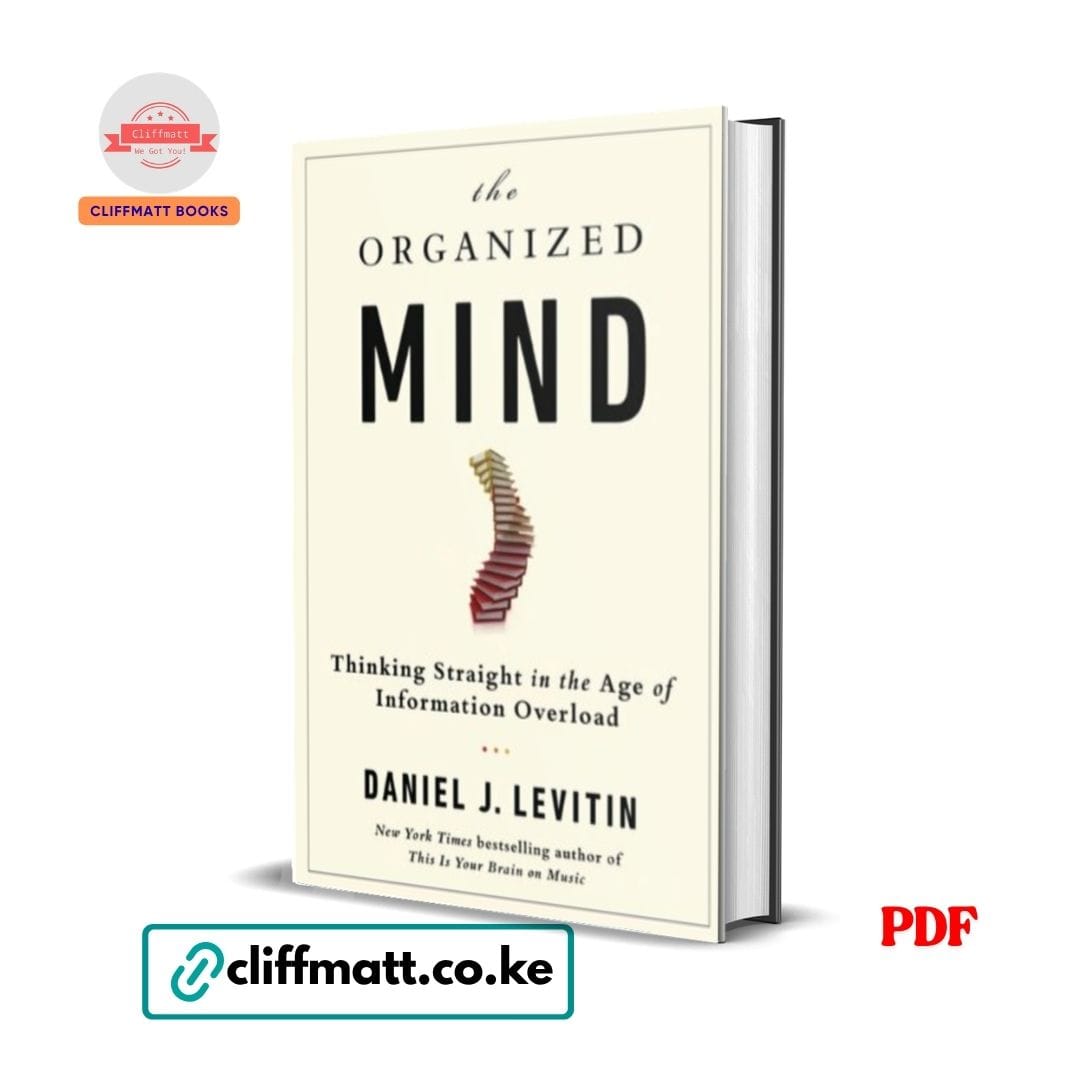
The Organized Mind: Thinking Straight in the Age of Information Overload is his answer — not a productivity hack collection, not a minimalist lifestyle manifesto, but the specific, deeply researched, immediately practically applicable science of how the specific organised mind actually works and how to build the specific external systems, the specific daily habits, and the specific decision-making frameworks that allow the specific human brain to do what it does best rather than what it was never designed to do at all.
At Ksh 100, the most scientifically grounded guide to thinking clearly in the age of distraction is available to every Kenyan.
What This Book Covers:
The Foundation — How Your Brain Actually Works:
- The specific neuroscience of attention — the particular finding that the specific human brain has two primary modes of attention: the specific task-positive network (engaged when you are focused on a specific external task) and the specific default mode network (engaged when your mind is wandering, daydreaming, and making the specific associative connections that produce insight and creativity); why the specific modern information environment, by constantly demanding task-positive attention, is systematically suppressing the specific default mode processing that produces the specific most valuable cognitive outputs available
- The specific cognitive load problem — the particular concept of working memory (the specific mental workspace where the specific brain holds and manipulates the specific information it is currently processing) and its specific, severely limited capacity; the particular finding that the specific human working memory can hold approximately four chunks of information at any given time; why the specific world that is constantly adding new chunks faster than the specific brain can process the existing ones produces the specific cognitive overload that most modern professionals experience as their permanent baseline rather than an occasional exceptional state
- The specific attentional filter — the particular brain mechanism (centred in the prefrontal cortex) that determines what specific information gets promoted from the specific sensory environment into the specific conscious awareness; how the specific modern information environment has compromised this filter by producing the specific continuous stream of novel, emotionally charged, and socially relevant stimuli that the specific attentional filter is biologically calibrated to prioritise above the specific sustained, patient attention that the specific deepest thinking requires
- The specific cost of task-switching — the particular neuroscience finding that the specific human brain does not actually multitask but switches rapidly between tasks, and that each specific switch imposes a specific cognitive cost (the particular time and energy required to disengage from one task and fully re-engage with another) that accumulates throughout the specific working day into the specific substantial productivity loss that research consistently quantifies as equivalent to losing ten or more IQ points; why the specific Kenyan professional who prides themselves on handling multiple tasks simultaneously is not demonstrating exceptional capability but consistently producing worse outcomes than the specific professional who handles each task sequentially with full attention
Organising the Home — The External Mind:
- The specific “offloading” principle — Levitin’s foundational practical insight: that the specific most powerful thing you can do for your specific overwhelmed brain is to move as much as possible out of it and into the specific reliable external systems that hold information without consuming the specific limited cognitive resources that your brain most needs for the specific thinking that external systems cannot do; the particular application of this principle to the specific home environment
- The specific designated place system — the particular neuroscience case for the specific practice of having a specific designated place for every specific object in your home; why the specific brain that knows where everything is and can find everything without searching is the specific brain that has the specific most cognitive resources available for the specific thinking that matters; how the specific few minutes per day required to maintain the specific designated place system are a far better investment than the specific accumulated minutes per day that the specific alternative (searching for things) costs
- The specific home filing system — how to organise the specific physical and digital documents of a household in the specific way that makes retrieval effortless and maintains the specific minimal cognitive overhead that household administration should require; the particular categories, the specific naming conventions, and the specific physical and digital organisation principles that Levitin recommends
- The specific junk drawer principle — the particular counterintuitive argument that a single, well-defined junk drawer (or its digital equivalent) is not a failure of organisation but a specific feature of good organisation; how the specific designated miscellaneous space reduces the specific cognitive cost of deciding where to put things that genuinely don’t belong anywhere specific
Organising Social Life — Managing Relationships in the Information Age:
- The specific social brain — the particular neuroscience of the human brain as a specifically social organ; the particular finding that the specific human cortex evolved primarily to manage the specific complexity of human social relationships rather than to navigate physical environments or solve abstract problems; why the specific social information (who said what, who did what, who owes what to whom) is the specific type of information that the specific human brain most naturally and most powerfully processes
- The specific social media cognitive cost — the particular finding that the specific always-on social connectivity of modern digital life imposes a specific and measurable cognitive cost by keeping the specific social brain in a state of continuous partial social engagement that consumes the specific cognitive resources that the specific task at hand most needs; why the specific Kenyan professional who checks WhatsApp between every paragraph of serious work is not staying connected but continuously compromising the specific quality of the specific work they are doing between checks
- The specific relationship organisation — how to manage the specific administrative complexity of a full social and professional life (the specific birthdays, the specific commitments, the specific follow-ups, and the specific relationship maintenance that genuine human connection requires) in the specific way that makes relationship care a joy rather than a source of the specific guilt and the specific dropped-ball anxiety that most busy people experience as their permanent relational background noise
- The specific email and messaging management — the particular neuroscience-backed strategies for managing the specific email and messaging load that the specific modern professional carries; the specific inbox zero approaches, the specific batch-processing protocols, and the specific response-time management practices that prevent the specific continuous email checking that is one of the most reliably productivity-destroying habits in the specific modern professional’s repertoire
Organising Work — The Professional Mind:
Decision Making:
- The specific decision fatigue — the particular finding that the specific quality of human decision-making deteriorates measurably as the specific number of decisions made in a day increases; the particular evidence from studies of judges, doctors, and executives showing that the specific decisions made later in the day are consistently worse than the specific decisions made earlier, not because the specific person has become less intelligent but because the specific neural resource of deliberate decision-making is genuinely finite and genuinely depletable
- The specific decision-offloading strategies — how to reduce the specific number of decisions your specific brain must make daily by the specific use of pre-commitment (deciding in advance what you will eat, wear, or do in specific recurring situations), the specific use of habits (automating the specific recurring decisions that don’t require fresh deliberation each time), and the specific use of checklists and systems that move the specific decision from the specific overwhelmed prefrontal cortex to the specific reliable external system
- The specific decision hierarchy — how to categorise the specific decisions facing you by the specific combination of reversibility and importance that determines how much deliberate attention each deserves; the particular insight that the specific most damaging decision-making error is applying the specific same level of deliberate attention to decisions that differ vastly in their importance and reversibility, exhausting the specific decision-making resource on the specific trivial before it is most needed for the specific consequential
Organising Time:
- The specific time perception neuroscience — how the specific human brain perceives and misperceives time; the particular finding that the specific brain’s time estimation is consistently distorted by the specific emotional state, the specific task engagement, and the specific cognitive load of the moment; why the specific person in a state of flow consistently underestimates how much time has passed and the specific person in a state of anxiety consistently overestimates it; the specific implications for realistic scheduling and time management
- The specific time-blocking principles — the particular neuroscience case for the specific practice of scheduling specific types of work at the specific times of day when the specific brain is most suited to them; how to align the specific creative and analytical demands of your specific work with the specific natural rhythms of the specific brain’s daily performance cycle; the specific two-peak model that identifies the specific best times for the specific different types of thinking that the specific organised professional’s day requires
- The specific meeting cost — the particular calculation of the specific true cognitive cost of meetings; why the specific interrupted professional who attends four one-hour meetings distributed across the working day is not losing four hours but the specific entire day’s worth of the specific deep work that the specific four interruptions prevent; the specific meeting organisation principles that Levitin recommends for preserving the specific cognitive continuity that the specific best professional work requires
Organising Information:
- The specific filing and retrieval system for professional information — how to organise the specific documents, the specific notes, the specific research, and the specific reference material of a professional life in the specific way that makes retrieval fast, reliable, and cognitively effortless; the particular naming conventions, the specific categorical structures, and the specific tagging systems that the specific neuroscience of memory and retrieval most supports
- The specific note-taking neuroscience — the particular finding that the specific act of writing notes by hand produces significantly better retention and deeper processing than the specific act of typing them; the specific application of this finding to the specific Kenyan student, the specific Kenyan professional in meetings, and the specific Kenyan learner who wants to maximise the specific return on every specific learning investment they make
- The specific search versus sort cognitive trade-off — the particular neuroscience insight that the specific brain is better at searching for specific items than at sorting items into categories; how this specific finding supports the specific “everything in one place with powerful search” approach to digital information organisation over the specific elaborate categorical folder system that most people build and then consistently fail to maintain
Organising the Business World — Systems for Teams:
- The specific organisational neuroscience — how the specific findings of cognitive neuroscience apply to the specific design of organisations, teams, and business processes; the particular application to the specific Kenyan business owner or manager who wants to build the specific organisational systems that allow their specific team to perform at its collective best rather than being collectively overwhelmed by the specific information management challenges that most Kenyan businesses have never explicitly addressed
- The specific checklists for professionals — Levitin’s strong endorsement of the specific checklist as the specific most powerful cognitive offloading tool available to any professional whose work involves recurring sequences of specific steps; the particular evidence from aviation, surgery, and other high-stakes professional contexts for the specific error-reduction and the specific performance-improvement that the specific disciplined use of checklists consistently produces; how to design and implement the specific most useful checklists for the specific recurring tasks of the specific Kenyan professional context
- The specific delegation neuroscience — the particular cognitive science case for the specific practice of genuine delegation (not the specific pseudo-delegation that retains all decision-making while offloading only execution, which produces the specific maximum cognitive load with the specific minimum productivity benefit) but the specific genuine transfer of both responsibility and authority that allows the specific delegating professional’s cognitive resources to focus on the specific work that their specific level most requires
The Organised Mind in Practice — Putting It All Together:
- The specific daily organisation routine — the particular morning and evening practices that Levitin recommends for maintaining the specific externally organised environment that keeps the specific internal cognitive resources maximally available; the specific five-minute daily reviews, the specific weekly planning practices, and the specific monthly assessment habits that prevent the specific gradual accumulation of cognitive clutter that most organised systems eventually experience
- The specific technology management — how to use the specific digital tools of the modern professional’s life (smartphones, laptops, apps, notifications) in the specific way that serves cognitive organisation rather than compromising it; the specific notification management, the specific app organisation, and the specific digital minimalism practices that the specific neuroscience most supports
- The specific sleep and cognitive performance connection — a return to the specific most foundational cognitive organisation practice of all: the specific adequate, high-quality sleep that the specific organised mind most fundamentally requires; the particular neuroscience of sleep’s role in the specific memory consolidation, the specific neural cleanup, and the specific cognitive restoration that make the specific organised mind’s performance possible
Why Kenyan Professionals Are Buying This Book:
The specific Kenyan professional of 2025 is managing more information, more communication channels, more competing demands, and more complex decisions than any previous generation of Kenyan professionals has faced. The specific smartphone that never leaves the hand, the specific WhatsApp groups that never stop notifying, and the specific always-on work culture that the specific digital connectivity of modern Kenyan professional life has produced has created the specific cognitive environment that this book was written to address.
The Organized Mind gives every Kenyan professional the specific neuroscience they need to understand why they are overwhelmed and the specific practical systems they need to do something about it — not by working harder or by eliminating legitimate responsibilities but by working with their brain’s specific architecture rather than against it.
At Ksh 100, the most scientifically grounded guide to thinking clearly in the age of information overload.
Who This Book Is For:
- Every Kenyan professional who feels perpetually overwhelmed, perpetually behind, and perpetually unable to give their best thinking to their most important work in the specific information-saturated environment of the modern Kenyan workplace
- Kenyan students who want the specific neuroscience-backed study, note-taking, and information management practices that produce the specific most efficient and most durable learning available
- Kenyan managers, executives, and business owners who want to design the specific organisational systems and the specific team environments that allow their specific people to perform at their collective cognitive best
- Kenyan parents who want to understand and manage the specific cognitive demands that the specific information environment is placing on their children and who want the specific practical guidance for building the specific organised home environment that supports the specific clear thinking their family most needs
- Every reader of Atomic Habits (Clear), Essentialism (McKeown), Quiet (Cain), Own the Day, Own Your Life (Marcus), and Deep Work who wants the most rigorously neuroscience-grounded guide to thinking clearly and performing consistently in the specific age of information overload to complete their cognitive performance library
📖 Author: Daniel J. Levitin
📄 Format: PDF eBook (instant download via WhatsApp or email)
💰 Price: Ksh 100 only
🚀 Delivery: Instant after M-Pesa payment confirmation
👉 Order now on cliffmatt.co.ke — Pay via M-Pesa, receive your PDF instantly.














Reviews
There are no reviews yet.