
Description
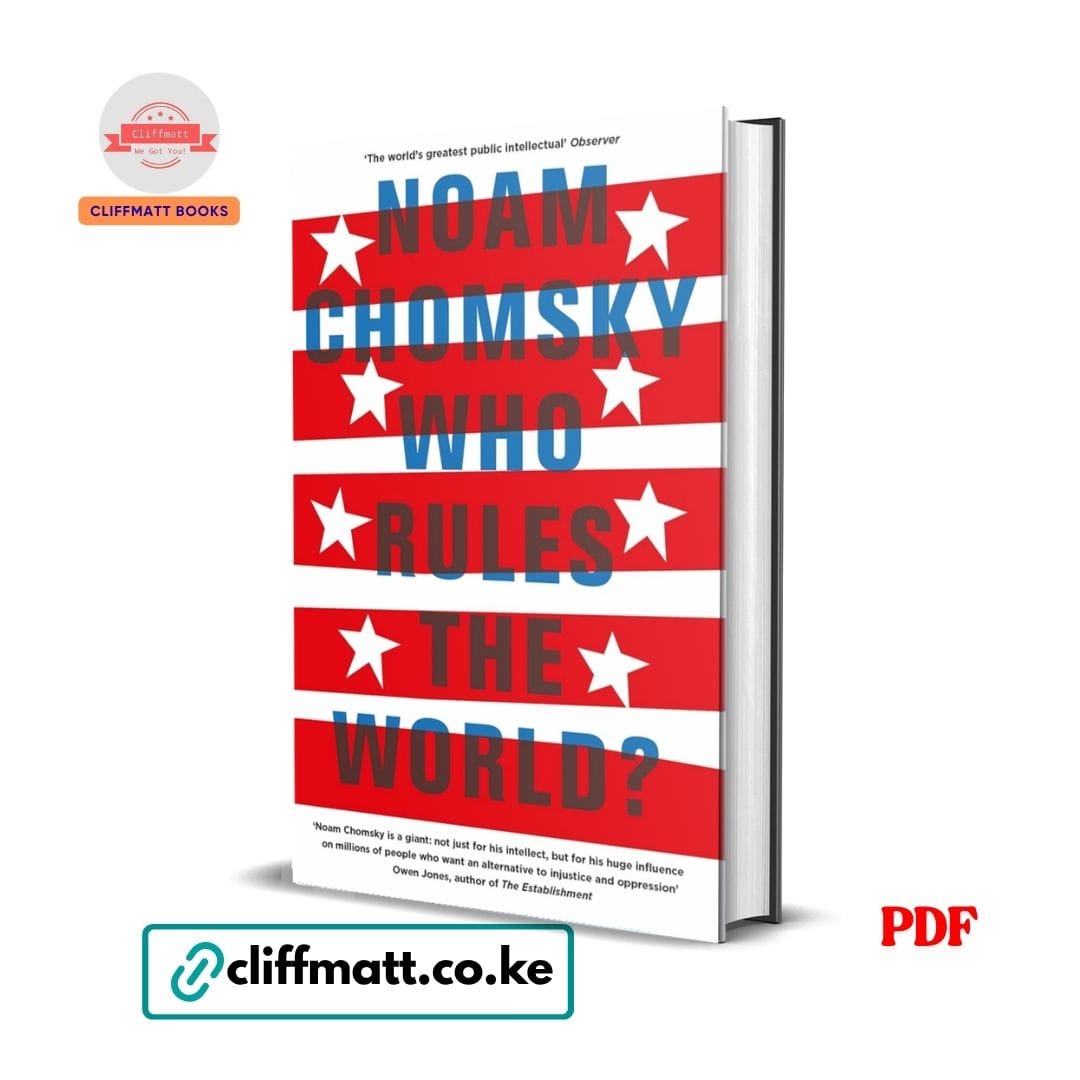
The question is simple. The answer is not. And the person asking it — Noam Chomsky, Institute Professor Emeritus at MIT, described by the Observer as the world’s greatest public intellectual, and by his critics as the most dangerous intellectual in the Western world — has spent more than six decades building the most comprehensive, most rigorously documented, and most consistently challenging answer to that question in the history of political thought.
Who Rules the World? is Chomsky at his most expansive, most current, and most directly addressed to the specific shape of global power in the twenty-first century. It draws on decades of research, on thousands of primary sources, and on the specific forensic intelligence of a man who has read everything, forgotten nothing, and whose conclusions — however uncomfortable — consistently prove, with the passage of time, to have been correct.
This is not a conspiracy theory book. Chomsky does not deal in hidden hands and secret cabals. He deals in documented policy, in declassified government papers, in the public record of decisions made by identifiable institutions and named individuals — a record that, when examined with the rigour and the honesty that Chomsky brings to it, reveals a picture of power that is more disturbing than any conspiracy precisely because it operates so openly, so consistently, and with so little accountability.
For every Kenyan who has ever wondered why the world works the way it does — why certain conflicts receive global attention and others do not, why certain nations are held to certain standards and others are not, why the rhetoric of freedom and democracy so consistently produces outcomes that serve neither — this is the book.
“Noam Chomsky is a giant: not just for his intellect, but for his huge influence on millions of people who want an alternative to injustice and oppression” — Owen Jones, author of The Establishment
What This Book Covers:
The Architecture of Global Power:
- Who actually rules the world in the twenty-first century — not in the conspiratorial sense of a secret controlling group, but in the precise, documented sense of which institutions, which governments, and which concentrations of economic and military power make the decisions that determine the shape of everyone else’s lives
- The relationship between American global dominance and the specific foreign policy doctrine that has governed it across administrations, across parties, and across decades — with a consistency that renders the specific ideology of individual presidents largely irrelevant to the outcomes produced
- How the rules-based international order is constructed, maintained, and applied — specifically, why the rules apply differently to different actors, why the most powerful nations consistently exempt themselves from the standards they impose on others, and why that asymmetry is the defining feature of the current international system rather than an occasional aberration from it
- The role of international institutions — the United Nations, the World Bank, the IMF, the WTO — in either challenging or reinforcing the existing distribution of global power; and why Chomsky’s answer to that question is consistently more complicated and more honest than either the institutions’ own self-presentation or their most vocal critics allow
- The specific ways that global power is exercised not through military force alone but through economic coercion, through the control of international financial systems, through the specific leverage of debt and conditionality — mechanisms that are directly relevant to Kenya’s own relationship with international financial institutions and bilateral creditors
American Power — Doctrine and Reality:
- The specific gap between American foreign policy rhetoric — freedom, democracy, human rights, self-determination — and the documented reality of American foreign policy decisions across the post-war period; why that gap exists, who benefits from maintaining it, and how it is sustained through the specific management of public information
- The doctrine of humanitarian intervention — how the decision to intervene militarily in some conflicts and not others correlates not with the severity of the humanitarian crisis but with the strategic and economic interests of the intervening power; the specific cases that most clearly demonstrate this correlation and what they reveal about how intervention decisions are actually made
- The War on Terror as a political and military framework — how it has been deployed, what it has produced, whom it has served, and what the documented record of its application reveals about its actual purposes relative to its stated ones
- Nuclear weapons and the specific irrationality of the current nuclear order — the extraordinary danger of a world in which the most powerful nations maintain the capacity for civilisational destruction, the specific near-misses that have brought humanity closer to nuclear catastrophe than most people know, and the structural reasons why the existing order consistently fails to address that danger seriously
- Climate change as a governance failure — the specific documented record of the most powerful nations’ response to the most serious long-term threat to human civilisation, and what that record reveals about the decision-making priorities of the institutions that are claiming to govern in the common interest
The Middle East — The World’s Most Documented Power Contest:
- The Israel-Palestine conflict — examined with the specific documentary rigour that Chomsky has applied to it across decades; the gap between the international legal and human rights consensus and the actual policy positions of the most powerful actors; what the specific management of that gap reveals about how global power operates
- The specific role of oil, of strategic geography, and of the particular history of Western involvement in the Middle East in shaping the conflicts, the alliances, and the humanitarian disasters of the region — not as a simplistic resource-war narrative but as a carefully documented account of how stated and actual policy motivations consistently diverge
- Iran, Saudi Arabia, and the specific logic of American alliance choices in the region — why the proclaimed values of the foreign policy establishment bear so little relationship to the specific partners it chooses and the specific enemies it designates
- The Arab Spring — what happened, why it was received so differently by different external powers, and what the specific pattern of those responses reveals about the relationship between democratic rhetoric and the actual response to democratic movements when they threaten existing power arrangements
China, Russia, and the Emerging World Order:
- The specific nature of the competition between the United States and China — what it is actually about, what the documentary record of each power’s behaviour reveals about their respective claims and intentions, and why the framing of that competition as a contest between democracy and authoritarianism misrepresents both the nature of the competition and the character of the competitors
- NATO expansion and the specific documented history of the agreements and understandings — made and broken — that have shaped the current European security crisis; what Chomsky identifies as the legitimate security concerns beneath the illegitimate actions, and why both need to be held simultaneously to understand what is actually happening
- The rise of the Global South — the specific ways that countries across Africa, Asia, and Latin America are navigating the competition between established and emerging powers, and what that navigation reveals about the actual options available to countries in Kenya’s position in the existing international order
- Why the post-war international order is in genuine crisis — the specific structural forces that are producing its destabilisation, and why the outcome of that destabilisation is not predetermined in the direction of either greater justice or greater catastrophe but depends on decisions, including decisions made by citizens and their governments, that are still to be made
Media, Propaganda, and the Management of Public Consent:
- The manufacturing of consent — Chomsky’s foundational argument about how advanced industrial democracies manage public opinion without the crude censorship of authoritarian states; through the specific structuring of what information is available, what perspectives are represented, and what questions are treated as serious versus what questions are treated as marginal
- How the media landscape — including social media — shapes what populations believe about global events not primarily through deliberate lying but through the specific selection of what to cover, how to frame it, whose voices to include, and what context to provide or withhold
- The specific mechanisms through which powerful interests shape the information environment — through ownership, through advertising dependence, through the cultivation of access, through the specific professional norms that cause journalists to internalise the perspectives of the institutions they cover
- Why media literacy — the specific ability to read news critically, to identify framing choices, to seek out suppressed perspectives, and to evaluate official claims against the documentary record — is one of the most important intellectual skills available to any citizen of a country that is subject to the decisions of global power
Why This Matters for Kenya:
- Kenya’s specific position in the global power order — as a country that sits at the intersection of American, Chinese, and Gulf strategic interests, that carries a significant debt load to international financial institutions and bilateral creditors, and that is building its own democratic institutions in an international environment that frequently rewards different behaviour than it preaches
- The IMF and World Bank in Kenya — examined through Chomsky’s framework of the actual function of international financial institutions relative to their stated purposes; what that framework reveals about the conditionality attached to Kenyan borrowing and the structural adjustment logic that has shaped Kenyan economic policy
- Why Kenyan citizens who understand how global power actually operates are better equipped to evaluate the foreign policy choices of their own government, the conditions attached to their country’s international borrowing, and the specific interests being served by the external actors who present themselves as Kenya’s partners and friends
- The specific relevance of Chomsky’s media analysis to the Kenyan information environment — how the same mechanisms of consent manufacturing that he documents in Western media operate, with local variations, in Kenya’s own media landscape
Why Kenyan Readers Are Buying This Book: Kenya is a country that lives at the intersection of global powers — borrowing from them, trading with them, hosting their military bases, absorbing their aid and its conditions, and navigating the specific pressures they apply to its political and economic choices. Every Kenyan who wants to understand that environment honestly — not through the self-presentation of the powerful but through the documented record of their actual behaviour — needs Chomsky.
At Ksh 100, this is the most rigorous, most documented, and most challenging guide to global power available to any Kenyan reader.
Who This Book Is For:
- Kenyan students of political science, international relations, economics, law, journalism, and history who want the most rigorously documented challenge to mainstream international relations theory available
- Kenyan journalists, civil society advocates, and public intellectuals who want the analytical framework and the documentary evidence to ask harder questions of both domestic and international power
- Engaged Kenyan citizens who have sensed that the world does not work the way its official explanations suggest and who want the most credible, most documented account of how it actually does
- Kenyan policymakers and diplomats who want to understand the actual interests and actual behaviour of the international actors they are engaging — rather than their self-presentation
- Every reader of Dead Aid (Moyo), The New Confessions of an Economic Hit Man (Perkins), How China Escaped the Poverty Trap (Ang), The Future of Capitalism (Collier), and Kenya Between Hope and Despair (Branch) who wants the most globally comprehensive critical framework to complete their understanding of power, development, and Africa’s place in the world order
📖 Author: Noam Chomsky 📄 Format: PDF eBook (instant download via WhatsApp or email) 💰 Price: Ksh 100 only 🚀 Delivery: Instant after M-Pesa payment confirmation
👉 Order now on cliffmatt.co.ke — Pay via M-Pesa, receive your PDF instantly.








Reviews
There are no reviews yet.