

Description
The rules of business have changed.
Not gradually. Not incrementally. But fundamentally — and fast. The specific business that was thriving five years ago using the specific model it had always used is now struggling to understand why the specific customers it relied on are behaving differently, why the specific competitive advantages it built are eroding, and why the specific strategies that produced results in the old economy are producing diminishing returns in the new one.
The Kenyan entrepreneur navigating this reality faces a specific version of the same challenge: a rapidly digitalising economy, a young and mobile-first consumer base, a competitive landscape that is simultaneously local and global, and the specific pressure of building a genuinely viable business in the specific conditions that Kenya’s new economy is producing faster than most business frameworks have been able to keep pace with.
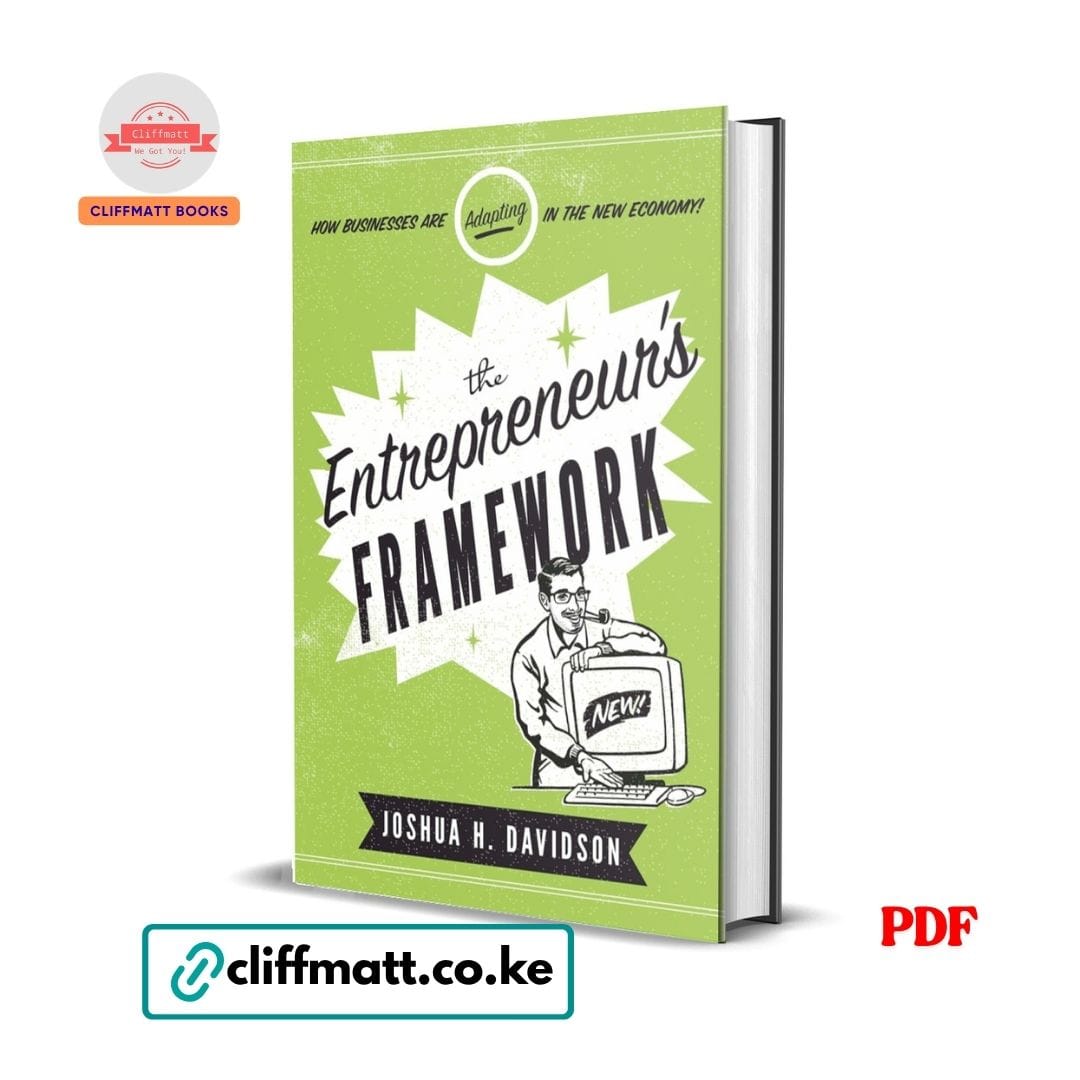
Joshua H. Davidson’s The Entrepreneur’s Framework: How Businesses Are Adapting in the New Economy! is the specific, structured, immediately applicable answer to that challenge. It is not a theory of what the new economy is. It is a practical framework for how businesses — including the specific Kenyan business at whatever stage it currently occupies — are adapting to it successfully. The specific tools, the specific thinking patterns, the specific structural decisions, and the specific strategic orientations that the businesses winning in the new economy are consistently deploying.
At Ksh 100, the framework that every Kenyan entrepreneur in a changing market most needs.
What This Book Covers:
Understanding the New Economy — What Has Actually Changed:
- The specific shifts that define the new economy — the particular combination of digital acceleration, platform-based competition, consumer expectation inflation, the specific collapse of traditional barriers to entry, and the specific rise of the connected customer who has more information, more alternatives, and more voice than any previous generation of consumers; why these shifts are not temporary disruptions but permanent structural changes that every business model must now account for
- The specific business models that are thriving — what the specific companies that are growing in the new economy have in common; how the specific combination of customer-centricity, digital integration, agility, and the specific willingness to cannibalise their own existing business models before competitors do it for them distinguishes the specific winners from the specific strugglers
- The specific Kenyan new economy context — how the particular combination of Kenya’s mobile money ecosystem (M-Pesa as foundational infrastructure), the specific rapid smartphone penetration, the specific young median population age, and the specific growing middle class creates both the specific opportunities and the specific competitive pressures that make the Kenyan new economy one of the most dynamic business environments on the African continent
- Why the old frameworks are failing — the specific reason that the specific business advice, the specific strategic tools, and the specific management frameworks developed for the industrial and early information economy consistently produce inadequate guidance for the specific decisions that the new economy requires; why every Kenyan entrepreneur who is still operating from frameworks developed in a different era is solving the wrong problems with the wrong tools
The Entrepreneur’s Framework — The Core Structure:
Mindset — The Foundation Everything Else Is Built On:
- The specific entrepreneurial mindset of the new economy — the particular combination of the specific comfort with uncertainty, the specific bias toward action and iteration, the specific customer obsession, and the specific willingness to challenge the specific assumptions that every existing business has accumulated as the specific barnacles of previous success that the new economy most consistently punishes; why mindset is not soft preparation for the real business work but the specific determinant of which strategic options the entrepreneur is even capable of seeing
- The specific growth mindset applied to business — how the particular understanding that every business model is a hypothesis rather than a truth, that every product is a prototype rather than a finished solution, and that every strategy is an experiment rather than a commitment transforms the specific relationship between the specific entrepreneur and the specific inevitable failures and pivots that building in the new economy requires
- The specific abundance versus scarcity orientation — why the specific entrepreneur who operates from the specific scarcity frame (protecting what exists, resisting competition, guarding information) consistently underperforms the specific entrepreneur who operates from the specific abundance frame (creating new markets, collaborating strategically, sharing knowledge to build authority) in the specific new economy where the specific most valuable competitive advantages are increasingly built through openness rather than protection
Customer — The Central Variable:
- The specific customer centricity framework — Davidson’s consistent argument that the specific new economy has permanently transferred power from the specific producer to the specific consumer; why the specific business that is still organised around what it finds convenient to produce rather than what the specific customer genuinely needs is specifically structured for the specific old economy that no longer exists
- The specific customer journey mapping — how to understand the particular path that the specific customer takes from the specific first awareness of a need through the specific purchase decision through the specific post-purchase experience; why the specific business that maps this journey accurately and removes the specific friction at every stage consistently outperforms the specific competitor who only manages the specific transaction
- The specific Voice of Customer practices — how to build the specific systematic listening mechanisms (customer interviews, usage data, feedback loops, community observation) that give the specific business the specific continuous flow of customer intelligence that genuine new economy responsiveness requires; why the specific entrepreneur who knows their customer more deeply than any competitor is the specific entrepreneur most capable of building the specific product that competitor cannot easily replicate
Value Creation — What the Business Actually Does:
- The specific value proposition design — how to define with precision what the specific business does that creates the specific genuine value for the specific specific customer that justifies the specific price and produces the specific loyalty that repeat business and referral require; why the specific vague value proposition is the specific most common and the specific most damaging strategic weakness of the specific small and growing business
- The specific differentiation framework — how to identify and build the specific combination of product, service, experience, and relationship qualities that distinguish the specific business from the specific competition in ways that the specific target customer genuinely values; the particular difference between the specific differentiation that the business finds significant and the specific differentiation that the specific customer actually uses to make purchasing decisions
- The specific value stack — how the specific layering of core product with service, with community, with content, and with the specific additional value dimensions that the new economy makes possible transforms the specific business from the specific commodity provider into the specific valued partner that customers retain even when cheaper alternatives are available
Digital Integration — The Non-Negotiable Dimension:
- The specific digital presence framework — how the particular combination of the specific website (the specific owned platform), the specific social media (the specific rented platforms), the specific email list (the specific most valuable owned audience asset), and the specific WhatsApp and mobile-first channels that the specific Kenyan market requires constitute the specific complete digital presence architecture that every new economy business needs
- The specific content strategy — how the particular systematic production and distribution of the specific genuinely useful content that the specific target customer is actively searching for transforms the specific digital presence from the specific business card into the specific authority-building, trust-generating, customer-attracting engine that new economy customer acquisition most reliably requires
- The specific data and analytics orientation — how the particular shift from gut-feel decision-making to the specific data-informed decision-making that every digital business channel makes possible gives the specific new economy entrepreneur the specific competitive advantage of knowing what is actually working rather than what feels like it should be working; the specific minimum viable analytics stack that every Kenyan business needs regardless of its size or stage
Operations — The Engine Under the Hood:
- The specific lean operations framework — how the particular orientation toward the specific maximum value output from the specific minimum resource input, toward the specific elimination of the specific waste that every growing business accumulates, and toward the specific systems and processes that make the specific business less dependent on the specific founding entrepreneur’s constant presence transforms the specific business from the specific job-with-employees into the specific scalable enterprise
- The specific systems thinking — why the specific business that is built on repeatable, documented, improvable processes rather than the specific individual talent and the specific institutional memory of key people is the specific business that scales, that survives key person departure, and that can be the specific basis for the specific genuine enterprise value creation that the new economy makes possible
- The specific team and talent framework — how to build the specific team that the specific new economy business requires; the particular hiring for values and cultural fit alongside skills, the specific remote and flexible work arrangements that the new economy workforce increasingly expects, and the specific retention practices that prevent the specific talent drain that every growing Kenyan business faces
Growth — From Traction to Scale:
- The specific growth framework — the particular distinction between the specific growth that comes from adding more of the specific same inputs (more salespeople, more marketing spend, more inventory) and the specific growth that comes from the specific structural changes (new channels, new products, new markets, new business model elements) that produce the specific non-linear growth that new economy businesses are capable of; why only the specific second type is genuinely scalable
- The specific revenue diversification strategy — how the particular combination of the specific multiple revenue streams, the specific recurring revenue components, and the specific different customer segment approaches transforms the specific vulnerable single-product, single-channel business into the specific resilient multi-stream enterprise that the specific economic volatility of the new economy most demands
- The specific partnership and collaboration framework — why the specific new economy consistently rewards the specific entrepreneur who builds the specific strategic partnerships, the specific complementary business alliances, and the specific ecosystem relationships that multiply reach and capability beyond what any single business can build alone; the specific Kenyan context where the specific SME collaboration networks that the new economy enables are producing the specific collective competitive strength that individual small businesses cannot achieve independently
Adapting in Practice — Case Studies and Applications:
- The specific businesses that are adapting successfully — Davidson’s particular case study approach; the specific real-world examples of the specific businesses that have applied the specific framework dimensions and produced the specific measurable results that the framework predicts; how the specific Kenyan entrepreneur can extract the specific applicable lessons from the specific examples that their specific business context most resembles
- The specific adaptation checklist — the particular self-assessment tools that allow the specific entrepreneur to evaluate where their specific business currently stands on each framework dimension and to identify the specific highest-priority adaptations that will produce the specific greatest improvement in their specific business’s new economy positioning
- The specific 90-day adaptation roadmap — how to translate the specific framework insights into the specific concrete actions with the specific concrete timelines that produce the specific measurable progress that motivation and momentum require; why the specific structured short-term implementation plan is the specific most effective bridge between the specific strategic framework and the specific operational reality
Why Kenyan Entrepreneurs Are Buying This Book:
Kenya’s economy is one of the fastest-digitalising in Africa. The specific combination of M-Pesa’s payment infrastructure, the specific mobile-first consumer, the specific growing e-commerce and platform economy, and the specific young population whose expectations have been shaped entirely by the new economy means that the specific Kenyan entrepreneur who understands how businesses are adapting in the new economy — and applies that understanding systematically — is the specific Kenyan entrepreneur who builds the specific business that thrives in the specific decade ahead.
At Ksh 100, the most practically structured and most immediately applicable new economy business framework available to every Kenyan entrepreneur.
Who This Book Is For:
- Kenyan entrepreneurs and startup founders who want the specific framework for building a genuinely new-economy-ready business from the ground up rather than discovering the gaps when competition makes them painful
- Kenyan small and medium business owners whose existing business model was built for the old economy and who want the specific structured approach to adapting it for the conditions that the new economy is producing
- Kenyan business students and young professionals who want to understand the specific strategic thinking, the specific operational frameworks, and the specific mindset orientations that the new economy’s most successful entrepreneurs are consistently applying
- Kenyan corporate employees who are considering the transition to entrepreneurship and who want the specific practical framework for understanding what building a new economy business actually requires before they make the leap
- Every reader of Rich Dad Poor Dad (Kiyosaki), The Millionaire Fastlane (DeMarco), Traffic Secrets (Brunson), Built to Last (Collins), and Think Like a Billionaire (Siebold) who wants the most specifically structured and most immediately applicable new economy adaptation framework to complete their entrepreneurial and business strategy library
📖 Author: Joshua H. Davidson
📄 Format: PDF eBook (instant download via WhatsApp or email)
💰 Price: Ksh 100 only
🚀 Delivery: Instant after M-Pesa payment confirmation
👉 Order now on cliffmatt.co.ke — Pay via M-Pesa, receive your PDF instantly.










Reviews
There are no reviews yet.