
Description
Kenya has always known that plants heal.
Long before the term “alkaline diet” entered global health conversations, Kenyan grandmothers were steeping bitter herbs for fevers, chewing ginger root for nausea, and reaching for moringa leaves when the body needed strengthening. The specific knowledge that plants contain the specific compounds that the human body most needs — and that nature has placed those plants within reach of every community that has ever needed them — is not a new idea in Kenya. It is ancient wisdom that the modern wellness movement is rediscovering.
Dr. Sebi — the Honduran-born herbalist and self-taught healer whose alkaline, plant-based approach to health attracted a global following and made him one of the most discussed figures in the natural healing world — built his entire philosophy on exactly this insight: that the specific mucus-reducing, cell-cleansing, alkalinity-restoring properties of specific plants and herbs constitute the most effective approach to the specific chronic conditions that modern diets and modern environments consistently produce.
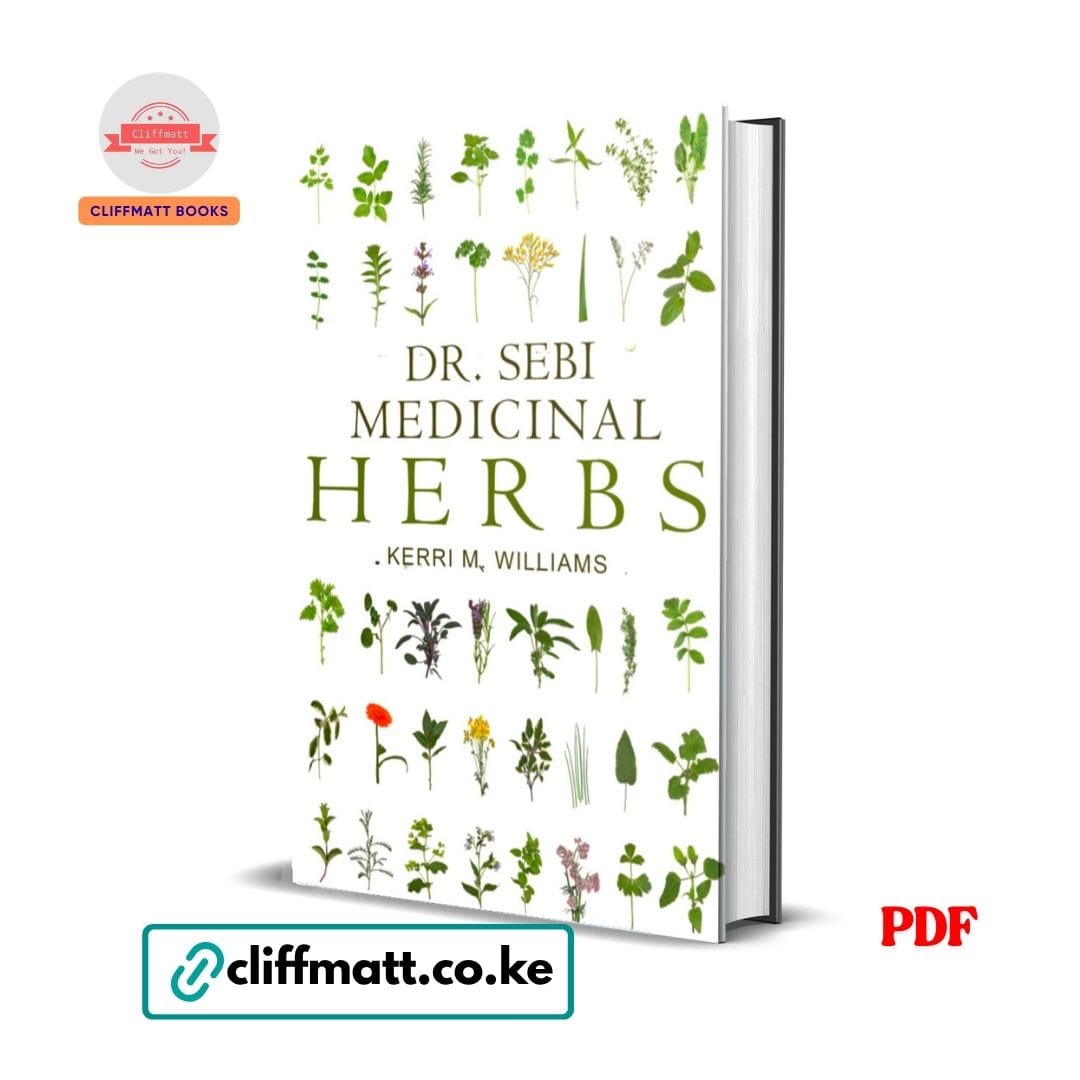
Dr. Sebi Medicinal Herbs by Kerri M. Williams brings the most practically accessible guide to this herbal tradition into a single, clearly structured, immediately usable reference — covering the specific herbs, the specific healing properties attributed to each, and the specific practical applications that allow the Kenyan reader with access to a local market, a garden, or a health store to begin using this knowledge immediately.
At Ksh 100, the complete guide to Dr. Sebi’s herbal healing philosophy is available to every Kenyan.
What This Book Covers:
The Dr. Sebi Philosophy — The Foundation:
- The specific alkaline approach — Dr. Sebi’s foundational argument that the body’s natural state is alkaline, and that the specific mucus and acidity produced by modern diets, modern stress, and modern environmental toxins is the root of the specific chronic disease burden that conventional medicine treats symptomatically rather than causally; why the specific alkaline, plant-based approach consistently produces the specific results that his followers attribute to it
- The specific “electric food” concept — Dr. Sebi’s distinction between food that carries the specific electrical charge that living cells require and food that does not; why this framework leads to the specific emphasis on raw, unprocessed, plant-based foods and the specific avoidance of hybrid, processed, and chemically altered foods that characterise his approach
- The specific mucus-cleansing philosophy — how Dr. Sebi understood the specific accumulation of mucus in the specific organs and the specific pathways of the body as the specific underlying mechanism of chronic disease; why the specific herbs in this book are selected for their specific mucus-reducing, cell-cleansing, and alkalinity-restoring properties
- Why Dr. Sebi resonated globally and specifically with African and African diaspora communities — the specific connection between his plant-based, nature-rooted, ancestral-wisdom approach and the specific traditional healing knowledge that African communities have carried; why his message found such a specific audience among people whose own cultures had always understood what he was describing
The Herbs — Individual Profiles:
Foundational Alkaline Herbs:
- Burdock Root — the specific liver and blood cleansing properties attributed to burdock in Dr. Sebi’s approach; how it supports the specific iron content and the specific detoxification pathways that his nutritional guide emphasises; its availability in health food stores increasingly accessible to Kenyan consumers
- Elderberry — the specific immune-supporting, antiviral properties that have made elderberry one of the most widely researched medicinal plants in both conventional and alternative health literature; how it fits within Dr. Sebi’s alkaline herb framework; how to access elderberry products in the Kenyan market
- Sea Moss (Irish Moss) — the specific mineral-dense profile of sea moss — containing 92 of the 102 minerals that Dr. Sebi identified as essential to the human body — and the specific role it plays as what many Dr. Sebi followers consider the single most important herb in his entire nutritional framework; the growing availability of sea moss and sea moss gel in Kenya’s health product market
- Bladderwrack — the specific iodine-rich, thyroid-supporting, metabolism-activating properties of bladderwrack; why it is consistently paired with sea moss in Dr. Sebi’s approach; how the specific combination of sea moss and bladderwrack constitutes what many in this tradition consider the most powerful foundational supplement available
- Sarsaparilla — the specific blood-purifying, testosterone-supporting, energy-activating properties attributed to sarsaparilla; its specific role in Dr. Sebi’s male health protocols
Anti-Inflammatory and Cleansing Herbs:
- Chaparral — the specific powerful cleansing properties of chaparral; its specific applications in Dr. Sebi’s detoxification protocols; how to use it safely and appropriately
- Nopal (Prickly Pear Cactus) — a significant Dr. Sebi herb with specific relevance to the Kenyan reader: prickly pear cactus grows across Kenya’s drier regions; its specific blood sugar regulating, cholesterol-managing, and digestive-supporting properties make it one of the most practically accessible and most immediately locally relevant herbs in the entire collection
- Lily of the Valley — the specific heart-supporting properties attributed to lily of the valley in Dr. Sebi’s framework; its specific applications and the specific cautions required for safe use
- Damiana — the specific nervous system-supporting, mood-lifting, and traditionally reproductive health-supporting properties of damiana; its specific applications in Dr. Sebi’s approach
Herbs with Strong Kenyan Relevance:
- Ginger — one of the most universally available and most powerfully medicinal herbs in every Kenyan market; its specific anti-inflammatory, digestive-supporting, circulation-stimulating, and nausea-relieving properties align closely with Dr. Sebi’s emphasis on alkaline, mucus-reducing plants; how to use ginger in teas, in herbal preparations, and in daily cooking for the maximum therapeutic benefit
- Turmeric — the specific curcumin-containing anti-inflammatory power of turmeric; its specific applications for the specific joint pain, the specific digestive inflammation, and the specific skin health that Kenyan users most commonly seek it for; how turmeric fits within Dr. Sebi’s alkaline framework; how to maximise absorption with the specific black pepper or fat pairing that the science of curcumin bioavailability requires
- Moringa (the “Miracle Tree”) — Kenya’s most celebrated medicinal plant and one of the most nutritionally complete plants available anywhere on earth; its specific protein content, its specific iron content, its specific vitamin A content, and its specific anti-inflammatory properties; why moringa is already widely used across Kenya and why its specific properties align with the nutritional density and cellular nourishment that Dr. Sebi’s approach prioritises
- Aloe Vera — widely grown in Kenyan homes and gardens; the specific digestive-healing, skin-supporting, immune-modulating properties of aloe vera; how to prepare and use fresh aloe vera gel from the specific plant most Kenyans already have; its applications as both a topical and an internal healing agent
Speciality and Therapeutic Herbs:
- Valerian — the specific sleep-supporting, anxiety-calming, nervous system-settling properties of valerian; its applications for the specific Kenyan dealing with the specific sleep challenges that urban stress consistently produces
- Yellow Dock — the specific iron-absorbing, liver-supporting, constipation-relieving properties of yellow dock; its specific value for anaemia support, which is one of the most prevalent nutritional deficiencies in Kenya
- Cascara Sagrada — the specific colon-cleansing, digestive-supporting properties of cascara sagrada; its applications in Dr. Sebi’s approach to establishing the specific healthy elimination that he considered the foundation of overall health
- Prodijiosa (Bricklebush) — one of Dr. Sebi’s most specifically recommended herbs for blood sugar management; its specific applications for the specific diabetes and pre-diabetes management that is one of Kenya’s most pressing NCD challenges
Preparing and Using Medicinal Herbs:
- The specific preparation methods — teas (infusions and decoctions), tinctures, capsules, poultices, and the specific applications for which each method is most appropriate; which preparations extract the specific active compounds most efficiently from each herb type
- The specific dosing principles — how to approach therapeutic dosing safely; the specific gradual introduction of herbs into your routine; the specific monitoring of your body’s responses that responsible herbal use requires
- The specific herb combination protocols — which herbs work most powerfully together in Dr. Sebi’s framework; the specific combinations that address the most common health concerns his followers typically bring to herbal healing
- The specific contraindications and cautions — which herbs require specific caution for specific conditions (pregnancy, breastfeeding, specific medications, specific pre-existing conditions); the specific interactions between herbal and pharmaceutical treatments that require awareness and, where relevant, professional guidance
- How to source herbs in Kenya — specific guidance on finding the most accessible, most common, and most widely available Dr. Sebi herbs through Kenya’s health food stores (Nairobi Health Foods, organic markets, pharmacy herb sections), online health product suppliers delivering within Kenya, and the specific locally grown alternatives that the Kenyan garden and the Kenyan market already provide
The Alkaline Herbal Lifestyle — Integration:
- The specific transition to an alkaline, herb-supported lifestyle — how to integrate medicinal herbs into daily routine without wholesale dietary disruption; the specific entry points (morning herbal tea, sea moss gel addition, moringa powder in smoothies) that make the herbal lifestyle sustainable rather than overwhelming
- The specific detoxification protocols — how Dr. Sebi’s herbal approach supports the specific cleansing programmes that his followers use for the specific energy, skin, and digestive improvements that herbal cleansing consistently produces
- The specific long-term herbal wellness practice — how to build the consistent, daily relationship with medicinal herbs that produces the most meaningful long-term health outcomes rather than the specific short-term results of occasional herbal use
Why Kenyan Health Enthusiasts Are Buying This Book:
Kenya’s relationship with herbal and plant-based healing is ancient, deeply rooted, and currently experiencing a significant renaissance — driven by the specific growing NCD burden, the specific rising cost of pharmaceutical healthcare, the specific increasing interest in natural and preventive approaches, and the specific cultural resonance of a return to plant-based wisdom that Kenya has always possessed.
Dr. Sebi’s philosophy — that healing lives in plants, that alkalinity is health, and that the body has the specific capacity to heal itself when it is given the specific nutritional and herbal support it most needs — speaks directly to this Kenyan moment. Dr. Sebi Medicinal Herbs by Kerri M. Williams gives every Kenyan health enthusiast the specific, practically accessible entry point into this tradition.
At Ksh 100, the complete herbal wisdom guide for the health-conscious Kenyan.
Who This Book Is For:
- Every Kenyan health enthusiast who has encountered Dr. Sebi’s name and philosophy and wants the most accessible and most practically usable introduction to his specific herbal approach
- Kenyan natural health practitioners, herbalists, and wellness coaches who want a clearly structured reference for the specific Dr. Sebi herb list and its applications
- Kenyan readers managing chronic conditions — diabetes, hypertension, digestive issues, skin challenges, fatigue — who want to explore plant-based complementary approaches to their health
- Every reader of The Complete Woman’s Herbal (McIntyre), Kenyan Juicing Recipes, Kenyan Smoothies Recipes, and Super Cleanse (Niemerow) who wants the most specifically Dr. Sebi-aligned herbal reference to complete their natural health library
- Every Kenyan who already uses ginger, turmeric, moringa, or aloe vera and wants to understand the specific science and tradition behind what they are already doing
📖 Author: Kerri M. Williams
📄 Format: PDF eBook (instant download via WhatsApp or email)
💰 Price: Ksh 100 only
🚀 Delivery: Instant after M-Pesa payment confirmation
Disclaimer: This is an independent publication by Kerri M. Williams and is not affiliated with or endorsed by the Dr. Sebi estate or Dr. Sebi’s Cell Food LLC.
👉 Order now on cliffmatt.co.ke — Pay via M-Pesa, receive your PDF instantly.











Reviews
There are no reviews yet.