


Description
Life does not always give you the ending you planned for. Sometimes the person you built your life around is taken before the story feels finished. Sometimes you are left standing in the middle of a life that was supposed to look completely different — with children who need you, with a future you have to rebuild, and with a grief so specific and so personal that no general comfort quite reaches it.
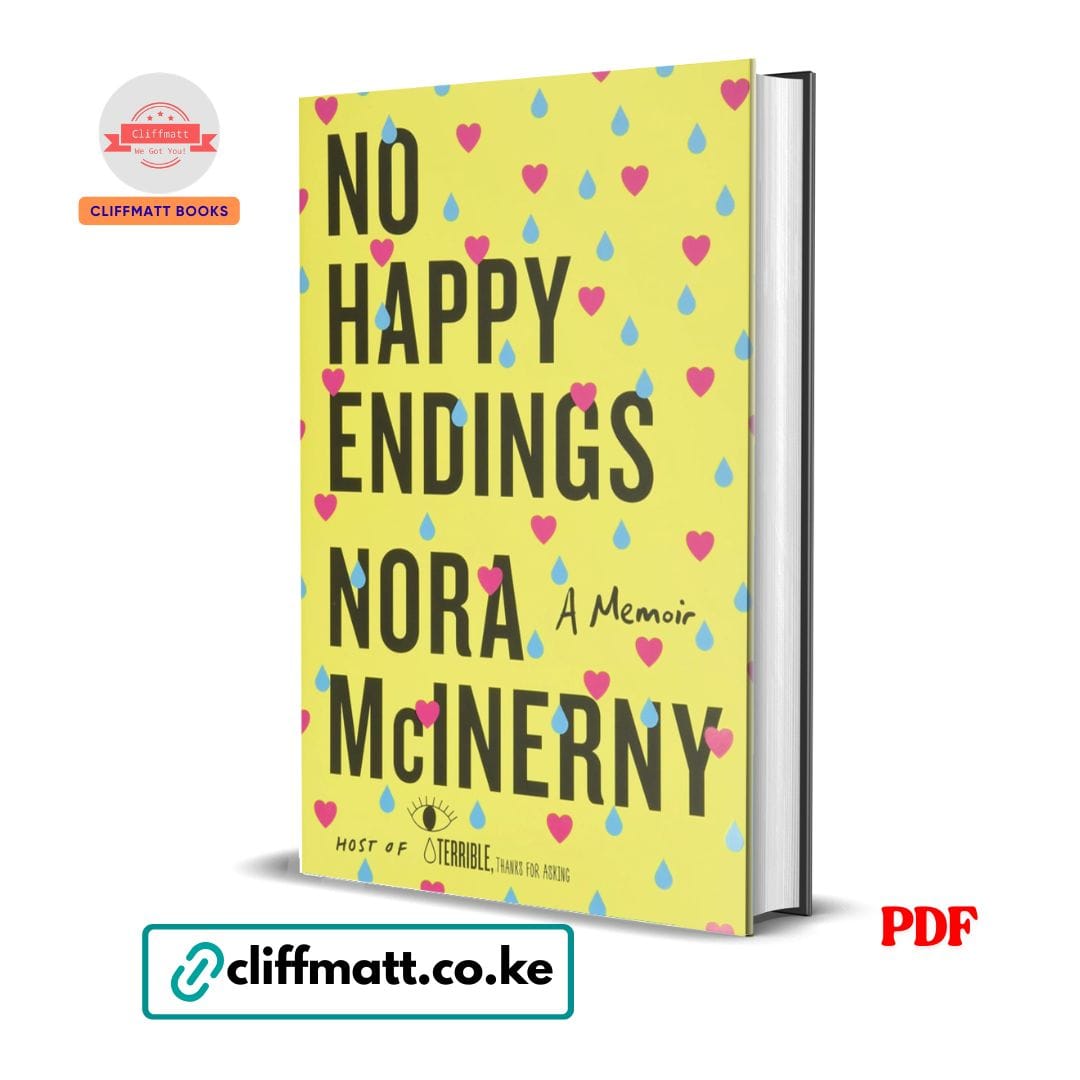
Nora McInerny has been there. And she has written the most honest, most human, and — improbably, wonderfully — most funny book about grief and rebuilding that exists. No Happy Endings is the sequel to her first memoir It’s Okay to Laugh (Crying Is Cool Too) — the continuation of her story after the death of her husband Aaron from brain cancer, through the impossible question of what comes next.
Host of the podcast Terrible, Thanks for Asking — a show about the things we are not supposed to talk about, honest and award-winning. Available now on Cliffmatt Books for only Ksh 100.
What This Book Is About:
The Space After Loss:
- What the world does not tell you about grief — that it does not follow a timeline, does not move in stages, and does not resolve into acceptance on any schedule that the grieving person chose or controls
- The specific experience of being a young widow with children — the particular impossible combination of needing to fall apart and needing to keep functioning that defines parental grief
- Why “moving forward” is not the same as “moving on” — the specific distinction that makes all the difference between honouring what was lost and pretending it did not matter
- The loneliness of grief in a world that wants you to be better already — how social pressure to recover, to be positive, to stop being sad creates a specific additional suffering on top of the grief itself
- For Kenyan readers: in a culture where grief is both communally held and individually expected to resolve within certain social timeframes, McInerny’s honest account of how grief actually works resonates with a specificity that sanitised grief narratives cannot reach
Love After Loss — The Complicated Truth:
- The specific terror and guilt of loving someone new after losing someone irreplaceable — how McInerny navigates the profound emotional complexity of falling in love again without feeling like a betrayal of Aaron
- Why there is no instruction manual for this — the specific ways that the cultural narratives about “moving on” and “finding love again” completely fail to address the actual psychological and emotional reality of loving after loss
- The children dimension — how being a parent changes every aspect of grief and every aspect of new love; the specific negotiations, conversations, and emotional complexity of bringing a new partner into a family still shaped by loss
- The public grief dimension — McInerny built a public community around her grief through her podcast and writing; how that public dimension complicates the private experience of finding new love and new life
- For Kenyan readers: the specific social scrutiny that widows and widowers face in Kenyan communities — the judgments about how long grief should last, whether remarriage is appropriate, and what loyalty to the deceased requires — makes McInerny’s frank account of these pressures immediately recognisable
Rebuilding a Life:
- What it actually looks like to rebuild — not the inspirational version but the specific, daily, often unglamorous work of reconstructing a life that has lost its centre
- The identity dimension — who are you when the person who helped define you is gone? How do you answer that question without either freezing in the past or abandoning it completely?
- Parenting through grief — the specific challenge of being the primary emotional support for children who are also grieving, while you yourself are barely holding together; and the specific grace that children’s resilience and need can produce in their grieving parent
- Finding purpose in pain — how McInerny’s podcast grew out of her loss into a community of people who needed exactly what she was offering: honest, non-sanitised acknowledgment that terrible things happen and that life continues anyway
- For Kenyan readers: the Kenyan experience of grief — communally held, spiritually processed, and expected to produce resilience — gives McInerny’s account of the rebuilding process specific resonance; her questions are universal even when her specific cultural context is different
The Humour in the Hard Things:
- Why No Happy Endings is genuinely funny — not in a way that diminishes the grief but in a way that honours the full humanity of a person who is grieving and still alive, still ridiculous, still capable of laughing at themselves
- The specific role of humour in surviving the unsurvivable — how the ability to find what is absurd and funny in even the worst experiences is not disrespect for suffering but one of the most powerful human tools for surviving it
- Why McInerny’s voice — warm, direct, self-aware, and consistently funnier than any grief memoir has any right to be — makes this book one of the most genuinely readable accounts of loss available
- For Kenyan readers: the specific Kenyan cultural capacity for finding humour in difficult circumstances — the laughter that is also a way of holding pain — makes McInerny’s tonal approach immediately comprehensible and immediately comforting
A Note on Faith:
McInerny approaches grief from a broadly spiritual but not specifically doctrinal perspective. Kenyan Christian readers will find her honest wrestling with questions of meaning, loss, and what comes after to be a genuine and recognisable spiritual journey — even when the specific framework differs from their own. The questions she asks are the questions faith is meant to answer, and her account of living inside those questions is deeply human and deeply honest.
Why This Book Matters for Kenyan Readers:
Kenya is a country where loss is not abstract. Illness, accident, and the specific realities of life in a developing nation mean that grief — early loss, sudden loss, the loss of people who should have had more time — is a near-universal experience. No Happy Endings does not offer easy comfort or religious platitudes. It offers something rarer: honest company. The sense that someone who has been in the darkness you are in has come out the other side — not unchanged, not unmarked, but alive and loving and still capable of laughter.
Who This Book Is For:
- Every Kenyan who has lost someone and found that the world’s comfort did not reach the specific place where the grief lives
- Widows and widowers navigating the impossible question of what comes next — practically, emotionally, and relationally
- Anyone who has been told they should be “over it” by now and who needs the honest acknowledgment that grief does not follow anyone else’s schedule
- Readers of Left to Tell (Ilibagiza), 491 Days (Winnie Mandela), and Letter to My Daughter (Angelou) who want the most personally intimate, most honestly human grief memoir in your catalogue
- Anyone who needs to know that it is possible to be completely broken and still funny, still loving, and still building something worth having
📖 Author: Nora McInerny 📄 Format: PDF eBook (instant download via WhatsApp or email) 💰 Price: Ksh 100 only 🚀 Delivery: Instant after M-Pesa payment confirmation 👉 Order now on cliffmatt.co.ke — Pay via M-Pesa, receive your PDF instantly.













Reviews
There are no reviews yet.