


Description
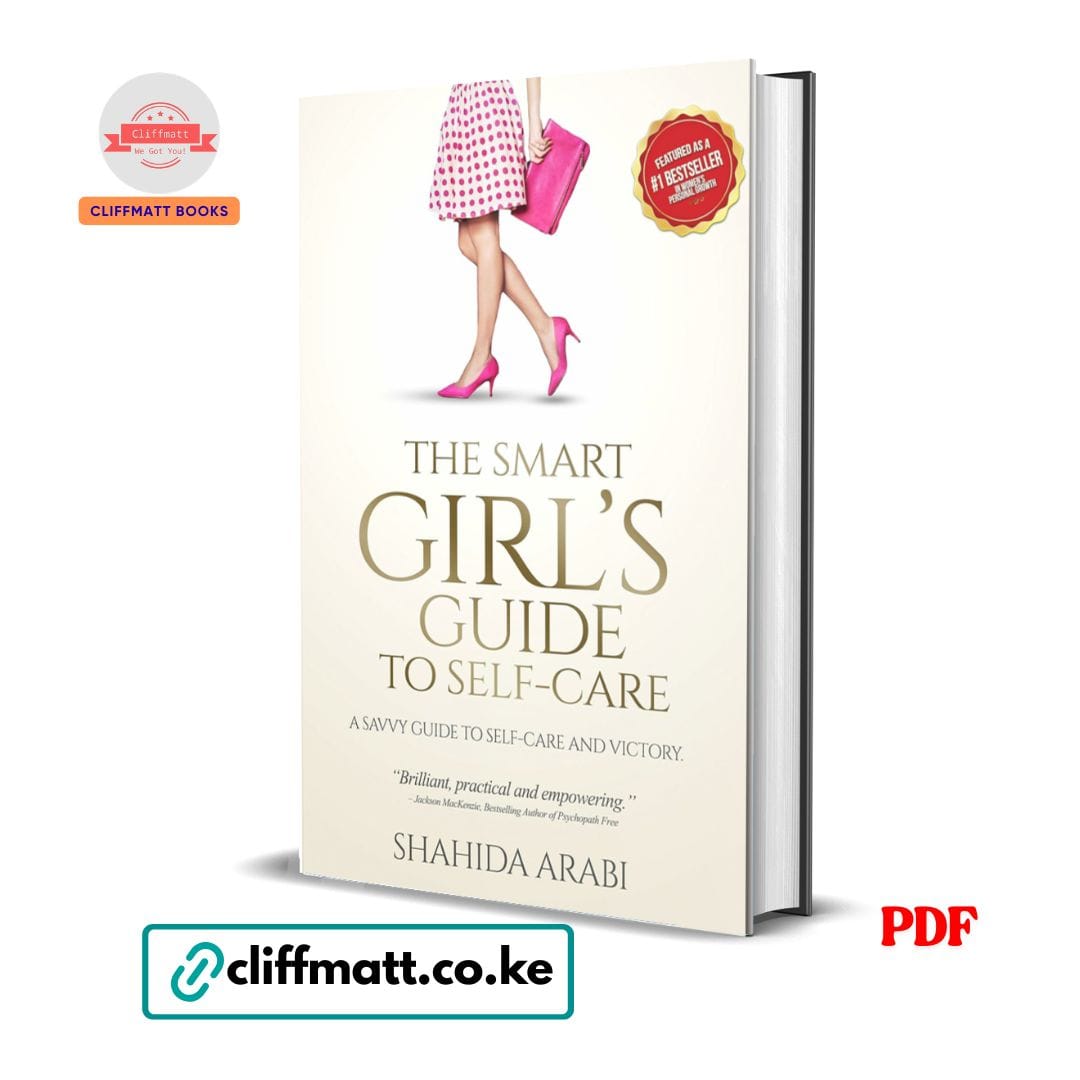
Self-care has become one of the most overused and least understood concepts in modern personal development. For too many women, it has been reduced to bubble baths and scented candles — pleasant, comforting, and entirely insufficient for the actual challenges of building a life of genuine health, happiness, and achievement. Shahida Arabi wrote The Smart Girl’s Guide to Self-Care to correct that — to give ambitious, intelligent women a self-care framework that is as serious, as practical, and as comprehensive as the lives they are actually living.
A #1 Bestseller in Women’s Personal Growth, described by bestselling author Jackson MacKenzie as “brilliant, practical and empowering,” this is the self-care guide that does not patronise or oversimplify. It treats every woman who reads it as the intelligent, capable, complex person she is — and gives her the specific tools to protect, restore, and invest in herself with the same rigour and intentionality she brings to every other area of her life.
Available now on Cliffmatt Books for only Ksh 100.
What This Book Teaches:
Redefining Self-Care for Smart Women:
- Why genuine self-care is not indulgence but strategy — the specific argument that caring for yourself is the prerequisite for everything else you are trying to build and sustain
- The difference between self-care that soothes and self-care that transforms — why the most important self-care practices are often the least comfortable and the most counter-cultural
- Why smart, ambitious women are often the worst at self-care — the specific psychological patterns (perfectionism, people-pleasing, chronic over-giving) that make high-achieving women systematically neglect the person who makes all their achievements possible
- For Kenyan women: why self-care in Kenya’s demanding cultural context — where women are expected to give endlessly to family, community, church, and career — is not selfishness but survival and sustainability
Physical Self-Care — Your Body Is Your Foundation:
- Why physical health is not a vanity concern but a performance and longevity concern — the direct connection between how you care for your body and how effectively you can show up for every other demand on your life
- Sleep — the most undervalued self-care practice available; the specific ways that chronic sleep deprivation sabotages cognitive performance, emotional regulation, physical health, and relationship quality
- Nutrition and energy management — how to fuel your body for sustained high performance rather than the sugar-and-caffeine cycles that produce short bursts and long crashes
- Movement and exercise as emotional medicine — the specific neurological effects of regular physical activity on mood, stress, anxiety, and cognitive function
- The specific physical self-care non-negotiables that Arabi identifies as foundational — and how to protect them even in the demanding schedule of a Kenyan woman managing career, family, and community obligations
Emotional Self-Care — Your Inner World Matters:
- Why emotional health is not a luxury dimension of wellbeing but the foundation of every relationship, every decision, and every professional outcome
- Processing difficult emotions — the specific practices that allow you to feel, acknowledge, and move through difficult emotional experiences rather than suppressing them until they erupt at the worst possible moment
- The inner critic — the specific self-talk patterns that undermine confidence, amplify anxiety, and make the already demanding life of an ambitious woman unnecessarily harder; and the cognitive practices that transform them
- Grief, disappointment, and loss — how to care for yourself through the inevitable painful seasons of life without losing the forward momentum that your ambitions require
- For Kenyan women: acknowledging that the emotional labour demanded of women in Kenyan culture — as mothers, daughters, wives, church members, and community pillars — is real, is exhausting, and requires deliberate emotional replenishment
Setting Boundaries — The Self-Care That Changes Everything:
- Why boundaries are not walls, not selfishness, and not rejection — they are the honest communication of your limits, your values, and your needs; the specific reframe that makes boundary-setting feel like love rather than conflict
- How to identify where your boundaries have been violated — the specific physical, emotional, and relational signals that tell you a boundary is needed before the situation reaches crisis
- The specific language of boundary-setting — how to communicate limits clearly, kindly, and firmly without excessive explanation, apology, or negotiation
- Boundaries in Kenyan cultural context — how to navigate the specific cultural pressures around family obligation, extended network demands, and community expectations that make boundary-setting particularly challenging for Kenyan women
- Boundaries with toxic people — the specific framework for identifying and limiting contact with people whose consistent behaviour costs you more than their presence contributes
Recognising and Recovering from Toxic Relationships:
- Why this section — on toxic relationships and emotional abuse — appears in a self-care book: because no amount of bubble baths or positive affirmations repairs the damage that a genuinely toxic relationship inflicts, and because removing or limiting that damage is the most important self-care decision many women will ever make
- The specific patterns of emotional manipulation — gaslighting, coercive control, chronic criticism, love-bombing and withdrawal — that are most commonly experienced by intelligent, caring women in toxic relationships
- Why smart women end up in toxic relationships — the specific psychological dynamics that make high-empathy, high-achieving women particularly vulnerable to certain patterns of manipulation
- The recovery pathway — the specific self-care practices that rebuild self-trust, self-worth, and self-knowledge after a toxic relationship has eroded them
- For Kenyan women: navigating the specific cultural pressures — around marriage, family honour, and community perception — that make leaving or limiting toxic relationships particularly complex in Kenyan contexts
Building Your Self-Care Practice:
- The morning routine — why how you begin your day is the single most powerful daily self-care lever available; the specific morning practices that set the emotional, physical, and mental tone for everything that follows
- The evening routine — how to close each day in a way that promotes genuine rest, reflection, and recovery rather than exhausted collapse
- Weekly, monthly, and seasonal self-care — how to build a layered self-care practice that addresses immediate daily needs, weekly restoration, and deeper periodic renewal
- Digital self-care — the specific practices around social media, screen time, and digital consumption that protect your attention, your mood, and your self-image from the specific harms of the digital environment
- Social self-care — how to curate the people, communities, and relationships that fill rather than drain you; the specific choices about social investment that the smartest self-care practitioners make
Self-Care and Achievement — The Integration:
- Why self-care and ambition are not in tension — the specific argument that the most consistently high-performing women are those who take their self-care most seriously
- How self-care practices directly improve professional performance — the specific mechanisms by which adequate rest, emotional regulation, physical health, and clear boundaries make every professional task easier and every professional outcome better
- The self-care that sustains long-term success — why the sprint model of ambition (sacrifice everything now, recover later) consistently produces burnout, health breakdown, and relationship damage; and the sustainable model that produces lifelong achievement without personal destruction
Why This Book Speaks Directly to Kenyan Women:
Kenya’s women carry an extraordinary load — professional ambition, family responsibility, community obligation, and often deep spiritual commitment — simultaneously. The cultural expectation that a good woman gives endlessly without needing replenishment is not only emotionally unsustainable — it produces the specific patterns of burnout, resentment, and health breakdown that are increasingly common among Kenya’s most capable women. The Smart Girl’s Guide to Self-Care gives every Kenyan woman permission — and a practical framework — to take herself as seriously as she takes everyone else she cares for.
Who This Book Is For:
- Every Kenyan woman who gives everything to everyone else and consistently places herself last — and who needs both the permission and the practical framework to change that pattern
- Young Kenyan women in their 20s and 30s building careers, relationships, and identities simultaneously — and who want to do so on a foundation of genuine self-knowledge and self-care
- Kenyan mothers navigating the specific self-erasure that motherhood can produce — and who want to model healthy self-care for the children they are raising
- Women recovering from toxic relationships, burnout, or prolonged periods of self-neglect who need a structured, compassionate pathway back to themselves
- Readers of Successful Women Think Differently (Mitchell), Dare to Lead (Brown), Letter to My Daughter (Angelou), A Woman Makes a Plan (Musk), and Disciplines of a Godly Woman (Hughes) who want the most practically focused self-care framework to complement every other women’s empowerment title in their library
📖 Author: Shahida Arabi 📄 Format: PDF eBook (instant download via WhatsApp or email) 💰 Price: Ksh 100 only 🚀 Delivery: Instant after M-Pesa payment confirmation 👉 Order now on cliffmatt.co.ke — Pay via M-Pesa, receive your PDF instantly.










Reviews
There are no reviews yet.