
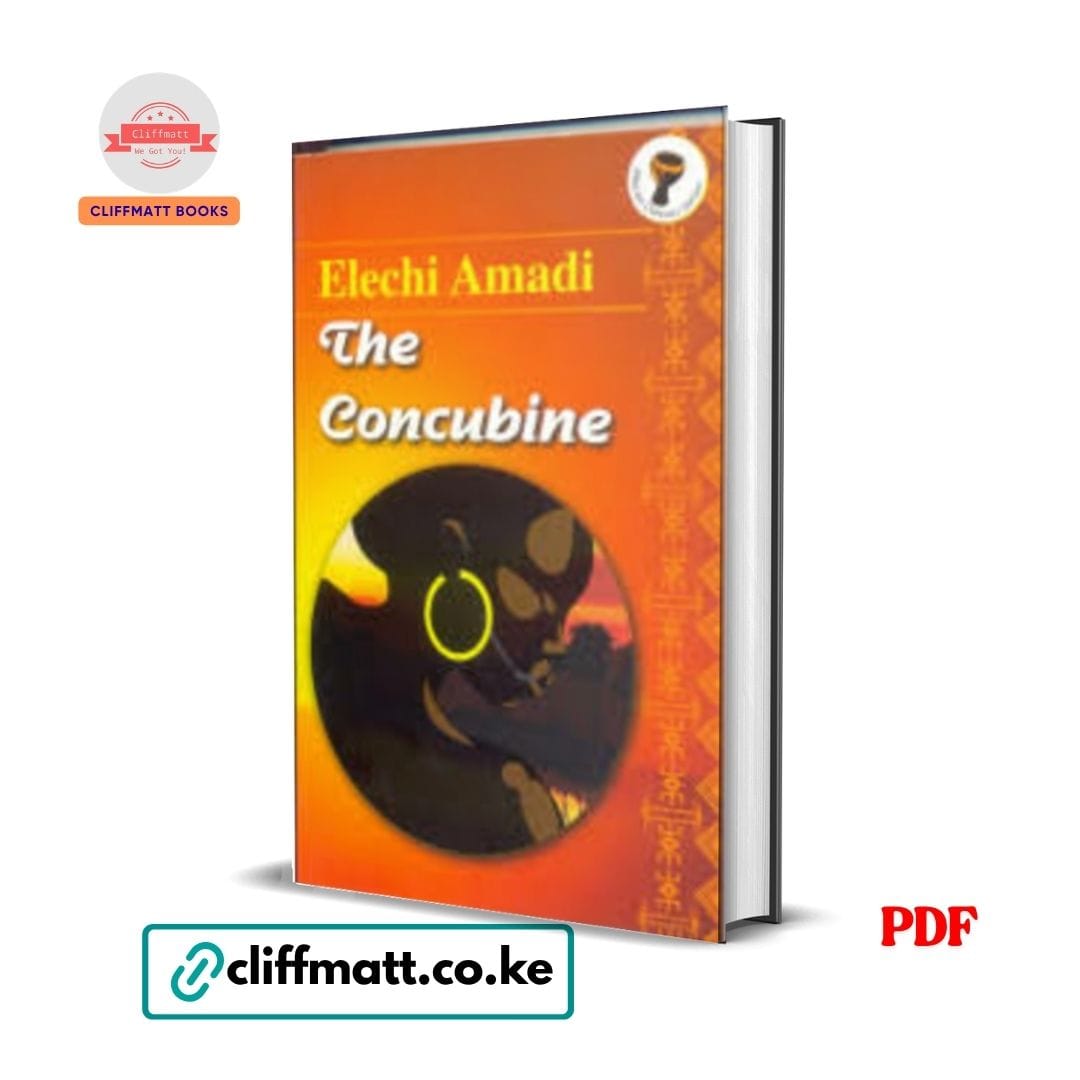


Description
There are novels that entertain. There are novels that provoke. And then there are novels that reach into the deepest wells of human experience — love, fate, community, the unseen world — and hold up a mirror so true and so beautiful that you recognise something in it that you have never been able to name. The Concubine by Elechi Amadi is that kind of novel. It is one of the most celebrated, most studied, and most beloved works in the entire canon of African literature — and it deserves to be in the hands of every Kenyan reader who cares about the richness of the African story.
First published in 1966 and never out of print since, The Concubine is set in a traditional Igbo village in pre-colonial Nigeria. It follows Ihuoma — a woman of extraordinary beauty, grace, and virtue, admired by everyone who knows her — and the men whose lives are inexorably drawn into, and destroyed by, their love for her. The novel is simple in its setting and devastating in its power. Amadi writes with the quiet, unhurried confidence of a master storyteller who trusts his story completely — and the result is a novel that stays with you long after the final page.
The Story:
Ihuoma is the most admired woman in her village — not only for her physical beauty but for her gentleness, her wisdom, and the dignity with which she carries herself. When her husband Emenike dies suddenly, the village begins to whisper. When a second man who loves her meets a similar fate, the whispers grow louder. There is something about Ihuoma, the elders say. Something that cannot be explained in ordinary human terms.
What unfolds is a story of love pursued against invisible resistance — of men who know the risk and cannot stop themselves — of a community trying to understand through the tools of their tradition what modern language has no categories for. And at the centre of it all is Ihuoma herself: not a villain, not a victim, but one of the most complex, most sympathetically drawn female characters in all of African fiction — a woman who wants only to live and love normally, and who is caught in a fate she did not choose and cannot escape.
What Makes This Novel Extraordinary:
The World Amadi Creates:
- A pre-colonial Igbo village rendered with such specificity, such texture, and such warmth that it becomes fully real — its rhythms, its relationships, its governance, its spiritual life, all drawn with the authority of someone who knows this world from the inside
- The seamless integration of the spiritual and the physical — in Amadi’s village, the world of the gods and the world of human beings are not separate; they overlap, they intersect, and the events of the visible world are often determined by forces in the invisible one
- The community as a character — The Concubine is not just the story of individuals; it is the story of a village, its collective wisdom, its shared assumptions, and its communal response to events that exceed ordinary understanding
- The portrayal of traditional African society on its own terms — not through the lens of colonialism, not in comparison to the West, but as a complete, functioning, beautiful human world with its own logic, its own values, and its own profound understanding of existence
The Character of Ihuoma:
- One of the most memorable female characters in African literature — beautiful without vanity, good without weakness, dignified without coldness
- The specific tragedy of Ihuoma’s situation — she is everything a woman in her culture is supposed to be, and it is precisely that completeness that marks her as belonging to another world
- How Amadi writes female interiority with a depth and sensitivity that was remarkable for its time and remains impressive today
- Why generations of African readers — men and women — have identified with, admired, and been moved by Ihuoma in ways that few fictional characters achieve
The Themes:
- Fate and free will — the central question the novel poses: to what extent are human lives shaped by forces beyond human choice, and how should human beings respond to that reality?
- Love and its costs — the specific portrait of love that The Concubine offers is neither romantic nor cynical; it is honest about love’s power, its irrationality, and the price it sometimes extracts
- Community and belonging — how a traditional African community makes sense of events that exceed its ordinary frameworks, and the specific role of elders, diviners, and spiritual authorities in that process
- The spiritual world — Amadi takes the reality of the spirit world entirely seriously — not as superstition to be examined ironically, but as a genuine dimension of existence that his characters navigate with the same seriousness they bring to every other aspect of life
- African womanhood — the specific pressures, expectations, freedoms, and constraints that shaped the lives of women in traditional African society, rendered with nuance and without either idealisation or condemnation
Amadi’s Craft:
- A prose style that is deceptively simple — clean, unadorned, and completely controlled — that achieves its effects through understatement rather than excess
- Pacing that reflects the rhythms of village life — unhurried, attentive, and unhurried in a way that pulls you into the world of the story rather than rushing you through it
- Dialogue that sounds genuinely spoken — the voices of his characters are distinct, natural, and perfectly calibrated to their personalities and their social positions
- The restraint with which Amadi handles his most devastating moments — it is precisely because he does not reach for melodrama that the tragedy of The Concubine hits as hard as it does
Why Kenyan Readers Are Buying This Book: The Concubine is a fixture on secondary school and university literature syllabi across East and West Africa — read, studied, and examined by generations of African students. But it is also, and perhaps more importantly, a novel that rewards reading purely for the pleasure of a great story beautifully told. Kenyan readers who love Things Fall Apart (Achebe), The River Between (Ngũgĩ), and Weep Not, Child (Ngũgĩ) will find in The Concubine a novel that belongs in exactly that company — the very best of what African literature has produced.
At Ksh 100, this is the most affordable access to one of Africa’s greatest novels available anywhere in Kenya.
Who This Book Is For:
- Kenyan secondary school and university students studying African literature — The Concubine is among the most widely set African novels on East African literature syllabi
- Literature teachers and lecturers who want a high-quality digital copy of this essential text
- Every Kenyan reader who loves African fiction and wants their digital library to include the classics of the continent’s literary tradition
- Readers of Chinua Achebe, Ngũgĩ wa Thiong’o, Chimamanda Ngozi Adichie, and Wole Soyinka who want to encounter Amadi — one of the most unjustly under-read voices in African literature
- Anyone who wants a beautifully written, deeply human story set in a world that is authentically, unapologetically African
📖 Author: Elechi Amadi 📄 Format: PDF eBook (instant download via WhatsApp or email) 💰 Price: Ksh 100 only 🚀 Delivery: Instant after M-Pesa payment confirmation
👉 Order now on cliffmatt.co.ke — Pay via M-Pesa, receive your PDF instantly.











Reviews
There are no reviews yet.