


Description
You have been performing a version of yourself for a very long time.
The specific version that meets the specific expectations of your parents. The specific version that fits the specific requirements of your community. The specific version that never admits to struggling, never shows the specific uncertainty, never reveals the specific fear behind the specific confidence that you project to the specific world that you believe requires you to have everything together. The specific version that is so busy being who you think you are supposed to be that it has very little time or energy left for being who you actually are.
Brené Brown — research professor at the University of Houston, Ph.D., L.M.S.W., and the specific researcher whose TED Talk on vulnerability became one of the most widely watched in the history of the platform — spent twelve years studying what she calls Wholehearted living: the specific way of engaging with the world from a place of worthiness rather than from the specific place of “I’ll be worthy when…” The specific people who live wholeheartedly, she found, are not the people who have resolved all their imperfections. They are the specific people who have learned to embrace them — and in doing so, have discovered that the specific imperfections they spent years trying to hide were never obstacles to connection, belonging, and joy. They were always the very things that made genuine connection, genuine belonging, and genuine joy possible.
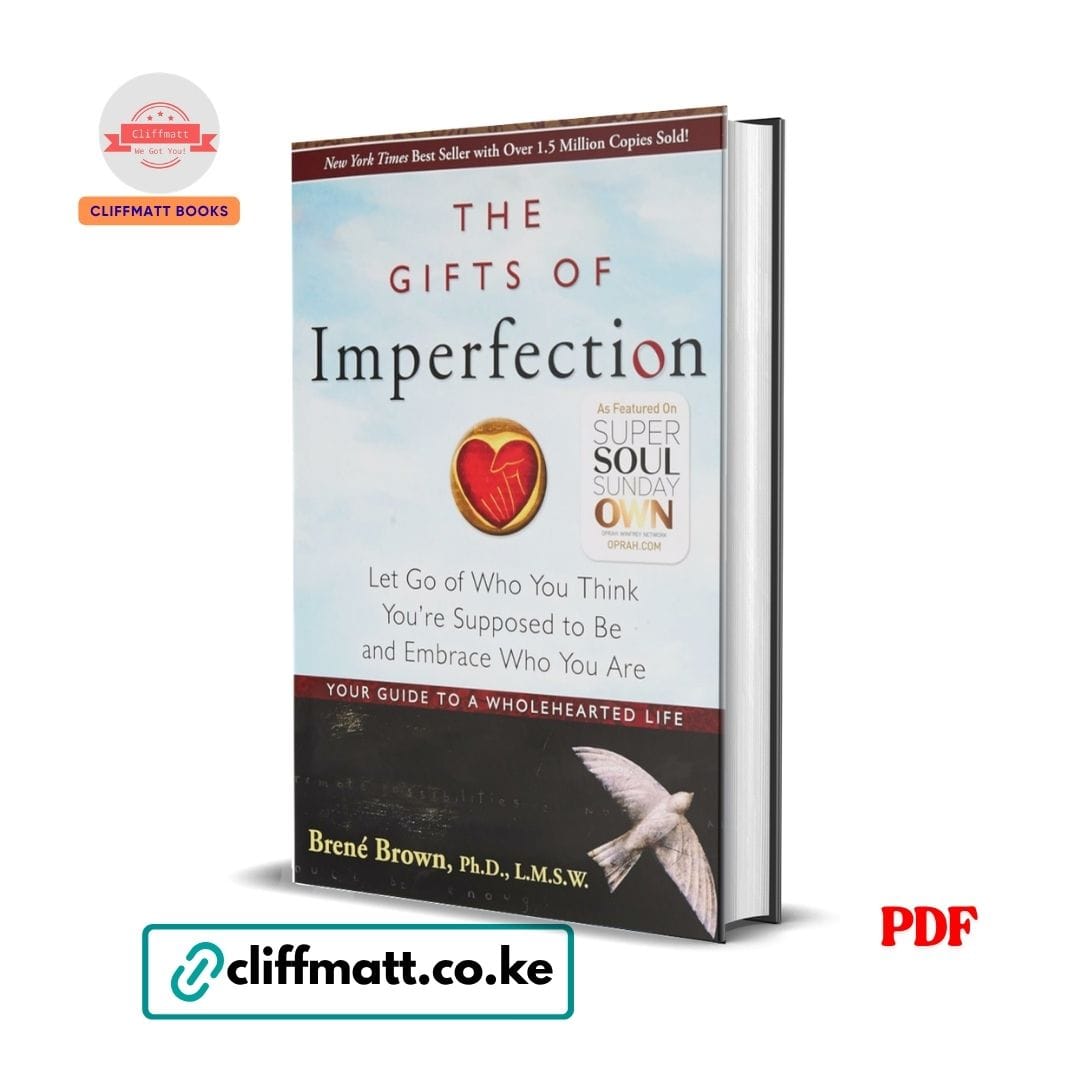
The Gifts of Imperfection: Let Go of Who You Think You’re Supposed to Be and Embrace Who You Are — New York Times Bestseller, over 1.5 million copies sold, featured on Oprah’s Super Soul Sunday — is the specific research-backed, personally honest, and immediately practically applicable guide to that discovery. It is the book that has helped 1.5 million readers stop performing their lives and start living them.
At Ksh 100, your guide to a wholehearted life is here.
What This Book Covers:
The Foundation — Wholehearted Living:
- The specific Wholehearted living definition — Brown’s particular research-based description of the specific people whose way of engaging with the world she identified as consistently and qualitatively different from the majority: the specific people who had a strong sense of love and belonging, who believed they were worthy of love and belonging, and who — crucially — did not earn that sense of worthiness through achievement, through perfect behaviour, or through the specific management of what others thought of them but through the specific courageous choice to embrace their own imperfection as an essential and irreducible part of who they genuinely are
- The specific “I am enough” foundation — the particular phrase that Brown’s research consistently identified as the specific core belief distinguishing Wholehearted people from the rest; the specific way that the genuine, non-performance-dependent conviction “I am enough” — not “I will be enough when,” not “I am enough if,” but the specific unconditional “I am enough” — produces the specific daily choices, the specific relational patterns, and the specific authentic engagement with the world that Wholehearted living consistently describes
- The specific Kenyan context of performance and worthiness — the particular combination of family expectation, academic pressure, community reputation management, professional achievement as social currency, and the specific cultural emphasis on visible success that makes the specific performance of worthiness rather than the specific genuine experience of it a recognisably Kenyan experience; why Brown’s research resonates with Kenyan readers with the specific force of recognition rather than merely the specific interest of observation
- The specific courage, compassion, and connection framework — the three specific qualities that Brown’s research consistently identified as the specific most important characteristics of Wholehearted people; the particular understanding that genuine courage is not the absence of fear but the specific willingness to act in spite of it; that genuine compassion is not possible without the specific boundaries that protect the specific person offering it; and that genuine connection is not possible without the specific vulnerability that most people spend their lives trying to avoid
The Ten Guideposts — The Heart of the Book:
Guidepost 1 — Cultivating Authenticity: Letting Go of What People Think:
- The specific authenticity practice — Brown’s particular research finding that authenticity is not a fixed personality trait (something you either have or don’t have) but a specific daily practice: the specific choice, made consistently and often with genuine difficulty, to let your true self be seen rather than performing the version of yourself that you believe will be most acceptable to the specific people in the specific room; the specific daily decisions (speaking the honest opinion, revealing the genuine uncertainty, acknowledging the real struggle) that constitute the specific practice of authenticity in ordinary life
- The specific “hustling for worthiness” pattern — the particular exhausting performance cycle that Brown identifies in the specific person who has not yet made peace with their own worthiness: the specific continuous scanning for approval, the specific sensitivity to criticism, the specific fear of being “found out” as less than the specific person you appear to be; how authenticity practice specifically interrupts this cycle
- The specific Kenyan communal authenticity challenge — the particular tension between the genuine authentic self and the specific community-shaped self that the specific Kenyan communal identity culture consistently creates; why the specific Kenyan professional navigating family expectation, community reputation, and personal truth simultaneously is navigating the specific most complex authenticity challenge that this guidepost addresses
Guidepost 2 — Cultivating Self-Compassion: Letting Go of Perfectionism:
- The specific perfectionism definition — Brown’s crucial, research-backed distinction between the specific healthy striving (doing your best because the work matters and because excellence is genuinely valuable) and the specific perfectionism (doing your best in order to avoid the specific shame, the specific judgment, and the specific criticism that imperfect performance might produce); why the specific perfectionist is not primarily motivated by the desire for excellence but by the specific fear of what imperfection will cost them in the specific opinion of the specific people whose approval they most depend upon
- The specific perfectionism-shame connection — the particular finding that perfectionism and shame are not opposites but partners; that the specific perfectionist is not protecting themselves from shame but living in it — the specific constant, low-level, background shame of the person who is perpetually aware of the specific gap between who they are and who they believe they must be to be genuinely worthy of love and belonging
- The specific self-compassion practices — the particular three components of self-compassion (mindfulness, common humanity, and self-kindness) that Kristin Neff’s research identifies and that Brown applies to the specific perfectionism challenge; the specific daily practices of treating yourself with the specific kindness that you would offer a genuinely struggling friend; why this specific practice is simultaneously the most powerful antidote to perfectionism available and the specific practice that most high-achieving people find the most genuinely difficult
Guidepost 3 — Cultivating a Resilient Spirit: Letting Go of Numbing and Powerlessness:
- The specific numbing patterns — Brown’s particularly honest catalogue of the specific ways that the specific modern person manages the specific discomfort of vulnerability, imperfection, and uncertainty by numbing: the specific overworking, the specific overeating, the specific excessive social media consumption, the specific alcohol, the specific busyness, and the specific perpetual distraction that allow the specific uncomfortable feelings to be temporarily suppressed rather than genuinely processed; the specific cost of numbing (that it numbs joy and gratitude alongside the specific pain and fear it was deployed to suppress) that makes it the specific most self-defeating coping strategy available
- The specific spiritual practices of resilience — the particular role of meaning, faith, and the specific sense of connection to something larger than the self in the specific resilience that allows Wholehearted people to face the specific difficulties of their lives without the specific numbing that most people default to; how faith — including the specific Christian faith that the large majority of your Kenyan audience practices — is the specific most powerful resilience resource available, and why Brown’s research consistently confirms what Kenya’s Christian tradition has always known about the specific relationship between genuine faith and genuine resilience
- The specific “sitting with discomfort” practice — the particular skill of allowing the specific uncomfortable emotions (grief, fear, disappointment, uncertainty) to be genuinely felt and genuinely processed rather than immediately suppressed; why the specific emotions that are not felt don’t go away but accumulate; the specific practices of mindfulness, journaling, and genuine human conversation that make the specific feeling of difficult emotions genuinely possible rather than merely theoretically recommended
Guidepost 4 — Cultivating Gratitude and Joy: Letting Go of Scarcity and Fear of the Dark:
- The specific gratitude-joy connection — Brown’s most surprising research finding: that the specific people who experienced the most consistent joy were not the specific people with the most objectively positive circumstances but the specific people with the most consistent gratitude practice; that joy and gratitude are not simply pleasant emotions that fortunate circumstances produce but the specific active, chosen, practiced orientation toward the specific good that is present in every life regardless of the specific difficulties that are also present
- The specific “foreboding joy” pattern — the particular experience, familiar to most people who have experienced genuine happiness, of the specific involuntary anticipation of loss that often accompanies joy; the specific “don’t get too excited, it won’t last” and “something bad is going to happen” thoughts that the specific Wholehearted person learns to recognise as foreboding joy and to meet with the specific gratitude practice rather than the specific pre-emptive withdrawal from joy that protects against loss by preventing it from being fully experienced
- The specific gratitude practice — not the specific vague “counting your blessings” that most people associate with gratitude but the specific daily, written, specific practice of naming the specific things for which you are specifically grateful in the specific day that has just passed; the particular neuroscience and the particular research evidence for the specific measurable impact of this practice on joy, on resilience, on relationships, and on the specific overall sense of living a life that is genuinely worth living
Guidepost 5 — Cultivating Intuition and Trusting Faith: Letting Go of the Need for Certainty:
- The specific faith-versus-certainty distinction — the particular insight that the specific need for certainty before committing to a course of action, a relationship, or a belief is the specific most reliable obstacle to genuine faith and genuine living; that the specific Wholehearted life is not lived in certainty but in the specific trust that the specific next step, taken with the specific information currently available, is the specific right step
- The specific intuition practice — how to develop and trust the specific inner knowing that Brown’s research identifies as a specific genuine cognitive capacity (the particular accumulated, pattern-recognising, rapid-processing intelligence that operates below the level of deliberate analytical thought) that the specific person who has learned to trust it consistently makes better decisions than the specific person who ignores it in favour of the specific endless analysis that the need for certainty produces
Guidepost 6 — Cultivating Creativity: Letting Go of Comparison:
- The specific comparison trap — the particular finding that comparison (the specific measurement of your specific self against the specific other people in your specific reference group) is simultaneously one of the most natural and one of the most reliably creativity-killing habits available; why the specific person who is measuring their specific creative output against the specific output of others is the specific person who will either suppress their specific creativity entirely or produce work that is derivative of rather than genuinely different from what already exists
- The specific creativity as essential humanity — Brown’s particular argument that creativity is not a specific talent that specific people have and others don’t but the specific expression of essential humanness that every human being possesses and that every human being can access when they let go of the specific comparison that suppresses it; the specific application to the Kenyan context where the specific creative gifts of a genuinely extraordinarily creative people are consistently undervalued in the specific comparison with the specific Western cultural production that Kenyan education and media have historically prioritised
Guidepost 7 — Cultivating Play and Rest: Letting Go of Exhaustion as a Status Symbol:
- The specific exhaustion culture — the particular modern phenomenon of treating busyness as a badge of honour, treating rest as laziness, and treating the specific person who is not perpetually exhausted as the specific person who is not working hard enough; the specific Kenyan professional culture that has absorbed this specific value from the specific combination of colonial work ethic inheritance and the specific modern aspirational culture that equates the specific amount of time worked with the specific degree of seriousness about success
- The specific play research — Brown’s citation of Stuart Brown’s (no relation) research on the specific role of play in adult wellbeing, creativity, and cognitive performance; the particular finding that the specific person who plays — genuinely, purposelessly, for the specific joy of it — is consistently the specific more creative, the specific more resilient, and the specific more genuinely productive person than the specific person who has eliminated play from their life in the name of the specific productivity that the absence of play consistently undermines
Guidepost 8 — Cultivating Calm and Stillness: Letting Go of Anxiety as a Lifestyle:
- The specific anxiety-as-lifestyle pattern — the particular modern epidemic of the specific person who has normalised anxiety; who experiences the specific constant low-level worry, the specific hypervigilance, and the specific inability to be genuinely present in the specific moment as simply the specific way that responsible, caring people exist in the specific world; the specific cost of this normalisation (that it makes the specific person’s baseline the specific anxiety level that should be a signal that something needs attention) and the specific practices that Brown recommends for genuine calm
- The specific stillness practice — the particular discipline of the specific deliberate, regular, unprogrammed quiet that the Wholehearted person protects as the specific space in which genuine self-knowledge, genuine creativity, and genuine connection with God become consistently possible; the specific connection to the contemplative traditions within Kenya’s Christian heritage that have always understood what the specific modern productivity culture most urgently needs to rediscover
Guidepost 9 — Cultivating Meaningful Work: Letting Go of Self-Doubt and “Supposed To”:
- The specific meaningful work question — Brown’s particular challenge to the specific person who is doing the work they are “supposed to” do (the specific career that the specific family expected, the specific profession that the specific community respects, the specific path that the specific academic record pointed toward) and who has never seriously asked whether the specific work they are doing is the specific work they are called to do
- The specific self-doubt pattern — the particular internal voice that tells the specific person who is considering the specific meaningful but less conventional career, the specific creative path, the specific unconventional contribution, that they are not qualified enough, not talented enough, not prepared enough, and not special enough to deserve the specific space that the specific meaningful work requires; how Brown’s research frames the specific courage to persist in meaningful work despite this voice as the specific most important professional decision available
Guidepost 10 — Cultivating Laughter, Song, and Dance: Letting Go of Being Cool and “Always in Control”:
- The specific unselfconsciousness practice — the particular invitation to the specific person who has been managing their image, controlling their presentation, and monitoring the specific impression they are making for so long that they have forgotten what it feels like to be genuinely, unselfconsciously, joyfully in their own body and their own moment; the specific practices of genuine laughter (not the managed social laugh but the specific laugh that takes over), genuine singing (not performance but the specific pure expression of the specific song that is in you), and genuine physical expression that the Wholehearted life consistently includes
The Wholehearted Life — Integration:
- The specific daily Wholehearted practice — how to integrate the ten guideposts into a genuinely daily practice rather than a one-time reading experience; the particular morning reflection, the specific evening check-in, and the specific weekly assessment that keep the specific Wholehearted commitments alive in the specific ordinary days that the specific Wholehearted life is actually built from
- The specific community of Wholehearted living — why the specific journey toward Wholehearted living is not primarily a solo project but the specific relational work of finding and maintaining the specific people who see you, who know you, and who love you not despite your imperfections but alongside them; the specific practices of building and sustaining the specific relationships that the Wholehearted life most essentially requires
- The specific ongoing nature of the practice — Brown’s honest, throughout-the-book acknowledgement that Wholehearted living is not a destination but a specific daily, ongoing, never-completed practice; that the specific goal is not perfection at Wholehearted living (which would be its specific contradiction) but the specific genuine, imperfect, courageous daily attempt to live from worthiness rather than from the specific performance of it
Why Kenyan Women Are Buying This Book:
The specific combination of family expectation, community reputation management, professional performance pressure, spiritual worthiness performance, and the specific particular weight of being the specific woman who is expected to be the specific strong one — for her children, for her husband, for her church, for her extended family — makes the specific Kenyan woman one of the specific most urgently in need of the specific permission that this book consistently provides: the specific permission to be imperfect, to need help, to struggle, and to be worthy of love and belonging not because of what she achieves or provides or manages but simply because she is.
Brené Brown’s research does not give that permission. It reveals it as the specific truth that was always there, waiting to be claimed.
At Ksh 100, the most personally liberating and most research-grounded guide to wholehearted living is available to every Kenyan.
Who This Book Is For:
- Every Kenyan woman who has been performing the specific version of herself that others expect and who is ready to meet the specific person she actually is with the specific compassion, the specific courage, and the specific genuine acceptance that she has been offering everyone else her entire life
- Kenyan men who want to understand the specific emotional and psychological patterns that drive their own perfectionism, their own shame, and their own disconnection from the specific genuine life that the Wholehearted frame makes available — Brown’s research applies as powerfully to men as to women, even as her primary audience has been female
- Kenyan counsellors, therapists, pastors, and church leaders who want the most research-grounded and most accessible framework for understanding and addressing the specific shame, perfectionism, and worthiness struggles that their specific clients and congregation members most consistently present
- Kenyan parents who want to model Wholehearted living for their children — who want to raise children who know from the beginning that they are enough, rather than children who spend their entire adult lives trying to earn a worthiness they were born with
- Every reader of Dare to Lead (Brown), Quiet (Cain), Stop Saying You’re Fine (Robbins), Successful Women Think Differently (Burrell), and Get Your Hopes Up (Meyer) who wants the most personally transformative and most research-grounded guide to genuine self-acceptance and genuine wholehearted living to complete their personal development and emotional wellbeing library
📖 Author: Brené Brown, Ph.D., L.M.S.W.
📄 Format: PDF eBook (instant download via WhatsApp or email)
💰 Price: Ksh 100 only
🚀 Delivery: Instant after M-Pesa payment confirmation
👉 Order now on cliffmatt.co.ke — Pay via M-Pesa, receive your PDF instantly.













Reviews
There are no reviews yet.