

Description
Every leader leaves a legacy. The question is not whether you will leave one — you will — but whether it will be the legacy of someone who made things genuinely better, genuinely built people up, and genuinely contributed something worth remembering. Or the legacy of someone who occupied a leadership position without ever fully inhabiting it.
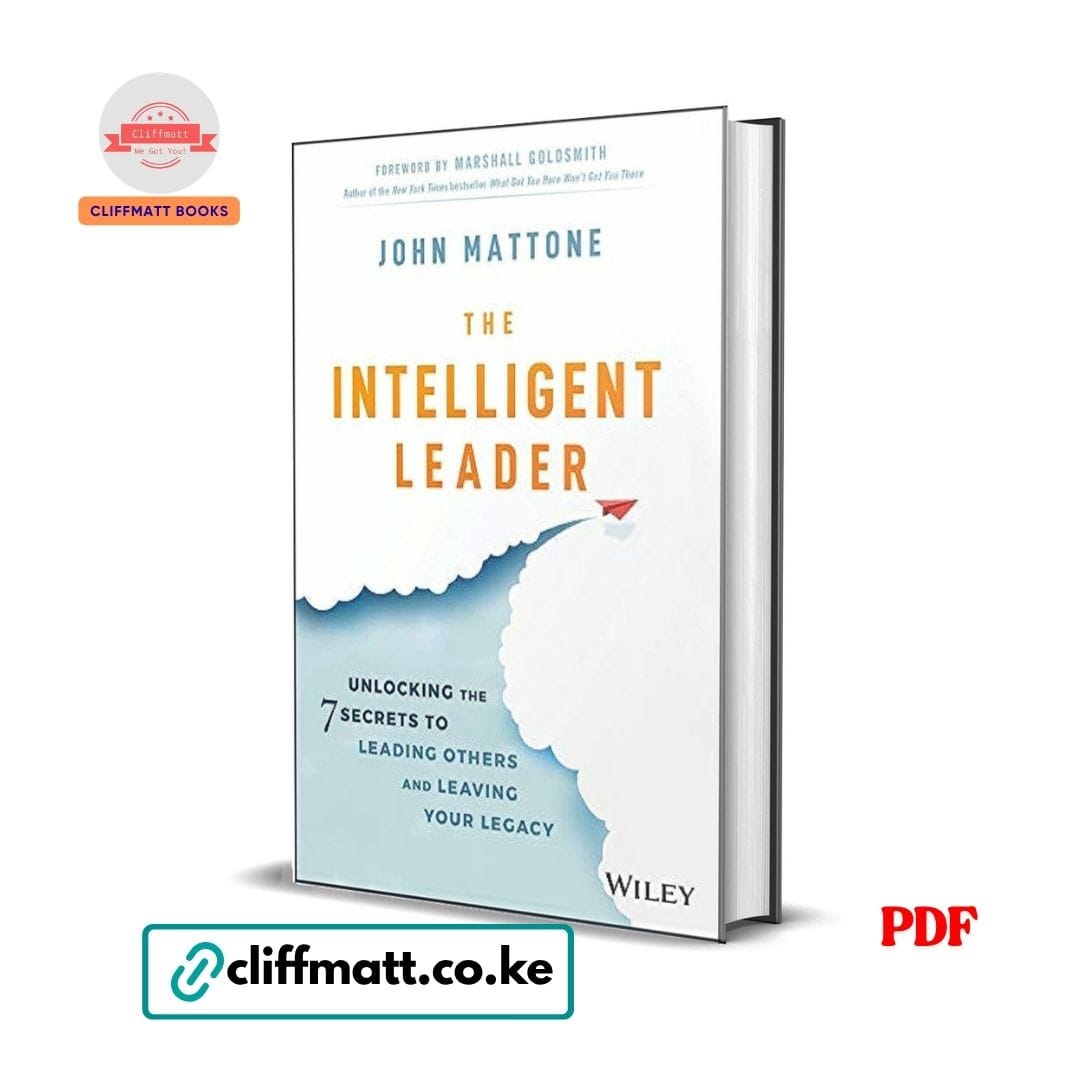
John Mattone — one of the world’s most respected executive coaches, the man who coached Steve Jobs and who has worked with some of the most consequential leaders across business, government, and civil society — has spent his career studying the specific qualities that separate leaders who leave meaningful legacies from those who simply leave. In The Intelligent Leader: Unlocking the 7 Secrets to Leading Others and Leaving Your Legacy, he distils those qualities into the most practically structured, most personally honest, and most immediately actionable leadership framework he has ever produced.
With a foreword by Marshall Goldsmith — the world’s most recognised executive coach and author of the New York Times bestseller What Got You Here Won’t Get You There — and published by Wiley, one of the most respected academic and professional publishers in the world, The Intelligent Leader is the specific book for every Kenyan leader who wants their leadership to be not merely effective but genuinely excellent — and genuinely remembered for the right reasons.
What This Book Covers:
The Foundation — What Intelligent Leadership Actually Means:
- The specific distinction between leadership intelligence and conventional intelligence — why IQ, technical competence, and even emotional intelligence are necessary but insufficient for the specific quality of leadership that produces both extraordinary results and extraordinary legacy
- The Mattone Leadership Enneagram Inventory (MLEI) — the specific leadership assessment framework that Mattone has developed and refined across decades of executive coaching; the specific nine leadership character types it identifies and what each type’s specific strengths, specific blind spots, and specific developmental priorities look like
- Why character is the foundation beneath every other leadership quality — the specific understanding that the leader’s inner life produces the leader’s outer behaviour, which produces the organisational culture, which produces the organisational results; and why the specific work of leadership development must therefore begin at the deepest level rather than at the surface level of skills and behaviours
- The specific Virtuous Leadership Cycle — how genuine inner development produces authentic outer leadership which produces the specific organisational health and the specific results that sustainable legacy requires; why the shortcut of focusing on outer behaviour without inner development consistently produces the specific inauthenticity that neither teams nor organisations follow wholeheartedly
The 7 Secrets — The Core Framework:
Secret 1 — Passionate About Growing:
- The specific quality that Mattone identifies as the first and most foundational of the seven secrets — the specific genuine, intrinsically motivated commitment to personal growth that distinguishes leaders who continuously improve from those who plateau at the level of their most recent achievement
- Why the specific passion for growth is not about pursuing credentials or promotions but about the specific genuine curiosity, the specific genuine humility, and the specific genuine hunger for better understanding that characterises the leaders who produce the most consistently improving results over the longest careers
- The specific practices that cultivate and sustain genuine growth passion — reading, reflection, mentorship seeking, feedback receiving, and the specific willingness to be wrong and to learn from being wrong that most leaders find uncomfortable and that the best leaders find energising
- The specific Kenyan leadership context — how the specific cultural pressures toward authority performance and credential display can suppress the specific genuine growth orientation that produces genuine leadership development; why the most effective Kenyan leaders consistently resist those pressures in favour of genuine curiosity and genuine learning
Secret 2 — Being a Servant Leader:
- The specific understanding of servant leadership not as weakness or self-abnegation but as the specific orientation toward others’ growth and others’ success that consistently produces the highest-performing teams and the most loyal followership
- The specific servant leadership practices — genuinely listening before directing, removing obstacles for team members rather than adding them, measuring success by others’ growth rather than by personal visibility — and the specific evidence that these practices consistently produce better results than the authoritarian alternatives
- The specific relationship between servant leadership and legacy — why the leaders most remembered for positive legacy are almost universally those who invested most generously in the specific development of the people around them; why the specific multiplier effect of genuine servant leadership compounds across careers and generations in ways that the results of self-serving leadership never do
- The specific Marshall Goldsmith connection — Goldsmith’s own career as the world’s most recognised executive coach is itself the most visible example of servant leadership at scale; his foreword’s specific perspective on Mattone’s framework reflects the specific alignment between two of the world’s most respected coaching philosophies
Secret 3 — Being Authentic:
- The specific understanding of authenticity not as permission to be exactly as you are regardless of its impact on others, but as the specific alignment between your stated values and your actual behaviour; the specific congruence between what you say matters and what your actions demonstrate matters
- Why authenticity is the most important trust-building quality a leader possesses — the specific way that inauthenticity (saying one thing and doing another, projecting one set of values while living another) is detected by teams immediately and consistently and destroys the specific trust on which genuine followership depends
- The specific self-awareness practices that build the authentic leader — the specific reflective disciplines, the specific feedback systems, and the specific honest confrontation with the gap between intended and actual impact that produce the specific self-knowledge from which genuine authenticity grows
- Why authenticity in leadership is more difficult than it sounds — the specific organisational pressures, the specific impression management incentives, and the specific fear of vulnerability that make authentic leadership genuinely demanding rather than merely rhetorically appealing
Secret 4 — Being Courageous:
- The specific courage that leadership requires — not physical courage but the specific moral courage of making difficult decisions transparently, having uncomfortable conversations honestly, holding to positions under political pressure, and protecting team members at personal cost
- The specific failure modes of leadership cowardice — the indirect feedback that fails to help, the difficult decision deferred until it is too late, the toxic team member tolerated because confrontation is uncomfortable, the honest assessment withheld because it might displease — and the specific organisational damage that each produces
- Why courageous conversations are the specific leadership skill that most distinguishes effective leaders from ineffective ones in every Kenyan leadership context — the specific practice of addressing performance problems directly, of sharing honest perspectives in group settings, and of advocating for unpopular but correct positions with the specific evidence and the specific respect that make courageous communication productive rather than destructive
- The specific courage-building practices — the graduated exposure to difficult conversations that builds the specific confidence to have harder ones; the specific framing of courageous acts as service to others rather than as confrontation of others; and the specific relationship between genuine care for people and the specific courage to tell them hard truths
Secret 5 — Being Loyal:
- The specific understanding of loyalty in the leadership context — not blind institutional allegiance but the specific genuine commitment to the people who work with and for you; the specific consistency and reliability that makes team members confident they can trust you to do what you say, to have their backs, and to honour the specific relationship you have built
- Why loyalty is increasingly rare and increasingly valuable — the specific transactional orientation of contemporary professional culture that makes genuine loyalty a specific differentiator for the leader who maintains it; why the team that knows its leader is genuinely loyal consistently outperforms the team that does not
- The specific tension between loyalty to team and loyalty to organisation — how to navigate the specific situations where team interests and organisational interests conflict; the specific leadership wisdom that honours both without betraying either
Secret 6 — Being Selfless:
- The specific understanding of selflessness not as the absence of self but as the specific orientation toward others’ needs and others’ growth that consistently produces the specific kind of leadership that people willingly follow
- The specific practices of selfless leadership — giving credit generously, absorbing blame protectively, investing in others’ development more visibly than in one’s own visibility, and the specific daily choices that communicate genuine other-orientation to the teams being led
- Why selflessness and effectiveness are not in tension — the specific evidence that the most selfless leaders consistently produce the most effective teams, attract the most talented followers, and achieve the most significant results; why selflessness is not merely ethical but strategically optimal
Secret 7 — Being a Dreamer-Achiever:
- The final and integrating secret — the specific combination of genuine visionary ambition and genuine disciplined execution that produces the specific leadership outcomes that vision without execution and execution without vision both fail to produce
- The specific dream dimension — the genuine, vivid, personally meaningful vision of what the leader’s leadership is ultimately for; what they want their organisation to become, what they want their people to achieve, and what specific contribution they want to have made to their specific community and their specific generation
- The specific achieve dimension — the disciplined, strategic, operationally rigorous execution practices that translate the dream from inspiring vision into measurable reality; why the dream without the achievement discipline consistently produces inspiration without impact
- The specific legacy connection — how the Dreamer-Achiever leadership style produces the specific combination of inspiring vision and concrete results that is the foundation of genuine leadership legacy; why the leaders most remembered were consistently those who both dreamed large enough and executed specifically enough to leave something that endured
The Marshall Goldsmith Foreword — Two Masters of Coaching:
- Marshall Goldsmith is the world’s most recognised executive coach — the person who effectively invented the coaching methodology that the entire industry now uses; his foreword’s specific perspective on Mattone’s framework reflects the specific quality of the endorsement: not a courtesy from a famous name but a genuine professional affirmation from the person most qualified to assess the specific quality of executive coaching wisdom
- The specific Goldsmith insight in the foreword — what the world’s best executive coach identifies as the most important and most distinctive contribution of Mattone’s framework to the leadership development literature
Legacy — The Through-Line:
- Why legacy is not a separate consideration from the seven secrets but the specific natural outcome of applying all seven with consistency and genuine commitment across a leadership career
- The specific legacy questions that Mattone proposes every leader should ask regularly — What do I want to be remembered for? How are the people I lead different because of my leadership? What specific contribution am I making that would not be made if I were not here? — and how these questions orient every subsequent leadership decision
- The specific relationship between daily leadership behaviour and long-term legacy — how the specific daily choices (to have the courageous conversation or to avoid it, to invest in a team member’s growth or to exploit it, to serve or to be served) compound across years and decades into the specific legacy that is either left or forfeited
- Why now is the specific time to begin building the specific legacy you want — why the leader who waits for the right role, the right organisation, or the right circumstances to begin leading with genuine intelligence consistently discovers that the right circumstances never arrive; why intelligent leadership, like every other meaningful practice, begins in the specific ordinary moments that most leaders are waiting to move past
Why Kenyan Leaders Are Buying This Book: Kenya is building its next generation of leaders — in government, in business, in civil society, in the church, and in every community institution that shapes the specific quality of life available to Kenya’s 50 million citizens. The leaders who will build what Kenya’s next chapter requires are not those with the most impressive credentials or the most visible ambitions. They are the leaders who have done the specific inner work, built the specific character, and developed the specific qualities that the seven secrets describe — and who have committed to a specific legacy of genuine, lasting, human impact.
At Ksh 100, this is world-class executive coaching wisdom from the man who coached Steve Jobs — published by Wiley, endorsed by Marshall Goldsmith, and now available to every Kenyan leader.
Who This Book Is For:
- Kenyan senior leaders and executives who want the most rigorously structured and most personally honest leadership development framework available to take their leadership to the next level
- Aspiring leaders who want to build the specific character foundation from which genuine leadership effectiveness and genuine leadership legacy grow — before they need it rather than after the absence of it has already cost them
- Pastors and church leaders who want the specific intelligent leadership framework for building the specific kind of ministry that develops people rather than merely producing religious activity
- HR professionals and executive coaches who want the most comprehensive and most coaching-oriented leadership development framework available for the leaders they support
- Every reader of Leaders Eat Last (Sinek), Dare to Lead (Brown), Boundaries for Leaders (Cloud), The CEO Next Door (Botelho), and 100 Ways to Motivate Others (Chandler) who wants the most inner-character-focused and most legacy-specific leadership framework to complete their leadership library
📖 Author: John Mattone (Foreword by Marshall Goldsmith) 🏢 Publisher: Wiley 📄 Format: PDF eBook (instant download via WhatsApp or email) 💰 Price: Ksh 100 only 🚀 Delivery: Instant after M-Pesa payment confirmation
👉 Order now on cliffmatt.co.ke — Pay via M-Pesa, receive your PDF instantly.










Reviews
There are no reviews yet.