

Description
Selling is the highest-paid profession in the world.
The specific top salespeople in every industry — in every country, at every economic level, in every product category — earn more than the specific doctors, lawyers, engineers, and accountants who serve the same market. Not because they are smarter. Not because they are better educated. Not because they have better products. But because they have mastered the specific psychology of selling — the specific understanding of why people buy, what people are really buying when they buy anything, and how to position yourself, your product, and your conversation in the specific way that makes the specific customer’s specific buying decision both inevitable and genuinely satisfying.
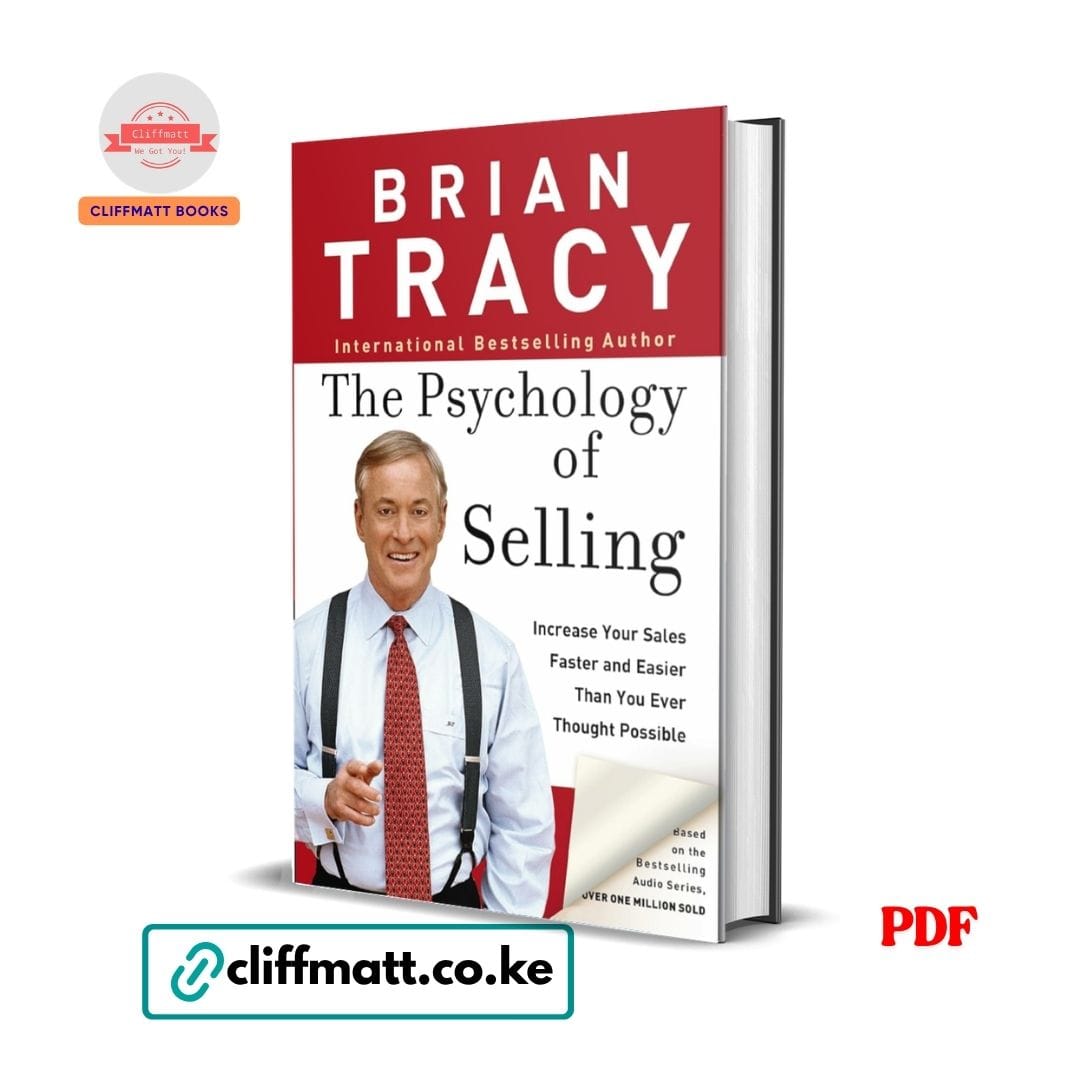
Brian Tracy — International Bestselling Author, one of the most widely listened-to sales and personal development trainers in the world, and the specific man whose audio programmes on selling have sold over one million copies — spent decades studying the specific top performers in sales: what they do, what they say, how they think, and what they believe about themselves and their customers that consistently separates them from the specific average performers who work just as hard and earn a fraction of the result.
The Psychology of Selling: Increase Your Sales Faster and Easier Than You Ever Thought Possible — based on Tracy’s bestselling audio series, over one million sold — is the distilled, most practically structured, and most immediately applicable version of everything he learned: the specific inner psychology, the specific outer techniques, and the specific daily practices of the specific top 20% of salespeople who consistently earn 80% of all the money made in selling.
At Ksh 100, the most comprehensive and most immediately results-producing sales psychology guide available is in your hands right now.
What This Book Covers:
The Inner Game of Selling — The Psychology That Drives Everything:
- The specific self-concept of the top salesperson — Tracy’s foundational insight: that the specific most important determinant of any salesperson’s results is not their product knowledge, not their territory, not their pricing, and not their company’s marketing, but the specific internal picture they carry of themselves as a salesperson; the particular finding that the specific person who sees themselves as a top performer consistently produces top performance, while the specific person who sees themselves as average consistently produces average results, regardless of the specific external circumstances they share with their more successful colleagues
- The specific “self-image” mechanism — how the specific internal self-concept functions as the specific thermostat that regulates the specific salesperson’s performance; why the specific salesperson who increases their sales temporarily but whose self-concept has not changed will consistently return to the specific performance level that their self-concept most naturally produces; why the specific most important investment any salesperson can make is in the specific upward revision of their self-concept as a sales professional
- The specific inner dialogue — the particular conversation that every salesperson is having with themselves continuously; how the specific quality, the specific content, and the specific emotional tone of that internal conversation is the specific most powerful determinant of the specific confidence, the specific energy, and the specific genuine belief in their product that prospects most reliably detect and most consistently respond to; why the specific salesperson who genuinely believes in what they are selling always outsells the specific salesperson of equal skill who does not
- The specific fear of rejection management — the particular most common and most performance-limiting psychological challenge in selling; how the specific person who has not resolved their specific relationship with rejection is unconsciously avoiding the specific sales activities (the specific cold call, the specific direct close, the specific request for referrals) that produce the specific most results, in the specific most self-protective but specific most career-limiting way available; the specific Tracy techniques for genuinely resolving the specific fear of rejection rather than merely managing it
Why People Buy — The Customer Psychology:
- The specific buying motivation framework — Tracy’s comprehensive account of the specific psychological forces that drive every buying decision; the particular combination of the specific conscious rationale (the specific features, the specific benefits, the specific price comparison) and the specific emotional drivers (the specific desire to gain something, the specific fear of losing something, the specific social identity implications of the specific purchase) that together produce the specific buying decision; why the specific salesperson who addresses only the specific conscious rationale and ignores the specific emotional drivers is consistently less effective than the specific salesperson who understands and addresses both
- The specific “people buy emotionally and justify logically” principle — Tracy’s most consistently and most practically useful single insight about buyer psychology; the particular application of this principle to the specific sales conversation (lead with the specific emotional benefit, follow with the specific logical justification, close when the specific emotional engagement is highest); why the specific reverse sequence (lead with specifications and features, hope the customer develops emotional engagement from the data) is the specific most common and the specific least effective sales approach available
- The specific buying decision factors — the particular hierarchy of the specific factors that customers most consistently identify as determinative of their buying decisions: the specific salesperson (trust, likeability, professional credibility), the specific company (reputation, reliability, standing behind the product), the specific product (genuine value, genuine fit for the specific customer’s specific need), and the specific price (the specific last factor, not the first, for the specific customer who has genuinely been sold on the specific first three); why the specific salesperson who leads with price is consistently the specific salesperson who loses on price
- The specific trust and credibility building — how the specific customer’s specific decision to buy is almost always preceded by the specific sufficient accumulation of trust and credibility in the specific salesperson and the specific company; the particular practices (the specific genuine interest in the customer’s specific situation, the specific honest acknowledgement of what the product does not do, the specific genuine concern for the specific customer’s specific best interest rather than the specific sale) that build the specific trust most efficiently and most durably
Setting and Achieving Sales Goals:
- The specific written goals practice — Tracy’s consistent, throughout-the-book emphasis on the specific practice of writing sales goals clearly, specifically, and with the specific deadline that gives them the specific motivational power that vague aspirations never produce; the particular finding that the specific top salespeople in every industry are significantly more likely to have written, specific, deadline-bound sales goals than the specific average performers in the same industry
- The specific daily sales planning — how to plan the specific day’s selling activities in the specific way that ensures the specific most important activities (the specific prospecting, the specific presentations, the specific follow-ups) receive the specific first and best hours of the specific selling day rather than the specific leftover time after the specific administrative and reactive tasks have consumed the specific morning
- The specific income goal calculation — the particular Tracy technique for calculating the specific income goal backward to the specific daily activity targets; how to know the specific number of calls, the specific number of presentations, the specific number of proposals, and the specific number of closes that your specific income goal requires in your specific selling environment; why the specific salesperson who knows their specific numbers is always the specific most systematically productive performer available
Prospecting Power — Finding More Buyers:
- The specific prospecting mindset — Tracy’s foundational positioning of prospecting as the specific most important activity in the specific entire sales process; the particular finding that the specific most common reason good salespeople underperform is not that they can’t close but that they have insufficient prospects to close; the specific 80/20 rule applied to prospecting: the specific 20% of prospecting activities that produce 80% of the specific sales results
- The specific ideal customer profile — how to identify the specific characteristics (demographic, psychographic, situational) of the specific customers who are the specific most likely to buy, the specific most likely to pay, and the specific most likely to refer; why the specific salesperson who has clearly defined their specific ideal customer and who focuses their specific prospecting efforts on finding more of that specific customer type consistently outsells the specific salesperson who approaches every possible prospect with equal effort
- The specific referral system — Tracy’s particularly strong emphasis on the specific referral as the specific highest-quality, lowest-cost, and most conversion-reliable prospect source available to any salesperson; the particular systematic approach to asking for, receiving, and following up on referrals that the specific top salespeople in every industry use as the specific primary engine of their specific prospecting activity; why the specific salesperson who has built a systematic referral process needs to do the specific least cold prospecting and produces the specific highest closing ratios
- The specific Kenyan prospecting context — how the specific Kenyan relationship-based commercial culture, the specific chama networks, the specific church communities, the specific professional associations, and the specific WhatsApp-connected social networks that characterise Kenyan professional life constitute the specific most natural and the specific most referral-friendly prospecting environment available to any Kenyan salesperson in any product category
The Sales Presentation — How to Present Irresistibly:
- The specific presentation structure — the particular sequence (rapport, needs analysis, presentation, close) that the specific most effective sales presentations across every product category and every selling environment most consistently follow; why departing from this specific sequence — presenting before genuinely understanding the customer’s specific need, closing before the specific presentation has addressed the specific most important customer concerns — consistently produces the specific lower conversion rates that the specific most common amateur selling mistakes most reliably generate
- The specific needs analysis — the particular questions (the specific open questions that reveal the specific situation, the specific problem questions that reveal the specific pain, the specific implication questions that reveal the specific cost of the specific pain, and the specific need-payoff questions that reveal the specific value of the specific solution) that Tracy teaches as the specific most important part of the specific entire sales conversation; why the specific salesperson who has asked the specific most questions and listened the specific most carefully is consistently the specific most persuasive presenter, because the specific most persuasive presentation is always the specific presentation that most precisely addresses the specific specific needs that the specific specific customer has just revealed
- The specific product knowledge and benefit translation — how to translate the specific features of your specific product into the specific benefits that the specific customer most specifically cares about; why “our system processes 10,000 transactions per second” is a feature and “your end-of-month close will take two hours instead of two days” is the specific benefit that the specific feature most relevantly produces; why the specific customer buys the specific benefit, not the specific feature, every single time
- The specific social proof — the particular use of the specific testimonials, the specific case studies, the specific references, and the specific third-party endorsements that allow the specific customer to see that the specific other people in the specific similar situation have made the specific same buying decision and have been satisfied with the specific result; why social proof is the specific most powerful and the specific most underused persuasion tool available to most salespeople
Handling Objections — Turning No into Yes:
- The specific objection psychology — Tracy’s foundational reframe of objections: not as the specific rejection of the specific salesperson or the specific product but as the specific request for more information, more reassurance, or more specific evidence that the specific buying decision is genuinely the specific right one; why the specific salesperson who genuinely believes this — who hears “it’s too expensive” as “please help me understand the specific value more clearly” rather than as a no — is the specific most effective handler of objections available
- The specific most common objections and their specific responses — the particular scripts, the specific frameworks, and the specific genuine understanding of the specific buyer psychology behind the specific most common objections (price, timing, need to think about it, need to check with someone else, currently using a competitor) that Tracy provides; how to respond to each in the specific way that moves the conversation forward rather than either accepting the objection as final or arguing with it in the specific way that makes the specific customer dig in deeper
- The specific feel-felt-found technique — the particular classic objection handling framework that Tracy teaches and demonstrates: “I understand how you feel; other customers have felt the same way; what they found was…” — the specific three-step response that simultaneously validates the specific customer’s specific concern, normalises it through social proof, and redirects it through the specific evidence of the specific resolution that the specific other customers found; why this specific framework works across the specific widest range of objections in the specific widest range of selling environments
Closing the Sale — Asking for the Business:
- The specific closing psychology — Tracy’s comprehensive treatment of the specific most feared and most celebrated moment in the specific entire sales process; the particular finding that the specific most common reason for sales failure at the closing stage is not that the customer doesn’t want to buy but that the specific salesperson doesn’t ask; why the specific “closing the sale” is in most cases simply the specific clear, confident, direct request for the specific buying decision that the specific customer has already made internally but needs the specific salesperson to invite them to announce
- The specific multiple closing techniques — the Tracy collection of the specific most effective and the specific most ethically sound closing techniques available: the specific assumptive close (“When would you like delivery?”), the specific alternative choice close (“Would you prefer the standard or the premium package?”), the specific summary close (“Based on everything we’ve discussed, it seems like this is exactly what you need — shall we get started?”), and the specific other specific closes that Tracy demonstrates in the specific different selling contexts where each is most naturally appropriate
- The specific “asking for the order” courage — the particular psychological challenge of the specific direct, clear, confident request for the buying decision that the specific close requires; how to develop the specific professional habit of asking for the order as a natural, expected, comfortable conclusion to every sales conversation rather than the specific anxiety-producing moment of uncertainty that most salespeople experience it as
- The specific follow-up after the close — the particular activities (the specific thank-you, the specific order confirmation, the specific delivery follow-up, the specific satisfaction check) that convert the specific one-time buyer into the specific repeat customer and the specific referral source that the specific most profitable long-term selling most essentially requires
Time Management for Salespeople:
- The specific 80/20 rule in sales time management — the particular application of the Pareto principle to the specific salesperson’s daily schedule: the specific finding that 80% of the specific most productive sales results come from 20% of the specific time-management choices; how to identify the specific 20% of activities that produce the specific 80% of results and to deliberately and consistently protect the specific maximum possible time for those specific activities
- The specific “golden hours” principle — Tracy’s particular recommendation to dedicate the specific peak selling hours (the specific hours when the specific customers are most available, most receptive, and most likely to make the specific buying decision) exclusively to selling activity; the specific discipline of reserving all administrative tasks, all internal meetings, and all non-selling activities for the specific times outside the specific golden hours when selling activity is least productive
- The specific preparation and planning investment — how the specific salesperson who invests the specific 10–15 minutes of specific daily planning that Tracy recommends consistently produces more in the specific subsequent selling hours than the specific salesperson who begins each day without the specific clarity about the specific most important activities that the specific planning would have produced
Building a Million-Dollar Sales Career:
- The specific continuous learning commitment — Tracy’s consistent emphasis on the specific most important career investment any salesperson can make: the specific reading, the specific listening to audio programmes, the specific attending of seminars, and the specific deliberate skills practice that the specific top 20% of salespeople invest in consistently and that the specific average performer consistently fails to invest in; the specific application of the specific 1-hour-per-day learning commitment to the specific decade-long compounding that produces the specific extraordinary sales career
- The specific top salesperson daily habits — the particular morning routine, the specific physical fitness commitment, the specific nutrition and energy management, and the specific end-of-day review practices that Tracy identifies as the specific most consistently shared habits of the specific top sales performers across every industry he has studied
- The specific career trajectory of the sales professional — how the specific salesperson who consistently applies the specific psychology and the specific techniques in this book for the specific five to ten years that mastery requires produces the specific income trajectory, the specific career advancement, and the specific genuine professional satisfaction that make the specific decision to master selling the specific most financially rewarding professional investment available in the specific Kenyan market
Why Kenyan Sales Professionals Are Buying This Book:
Kenya’s economy runs on selling. Every Kenyan entrepreneur, every Kenyan sales professional, every Kenyan network marketer, every Kenyan small business owner, and every Kenyan professional whose career advancement depends on the specific ability to persuade, influence, and sell — which is essentially every Kenyan professional in every field — is engaged in the specific activity that this book most directly addresses.
The specific difference between the specific Kenyan salesperson who struggles and the specific Kenyan salesperson who consistently excels is almost never the specific quality of the specific product, the specific territory, or the specific company. It is the specific psychology — the specific self-concept, the specific customer understanding, and the specific daily practice — that this book most precisely and most immediately addresses.
At Ksh 100, the most comprehensive sales psychology training programme ever written is available to every Kenyan.
Who This Book Is For:
- Every Kenyan sales professional in every industry — insurance, banking, real estate, FMCG, pharmaceuticals, technology, professional services — who wants the specific most comprehensive and most immediately applicable guide to their own specific sales performance improvement available
- Kenyan entrepreneurs and small business owners who sell their own products and services and who want the specific psychology and the specific techniques that the specific most effective professional salespeople use
- Kenyan network marketers who want the specific sales psychology and the specific conversation techniques that Go Pro (Worre) provides at the network marketing level at the specific broader, more deeply grounded, more psychologically comprehensive level that Tracy provides
- Kenyan professionals in any field whose career advancement depends on the specific ability to persuade, to present, and to close — which includes every professional in every field at every level
- Every reader of Go Pro (Worre), The Greatest Salesman in the World (Mandino), Swim with the Sharks (Mackay), Traffic Secrets (Brunson), and Think Like a Billionaire who wants the most psychologically grounded and most comprehensively structured sales training guide to complete their sales and business development library
📖 Author: Brian Tracy
📄 Format: PDF eBook (instant download via WhatsApp or email)
💰 Price: Ksh 100 only
🚀 Delivery: Instant after M-Pesa payment confirmation
👉 Order now on cliffmatt.co.ke — Pay via M-Pesa, receive your PDF instantly.













Reviews
There are no reviews yet.