
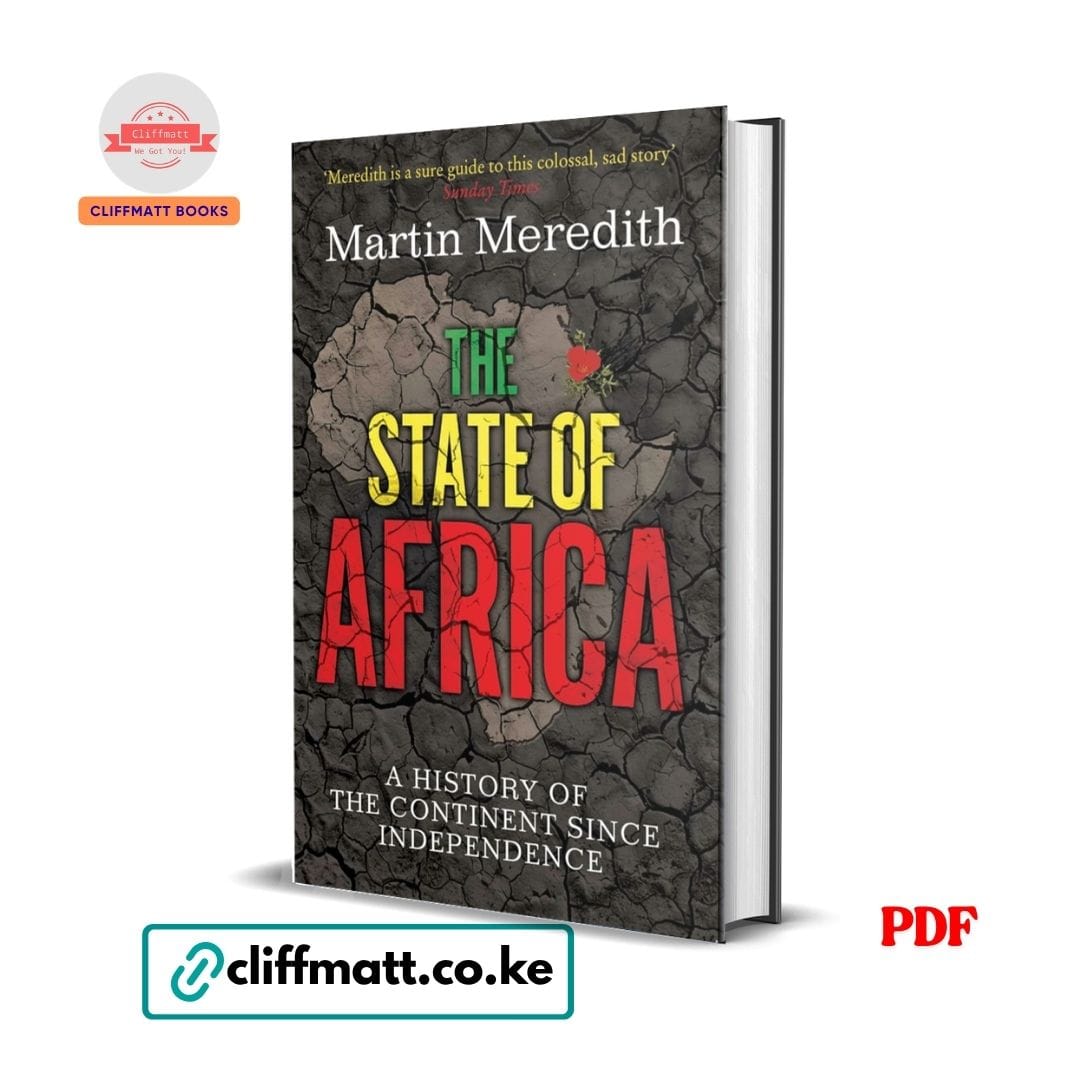


Description
Africa entered independence with extraordinary hope.
Across the continent in the late 1950s and 1960s, colonial flags were lowered and new national flags were raised. The specific leaders who had fought for independence — Nkrumah in Ghana, Kenyatta in Kenya, Nyerere in Tanzania, Lumumba in Congo, Mandela and his generation in South Africa — promised their peoples not merely political freedom but the specific comprehensive transformation of African life: prosperity, education, health, dignity, and the specific genuine self-determination that colonialism had denied for generations. The crowds that gathered for independence celebrations across the continent believed them. The world watched and many believed them too.
What happened next is the specific story that Martin Meredith — one of the most respected and most experienced Africa correspondents and historians writing in the English language — spent his career studying, and that The State of Africa tells with the specific comprehensiveness, the specific unflinching honesty, and the specific deep human understanding that this story most deserves and most demands.
It is not an easy story. The Sunday Times called it “colossal, sad.” But it is the specific story that every African — and every Kenyan in particular, whose own specific national story is woven through its pages — most needs to understand. Not to despair. Not to condemn. But to genuinely comprehend how the specific continent arrived at where it is, what the specific patterns of the specific failures and the specific successes most reveal, and what the specific understanding of that history most makes possible for the specific generation now inheriting Africa’s future.
At Ksh 100, the most important single-volume history of post-independence Africa is available to every Kenyan.
What This Book Covers:
The Independence Moment — The Promise:
- The specific euphoria of independence — the particular emotional and political atmosphere of the late 1950s and early 1960s across Africa; the specific combination of genuine popular excitement, genuine nationalist idealism, and genuine international goodwill that surrounded the independence movements of Ghana (1957), Guinea (1958), and the specific cascade of independence declarations across Sub-Saharan Africa in the landmark year of 1960; the particular hopes — economic development, democratic self-governance, continental unity, genuine educational opportunity — that the specific leaders of the independence generation articulated and that the specific populations of newly independent nations genuinely believed
- The specific inheritance of colonialism — what the specific departing colonial powers left behind; the particular combination of physical infrastructure (roads, railways, ports) built primarily for resource extraction rather than for national development; the specific administrative systems designed for control rather than for self-governance; the specific educational systems that had produced an African elite qualified to staff a colonial bureaucracy but not necessarily to design and run a modern state; and the specific artificial borders that had divided ethnic groups, lumped historical enemies together, and created the specific nation-state units that the specific post-colonial political project had to somehow fill with genuine national identity and genuine national purpose
- The specific pan-African dream — the particular vision of continental unity most powerfully articulated by Kwame Nkrumah; the specific political and economic logic of African unity; and the specific reasons why the specific practical, short-term interests of the specific newly independent national leaders consistently overcame the specific longer-term, more abstractly compelling logic of continental cooperation
West Africa — The First Experiments:
Ghana — The Pioneer:
- The specific Nkrumah story — Ghana’s independence in 1957 as the first Sub-Saharan African nation to achieve it; the specific charisma, the specific vision, and the specific genuine intellectual seriousness of Kwame Nkrumah as the specific most internationally influential African leader of his generation; the particular economic ambitions of the Nkrumah government, the specific large-scale industrial and infrastructure projects, and the specific rapid growth of the Ghanaian state apparatus that together consumed the specific cocoa revenue that was Ghana’s primary national resource faster than that revenue was generated
- The specific authoritarian drift — how the specific Nkrumah who had led a liberation movement became the specific Nkrumah who banned opposition parties, imprisoned critics without trial, and increasingly governed through the specific personality cult that Meredith documents as the specific recurring pattern across post-colonial African leadership; the specific 1966 military coup that removed Nkrumah while he was abroad and that set the specific pattern for the specific series of military interventions in civilian governance that would become the specific most common form of political transition across West Africa for the next three decades
- The specific Ghanaian recovery — the particular later story of Ghana’s democratic transition, its specific economic stabilisation, and its specific emergence as one of the specific most stable and specific most democratically functional nations in West Africa; why Ghana’s specific story is not only the specific cautionary tale of Nkrumah’s failure but the specific hopeful evidence of a country that learned from that failure and built something genuinely better
Nigeria — The Giant’s Struggles:
- The specific Nigerian independence story — the particular complexity of a nation that contained the specific Hausa-Fulani Muslim north, the specific Yoruba Christian and Muslim southwest, and the specific Igbo predominantly Christian southeast within a single political unit whose specific colonial design had never been intended to produce a coherent nation; the specific First Republic, the specific ethnic competition for federal power, and the specific 1966 military coups that set Nigeria on the specific path toward the specific catastrophe of the Biafra war
- The Biafra war — the specific secession of the Eastern Region as the Republic of Biafra in 1967 under Odumegwu Ojukwu; the particular federal government military campaign to suppress the secession; the specific famine that the specific blockade produced among the specific Igbo civilian population; and the specific international attention — the specific first major television famine that the specific world watched — that the specific Biafra war brought to Africa in a format that would shape how the specific world understood and misunderstood African suffering for decades
- The specific oil curse — how the specific discovery and the specific exploitation of Nigeria’s massive oil reserves produced the specific political economy that the specific scholarly literature calls the “resource curse”; the particular combination of enormous revenue, minimal taxation of the citizenry, and the specific absolute dependence of the political class on the specific control of oil revenue that together produced the specific political incentive structure within which the specific most devastating forms of Nigerian corruption and political dysfunction most naturally thrived
East Africa — Kenya’s Story in Continental Context:
Kenya — Independence, Promise, and Political Reality:
- The specific Kenyan independence story — the particular Mau Mau rebellion of the 1950s and its specific role in convincing the British that the specific cost of maintaining colonial Kenya was higher than the specific value of retaining it; the specific Kenyatta detention and release; the specific Lancaster House negotiations; and the specific December 1963 independence that made Jomo Kenyatta the first Prime Minister and then the first President of the Republic of Kenya
- The specific Kenyatta era — the particular combination of relative economic stability (Kenya was among the specific most economically functional of the new African states in the 1960s and 1970s), the specific ethnic favouritism toward the Kikuyu community, the specific authoritarian management of political opposition, and the specific land redistribution that concentrated the specific former white highland farms in the specific hands of a new African elite rather than redistributing them to the specific landless Africans for whom the specific Mau Mau had fought
- The specific Moi era — Daniel arap Moi’s succession to the Kenyan presidency in 1978 and the specific transformation of the Kenyatta state apparatus into the specific Nyayo system of personal loyalty to the President above all other political obligations; the specific Kenyan detention without trial, the specific torture, the specific political exile, and the specific systematic kleptocracy that characterised the specific Moi years in the specific detail that Meredith documents alongside the specific regional and continental context that shows the specific Moi system as a variant of the specific broader pattern of African authoritarian personal rule that the whole book traces
- The specific return to multiparty democracy — the particular internal and external pressures that forced Moi to accept multiparty elections in 1991; the specific 1992 and 1997 elections and their specific management; and the specific 2002 election that brought Mwai Kibaki to power as the specific first democratic transfer of power in Kenyan history; the specific hope of 2002 and the specific subsequent disappointment as the specific patterns of ethnic politics, corruption, and the specific privileging of elite interests over national development reasserted themselves in the specific new democratic dispensation
Tanzania — The Ujamaa Experiment:
- The specific Julius Nyerere story — the specific most intellectually serious and the specific most genuinely idealistic of the East African independence leaders; the particular Arusha Declaration of 1967 and the specific ujamaa (familyhood/socialism) programme that attempted to create a specifically African socialism built around the specific traditional African communal values of mutual assistance and collective welfare
- The specific ujamaa villagisation — the particular forced relocation of Tanzania’s rural population into planned villages that the Nyerere government believed would make the specific delivery of education, health, and agricultural extension services more efficient; the specific devastating impact on Tanzanian agricultural production as farmers were moved away from the specific land they had farmed, the specific crops they had grown, and the specific agricultural knowledge that had been adapted to their specific local environments over generations; the specific Tanzanian economic collapse of the 1970s and 1980s and the specific structural adjustment that eventually followed
- The specific Nyerere legacy — the particular honest assessment of what the ujamaa experiment produced (widespread literacy, genuine national unity across Tanzania’s extraordinary ethnic diversity, genuine absence of the specific ethnic political competition that destroyed so many of Tanzania’s neighbours) and what it cost (two decades of economic stagnation and the specific impoverishment of a population whose specific material standard of living was lower in 1985 than it had been at independence)
Central Africa — The Heart of Darkness:
Congo — The Greatest Catastrophe:
- The specific Belgian Congo independence — the particular most chaotic and most catastrophically unprepared independence in the entire history of African decolonisation; the specific Belgian decision to grant independence to the Congo in June 1960 without producing a single Congolese university graduate, without Africanising any significant position in either the civil service or the military officer corps, and without establishing any of the specific institutional foundations that the specific governance of the specific largest and the specific most resource-rich country in Sub-Saharan Africa most fundamentally required
- The specific Lumumba assassination — Patrice Lumumba’s particular charisma, his specific pan-African vision, and his specific refusal to accept the Cold War logic of alignment that both the United States and the Soviet Union were imposing on the African independence movement; the specific CIA involvement in his removal, the specific Mobutu intervention, and the specific January 1961 execution that made Lumumba the specific most important martyr of the African independence generation and that established the specific pattern of great power interference in African political processes that the specific Cold War imposed on the entire continent
- The specific Mobutu kleptocracy — the particular thirty-two years of Mobutu Sese Seko’s personal rule over Zaire; the specific systematic looting of the state treasury, the specific personalisation of all political authority, the specific “authenticity” campaign that renamed the country, the river, and the cities while systematically impoverishing the population; and the specific ultimate collapse of the Zairian state into the specific catastrophe of the First and Second Congo Wars that killed more people than any conflict since the Second World War
Rwanda — Genocide:
- The specific Rwandan genocide — April to July 1994; the specific murder of between 500,000 and 800,000 Tutsi and moderate Hutu in one hundred days; the specific failure of the United Nations peacekeeping force to intervene; the specific international community’s deliberate avoidance of the word “genocide” because the specific 1948 Genocide Convention would have obligated intervention if the word was used; and the specific role of Radio Mille Collines in broadcasting the specific instructions, the specific identifications, and the specific encouragement to the specific perpetrators that made the specific mass killing so efficiently organised
- The specific RPF victory and aftermath — Paul Kagame’s Rwandan Patriotic Front military campaign that ended the genocide and established the specific post-genocide Rwandan government; the specific extraordinary reconstruction of a society that had attempted to destroy itself; the specific Gacaca community justice process; and the specific particular Rwanda of the 21st century — rapidly developing, authoritarian, and the specific most genuinely transformed post-conflict state in the entire continental history that Meredith documents
Southern Africa — Liberation and Its Aftermath:
South Africa — The Long Walk:
- The specific apartheid system in continental context — how the specific South African apartheid state fits within the broader continental history of colonialism, racial domination, and the specific particular form of the specific economic exploitation of African people that the specific most industrialised African economy produced at the specific most extreme and the specific most explicitly racialised version of the colonial project
- The specific ANC and the liberation struggle — the particular role of the ANC, of Umkhonto we Sizwe, of the specific international solidarity movement, and of the specific internal resistance (the United Democratic Front, the specific trade union movement, the specific township uprising of the 1980s) in making the specific apartheid system too costly to maintain
- The specific Mandela release and the transition — the specific February 1990 release of Nelson Mandela, the specific CODESA negotiations, and the specific April 1994 election that ended apartheid; the specific miracle of the relatively peaceful South African transition in the specific continental context of countries that had managed the same specific transfer of power from white minority rule through civil war, through chaos, or through the specific long agony of gradual institutional collapse
- The specific post-apartheid disappointment — the particular honest assessment of the specific ANC government’s performance since 1994; the specific persistence of economic inequality, the specific housing and education failures, the specific corruption scandals, and the specific gradual institutional erosion under Jacob Zuma that have produced the specific South Africa of the 21st century — still the specific most economically significant country in Sub-Saharan Africa but far short of the specific transformation that the specific freedom generation most hoped for
The Patterns — What the History Reveals:
- The specific leadership failure pattern — Meredith’s most consistent and most carefully documented theme: the specific recurring pattern of the liberation leader who arrives at power with genuine popular support and genuine revolutionary credentials and who, within a decade, has concentrated power, suppressed opposition, enriched their own community at the expense of the national interest, and produced the specific authoritarian personal rule that the specific liberation struggle was ostensibly fought to end; the specific psychological, structural, and institutional explanations for this specific recurring pattern
- The specific debt and structural adjustment story — how the specific accumulation of sovereign debt during the independence years, the specific commodity price collapses of the 1970s and 1980s, and the specific IMF and World Bank structural adjustment programmes that followed produced the specific decade of economic contraction across most of Sub-Saharan Africa that the specific development literature calls “the lost decade”; what these programmes required, what they produced, and how the specific debate about their effects continues to shape the specific development policy conversation in Kenya and across the continent
- The specific Cold War distortion — how the specific superpower competition for African allies during the Cold War systematically rewarded the specific leaders who aligned with the specific right superpower regardless of their specific governance quality; the specific American support for Mobutu, the specific Soviet support for Mengistu, and the specific general pattern of external support for African authoritarianism that the specific Cold War logic most naturally produced
- The specific AIDS catastrophe — how the specific HIV/AIDS epidemic, arriving in the 1980s and devastating Sub-Saharan Africa through the 1990s and 2000s, produced the specific additional development challenge of a continent already struggling with debt, governance failure, and the specific commodity price environment that the specific 1980s structural adjustment decade had created; the specific demographic and economic impact on the specific most affected countries
- The specific democratic wave — the particular “third wave of democratisation” that swept Africa in the early 1990s; the specific combination of internal popular pressure and external donor conditionality that produced the specific rapid transition from single-party rule to formal multiparty democracy across most of Sub-Saharan Africa between 1989 and 1994; the specific honest assessment of what that transition produced — more elections, more formally democratic constitutions, more free press — and what it has not consistently produced: the specific genuine accountability, the specific genuine institutional independence, and the specific genuine rule of law that the specific formal democracy most requires to deliver its specific most important substantive promises
The Hope — What the History Also Shows:
- The specific success stories — Botswana (which has used its diamond revenues for genuine national development rather than elite enrichment and which has maintained the specific most functional multiparty democracy in Africa since independence), Mauritius (which has built the specific most prosperous and the specific most genuinely diversified economy in Sub-Saharan Africa through the specific deliberate, sustained, strategically intelligent development policy that Meredith documents as the specific sharpest contrast available to the specific pattern of resource mismanagement that characterises so much of the continental history), and the specific other partial successes that demonstrate that the specific pattern of failure is not inevitable
- The specific African renaissance — the particular story of the late 1990s and 2000s; the specific growth in the number of genuine democracies, the specific economic growth rates that made “Africa Rising” a genuine journalistic and analytical story rather than merely a marketing phrase, and the specific genuine improvement in health, education, and infrastructure across significant parts of the continent that the specific more recent decades of the continental history most honestly include
- The specific lesson for Kenya — what the specific Kenyan story, told within the specific continental context that Meredith provides, most reveals about the specific patterns that have both limited and enabled Kenyan development; what the specific continental comparison most suggests about the specific particular opportunities and the specific particular vulnerabilities of the specific Kenyan political and economic model
Why Kenyan Readers Are Buying This Book:
Kenya’s specific story — from the specific Mau Mau rebellion through the specific Kenyatta and Moi eras through the specific democratic transition of 2002 through the specific subsequent political history — is woven throughout The State of Africa in the specific continental context that allows every Kenyan reader to understand their own specific national experience not as a specific isolated Kenyan story but as the specific particular Kenyan variant of the specific patterns, the specific failures, and the specific partial successes that the entire post-independence continental history most consistently reveals.
For every Kenyan who wants to understand how Africa got here — why the specific promise of independence produced the specific mixed record of the specific post-independence decades, and what the specific most honest reading of that record most suggests about the specific most important choices facing Kenya’s specific current generation — there is no more comprehensive, more honest, or more compellingly written guide available.
At Ksh 100, the most important single-volume history of modern Africa is available to every Kenyan.
Who This Book Is For:
- Every Kenyan who wants to understand the specific post-independence history of their continent in the specific most comprehensive, the specific most rigorously researched, and the specific most accessibly written single-volume account available
- Kenyan university students of history, political science, African studies, international relations, and development studies who want the specific most authoritative and most comprehensive secondary source on post-independence African history available
- Kenyan journalists, policy makers, development professionals, and civil society leaders who want the specific deepest historical context for the specific contemporary African political and development challenges their work addresses
- Every Kenyan who has read Kenya Between Hope and Despair (Branch), Long Walk to Freedom (Mandela), Dreams from My Father (Obama), Dead Aid (Moyo), and Decolonising the Mind (Ngũgĩ) and who wants the specific most comprehensive single-volume continental history to contextualise and complete their African history and politics library
- Every Kenyan reader who asks “how did we get here?” — about corruption, about poverty, about ethnic politics, about the specific gap between the specific promise of independence and the specific reality of the specific six decades that followed — and who wants the specific most honest and most comprehensive answer available
📖 Author: Martin Meredith
📄 Format: PDF eBook (instant download via WhatsApp or email)
💰 Price: Ksh 100 only
🚀 Delivery: Instant after M-Pesa payment confirmation
👉 Order now on cliffmatt.co.ke — Pay via M-Pesa, receive your PDF instantly.










Reviews
There are no reviews yet.