
Description
What you believe about yourself is creating your life.
This is the foundational conviction of Louise Hay — counsellor, teacher, and the specific woman whose specific work with people facing illness, self-destructive patterns, and the specific deep emotional wounds of childhood abuse and neglect produced one of the specific most comprehensive and the specific most practically applied frameworks for personal healing ever developed outside the formal therapeutic traditions.
Louise Hay grew up in poverty and abuse, was raped at five years old, left school without graduating, and spent her early adult life in the specific circumstances that her specific beliefs about herself had produced. At forty-five, she discovered the specific New Thought philosophy that would become the foundation of her work — the particular conviction that the specific thoughts we think and the specific beliefs we hold are not merely descriptions of our experience but the specific most powerful creators of it; that the specific person who changes what they believe about themselves, consistently and deliberately, changes what their life produces.
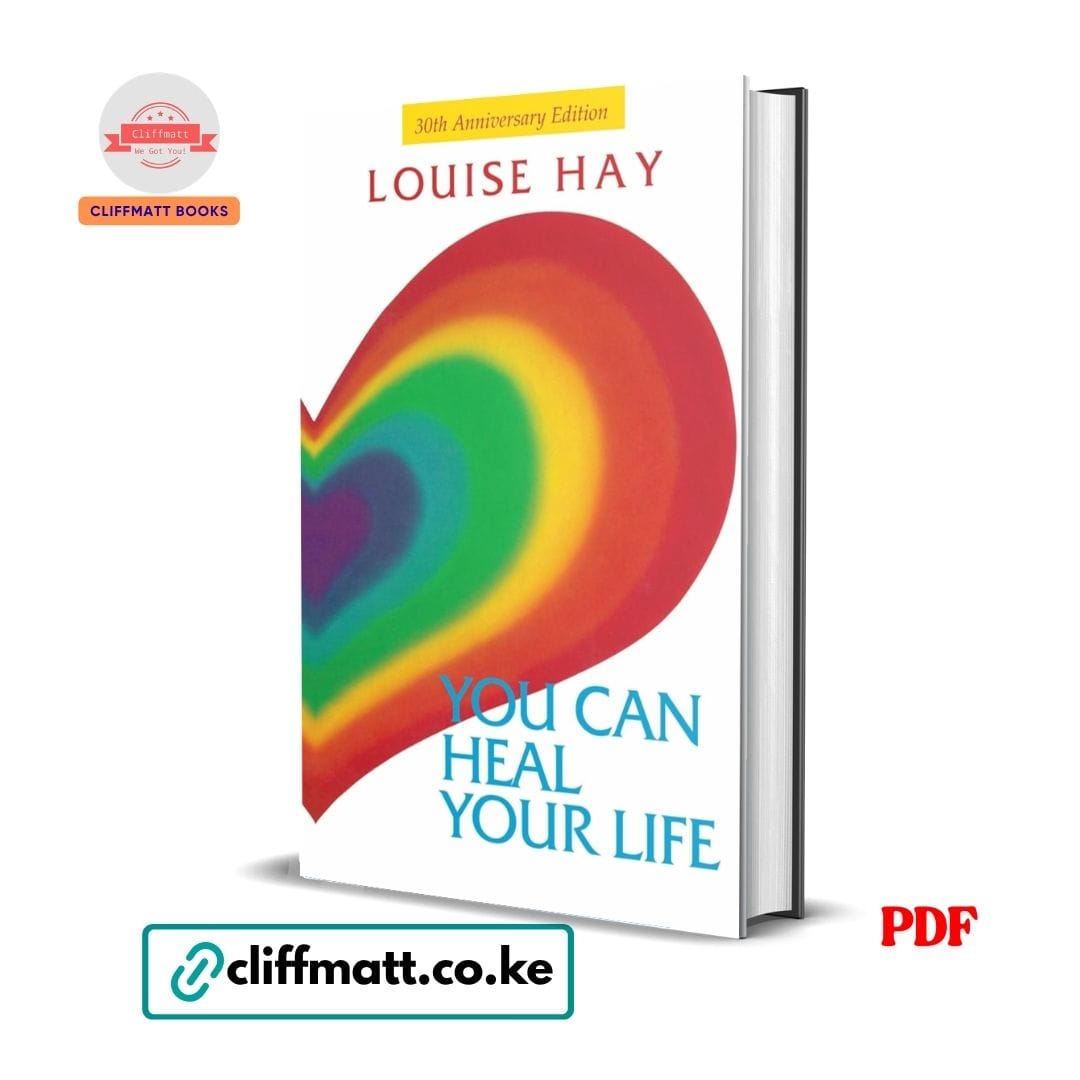
You Can Heal Your Life — 30th Anniversary Edition, over 50 million copies sold worldwide — is the book in which she explains how. It is the specific most accessible and the specific most personally honest account of the specific self-healing philosophy that has made Louise Hay one of the most widely read personal transformation writers in the history of popular psychology, and that has made Hay House — the publishing company she founded — one of the specific most important self-help and personal development publishers in the world.
At Ksh 100, the classic of personal transformation that fifty million readers have found life-changing is available to every Kenyan.
What This Book Covers:
The Foundation — What Louise Hay Believes:
- The specific mind-body philosophy — Hay’s foundational conviction, which she presents as both personally experienced and clinically observed across decades of individual counselling work, that the specific mental and emotional patterns we carry — the specific beliefs we hold about our worthiness, our safety, our lovability, and our capacity to receive good — are not merely psychological phenomena but are expressed in the specific physical, relational, and material circumstances of our lives; the particular application of this conviction to the specific healing process that Hay describes throughout the book
- The specific self-love as foundation — Hay’s most consistent and most central therapeutic conviction: that the specific inability to genuinely love and accept oneself is the specific root of the specific most significant personal suffering available; that the specific journey toward healing — whether the specific healing sought is physical, emotional, relational, or material — always and essentially begins with the specific genuine, non-conditional, non-performance-dependent love of the self that most people have never experienced and that this book is specifically designed to help them find
- The specific affirmation philosophy — the particular practice of deliberately, consistently, and repeatedly affirming the specific positive beliefs about oneself and one’s life that the specific negative belief patterns have suppressed; the particular neuroscience-adjacent (though Hay predates the specific neuroscientific research) conviction that the specific repetition of the specific positive affirmation gradually replaces the specific negative belief with the specific positive one, producing the specific changes in feeling, in behaviour, and ultimately in the specific circumstances of the specific life that the specific belief change most consistently generates
- The specific honest reader note — You Can Heal Your Life presents a specific philosophical and experiential framework, not a medically verified clinical treatment. Hay’s specific claims about the thought-pattern origins of physical disease are her personal conviction and counselling experience, not scientifically established medicine. Readers managing specific health conditions should engage with qualified healthcare professionals for their specific medical care. This book is most valuably read as a guide to the specific emotional and psychological dimensions of wellbeing rather than as a substitute for the specific professional medical care that specific physical conditions most require
The Beliefs That Limit Us — The Diagnosis:
Where Our Beliefs Come From:
- The specific childhood belief formation — Hay’s account of how the specific beliefs that most powerfully shape adult life are formed in the specific earliest years of childhood, before the specific cognitive development that allows the specific critical evaluation of incoming information is available; why the specific things that parents, teachers, siblings, and the specific broader cultural environment communicate to the specific child about their worth, their safety, and their lovability are accepted without the specific filtering that the adult mind applies and are stored as the specific foundational beliefs that the specific adult life most essentially runs on
- The specific parental programming — how the specific particular messages of the specific particular parents (the specific “you’re not smart enough,” the specific “money doesn’t grow on trees,” the specific “who do you think you are,” and the specific others that Hay documents as the specific most commonly encountered limiting belief sources) become the specific internal voice that the specific adult hears whenever they approach the specific opportunity, the specific success, or the specific genuine love that their specific childhood programming has taught them they are not worthy of
- The specific cultural programming — how the specific broader cultural messages (about gender, about class, about race, about what specific people like the specific reader are and are not supposed to achieve) layer on top of the specific family programming to produce the specific comprehensive belief system that the specific individual adult carries as their specific most unexamined and most powerfully operational psychological inheritance
The Specific Limiting Beliefs:
- “I am not good enough” — Hay’s identification of this specific belief as the specific most universally carried and the specific most comprehensively limiting belief available; the particular ways it manifests in the specific self-sabotage, the specific settling for less, the specific inability to receive genuine love and genuine appreciation, and the specific chronic underperformance relative to genuine capacity that the specific most capable people carry most visibly when this specific belief is their specific most deeply held one
- “I don’t deserve love/success/health/prosperity” — the specific belief cluster around deserving; how the specific person who genuinely, below-the-level-of-conscious-awareness believes they do not deserve the specific good things that life can provide consistently produces the specific circumstances (the specific relationship that confirms their unworthiness, the specific financial situation that confirms their poverty consciousness, the specific health situation that confirms their neglect of themselves) that their specific belief most powerfully predicts
- “The world is not safe” — the specific fear-based belief structure; how the specific person who experienced the specific earliest environment as fundamentally unsafe carries the specific hypervigilance, the specific difficulty with trust, and the specific chronic anxiety that the specific unsafe-world belief most naturally produces; why healing this specific belief is the specific prerequisite for the specific genuine openness to relationship, to opportunity, and to the specific genuine vulnerability that genuine life most essentially requires
- The specific Kenyan context of limiting beliefs — the particular combination of colonial educational messaging about African inferiority, the specific poverty consciousness of families who have experienced genuine economic limitation across generations, the specific gender-based limiting beliefs about what specific women are and are not supposed to aspire to, and the specific religious messaging (in some specific denominational contexts) about human unworthiness and human sinfulness that the specific Kenyan reader may carry as the specific particular version of the specific universal limiting belief experience that Hay addresses
The Healing Process — The Practical Framework:
Becoming Willing to Change:
- The specific willingness as first step — Hay’s consistent insistence that the specific healing process begins not with the specific action but with the specific willingness to consider the specific possibility that change is possible; the particular application to the specific reader who has been carrying the specific limiting beliefs so long that the specific idea of life without them feels not liberating but threatening; why the specific resistance to the specific healing process is itself one of the specific most important pieces of information about the specific nature of the specific limiting beliefs that are being carried
- The specific release of the past — the particular practice of releasing the specific resentments, the specific grievances, and the specific attachments to the specific painful past that Hay consistently identifies as the specific primary obstacle to the specific healing she describes; the specific forgiveness practice — not the specific condoning of the specific harmful behaviour but the specific release of the specific emotional charge that the specific resentment most powerfully maintains; why Hay’s forgiveness framework is simultaneously the specific most frequently misunderstood and the specific most healing practice in the entire book
The Mirror Work:
- The specific mirror exercise — one of Hay’s most distinctive and most personally confronting practices: the specific practice of looking directly into one’s own eyes in a mirror and saying “I love you, [your name], I truly love you”; why the specific difficulty that most people experience with this specific exercise is the specific most accurate and the specific most immediate diagnostic of the specific depth of their specific self-love deficit; how the specific regular practice of mirror work gradually produces the specific genuine self-acceptance that the specific intellectual commitment to self-love does not by itself generate
- The specific progression of mirror work — how to use the specific mirror for the specific daily affirmations, the specific forgiveness work, and the specific celebration of small victories that Hay recommends as the specific most powerful and the specific most immediately accessible daily self-healing practice available
Affirmations — The Practical Tool:
- The specific affirmation science (as Hay presents it) — the particular conviction that the specific mind does not distinguish between the specific experience and the specific vividly imagined or repeatedly affirmed experience; that the specific consistent affirmation of the specific positive truth (“I am worthy of love,” “I am safe,” “Prosperity flows freely into my life”) gradually replaces the specific negative programming with the specific positive one through the specific mechanism of the specific repetition that the specific advertising industry, the specific educational system, and the specific family environment all use to install the specific beliefs they install
- The specific categories of affirmation — the particular affirmations for the specific different life areas that Hay addresses: the specific self-worth affirmations, the specific love and relationship affirmations, the specific prosperity and work affirmations, the specific health affirmations, and the specific general wellbeing affirmations; how to choose, personalise, and use each category most effectively
- The specific affirmation format — the particular “I am,” “I have,” “I deserve,” and “I choose” constructions that Hay recommends as the specific most powerful affirmation formats; why stating the specific positive truth in the specific present tense rather than the specific future tense (“I am prosperous” rather than “I will be prosperous”) is the specific most important formal quality of the specific effective affirmation
The Specific Life Areas — Applied Healing:
- Healing self-worth — the specific practices for developing the specific genuine, unconditional sense of personal worth that the specific limiting beliefs have suppressed; the specific daily practices, the specific affirmations, and the specific behaviour experiments that together build the specific self-worth that the specific healing of every other life area most essentially requires
- Healing relationships — how the specific beliefs we carry about ourselves and about other people shape the specific relationships we attract and maintain; the particular application to the specific patterns of the specific relationship that consistently disappoints, the specific relationship that consistently repeats the specific same dynamic, and the specific inability to receive the specific genuine love that the specific specific person most genuinely wants; the specific affirmations and the specific belief work that Hay recommends for genuine relationship healing
- Healing prosperity consciousness — the particular belief patterns around money and abundance that Hay identifies as the specific most common obstacles to financial wellbeing; the specific “poverty consciousness” — the specific deep conviction that money is scarce, that there is not enough, that the specific person does not deserve more, and that wealth is either impossible or morally suspect — and the specific affirmations and belief work that she recommends for replacing it with the specific “prosperity consciousness” that she identifies as the specific foundational psychological condition of the specific financially thriving person
- Healing the body — the particular section of the book that requires the specific most careful reading and the specific most thoughtful engagement from the Kenyan reader with any specific health condition; Hay’s specific chart of the specific physical conditions and the specific thought patterns she associates with each (presented as her personal observation and counselling experience rather than as clinical evidence); the specific value of this framework as a prompt for the specific reflection on the specific emotional dimensions of physical wellbeing; the specific important caveat that this framework supplements rather than replaces the specific professional medical care that specific physical conditions most require
- Creating the work you love — the specific beliefs about work, about talent, about worthiness to pursue the specific calling, and about the specific relationship between passion and income that Hay addresses in this section; the specific affirmations and the specific belief work for the specific Kenyan professional who is currently doing the specific work they fell into rather than the specific work they feel called to
The Affirmation Reference — The Practical Resource:
- The specific affirmation collection — the particular comprehensive collection of specific affirmations for the specific different life areas and the specific different life challenges that makes the book not only a reading experience but a specific ongoing reference resource; the particular value of this specific section for the specific daily affirmation practice that Hay recommends
- The specific “probable cause” chart — Hay’s specific chart mapping the specific physical conditions to the specific thought patterns she associates with each, presented as her observational framework for counselling and reflection; a genuinely useful prompt for emotional self-examination, to be engaged with as such rather than as a medical diagnostic tool
Why Kenyan Readers Are Buying This Book:
You Can Heal Your Life has sold over fifty million copies across every culture, every religion, and every demographic for a simple reason: the specific experience of carrying the specific beliefs that limit the specific experience of life is universal. The specific Kenyan professional who carries the specific “I am not good enough” from the specific educational system that told them they failed. The specific Kenyan woman who carries the specific “I don’t deserve more” from the specific family and cultural environment that defined her aspirations. The specific Kenyan man who carries the specific poverty consciousness of the specific family that never had enough and the specific conviction, absorbed without examination, that he will not have enough either.
Louise Hay does not offer a Christian framework for addressing these specific beliefs. She offers a specific humanistic, self-directed, affirmation-centred approach to the specific healing of the specific beliefs that limit the specific experience of life. It sits alongside this catalogue’s Christian titles as a different path to some of the same destinations: the specific genuine self-acceptance, the specific genuine worthiness, and the specific genuine openness to the specific good life that the specific reader most deeply wants.
At Ksh 100, one of the most widely read self-healing guides in the history of popular psychology is available to every Kenyan.
Who This Book Is For:
- Every Kenyan who carries the specific limiting beliefs — about their worth, their deserving, their safety, or their capacity for genuine love and genuine prosperity — and who wants the specific most accessible and most practically structured guide to identifying and beginning to change them
- Kenyan women who want the specific most personally empowering and most self-compassionate guide to rebuilding the specific genuine self-worth that the specific combination of family, cultural, and gender-based messaging has most specifically undermined
- Kenyan counsellors, therapists, and pastoral caregivers who want the most accessible introduction to the specific affirmation and self-love framework that many of their clients have already encountered and that informs the specific language of many popular wellness conversations
- Kenyan wellness enthusiasts who want to complement their specific physical wellness practices with the specific psychological and emotional self-care framework that Louise Hay most comprehensively provides
- Every reader of The Gifts of Imperfection (Brown), Stop Saying You’re Fine (Robbins), Successful Women Think Differently (Burrell), I Declare (Osteen), and Tough Times Never Last (Schuller) who wants the most comprehensively self-healing-focused and most affirmation-centred personal transformation guide to complete their personal development and wellbeing library
📖 Author: Louise Hay
📄 Edition: 30th Anniversary Edition
📄 Format: PDF eBook (instant download via WhatsApp or email)
💰 Price: Ksh 100 only
🚀 Delivery: Instant after M-Pesa payment confirmation
👉 Order now on cliffmatt.co.ke — Pay via M-Pesa, receive your PDF instantly.



Reviews
There are no reviews yet.