


Description
In 1989, Alain Mabanckou left his hometown of Pointe-Noire in the Republic of Congo to study in France. He never went back. His mother died while he was away. His aunts and uncles aged. His childhood home fell into disrepair. The city he carried inside him — the city of his memories, his imagination, and his most formative years — lived on in his writing even as the actual Pointe-Noire moved forward without him.
In 2013, after 22 years, he returned.
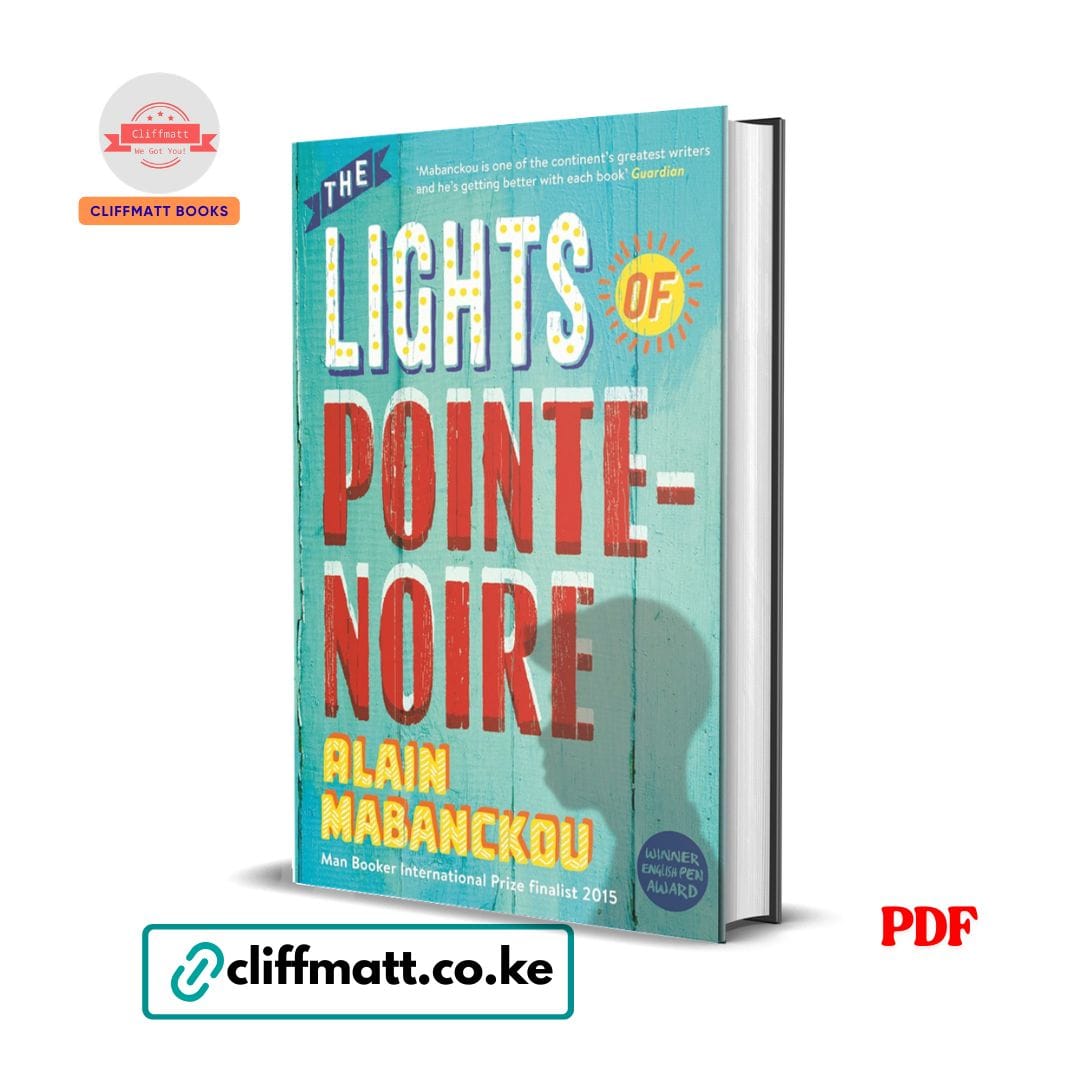
The Lights of Pointe-Noire is the memoir of that return — one of the most celebrated, most beautifully written, and most genuinely moving books produced by any African writer in the 21st century. Man Booker International Prize Finalist 2015. Winner of the English PEN Award. Described by the Guardian as the work of “one of the continent’s greatest writers and he’s getting better with each book.”
Available now on Cliffmatt Books for only Ksh 100.
What This Book Is About:
The Return:
- What it feels like to return to a city you left as a young man and find that everything — and nothing — has changed; the specific disorientation of being both a local and a stranger in the place that made you
- The people who are no longer there — the mother who died in his absence; the relatives who aged without him present; the specific grief of absence that compounds the grief of loss
- The people who are still there — changed, grown older, shaped by the same city in different ways; the specific joy and sorrow of reunion with people who remember you as someone you no longer quite are
- The city itself — Pointe-Noire’s specific geography, its sounds, its smells, its rhythms; rendered with the loving, grieving attention of a man who has been carrying it inside him for two decades and is finally seeing it again with his actual eyes
Memory and Place:
- How Mabanckou’s memory of Pointe-Noire — preserved in his novels, in his imagination, in the stories he has told himself about his childhood — collides with the actual city he finds on his return
- The specific places that hold memory — the house where he grew up, the cinema where he spent his adolescence, the streets where he formed the person he would become — revisited with the double vision of someone who sees them both as they were and as they are
- What places do to people — the specific argument that we are made by the physical and social environments of our childhood; that to understand who Mabanckou is, you must understand Pointe-Noire
- For Kenyan readers: the universal resonance of a story about internal migration — the specific experience of leaving your hometown or your rural home for the city; of building a new self in a new place; of returning to find that home has changed and so have you
The African Writer Abroad:
- The specific experience of being an African writer who has achieved international literary recognition — published in French, translated into English, taught in American universities — while writing about an Africa that most of his readers will never visit
- The responsibility of representation — what it means to be, for many Western readers, one of the primary voices through which they encounter Central Africa; the specific weight and freedom of that position
- Language and identity — Mabanckou writes in French, the language of the colonial power that shaped his country; the specific relationship between linguistic inheritance and cultural identity that his work explores
- For Kenyan readers: the resonance of Mabanckou’s position with the experience of Ngũgĩ wa Thiong’o — the great Kenyan writer’s own struggle with language, colonial inheritance, and the representation of African experience; The Lights of Pointe-Noire belongs in the same conversation
African Childhood and Adolescence:
- The specific texture of growing up in a Central African port city in the 1970s and 1980s — the music, the cinema, the politics, the specific social world of a post-independence Congo navigating its own complicated history
- The role of storytelling in his formation — how Mabanckou became a writer; the specific experiences, encounters, and obsessions of his childhood that made narrative the way he understood and communicated his world
- The cinema — one of the most beautifully rendered sequences in the book; how the specific movies Mabanckou watched as a child in Pointe-Noire shaped his imagination and his understanding of what stories could do
- For Kenyan readers: the specific cross-African resonance of an African childhood — the particular combination of colonial inheritance, traditional culture, and modern aspiration that African childhoods across the continent share, however differently they express it
The Literary Achievement:
- Why The Lights of Pointe-Noire is considered one of Mabanckou’s finest works — the specific qualities of the prose (even in translation), the specific emotional intelligence of the memoir, and the specific literary craft that has made him a finalist for some of the world’s most prestigious literary prizes
- The Man Booker International Prize recognition — what it means for an African writer to be recognised at the highest levels of international literary culture; and what that recognition reflects about the quality and significance of the work
- Why this book belongs in Cliffmatt’s African Literature section alongside Ngũgĩ wa Thiong’o, Nelson Mandela, Wangari Maathai, and the great African memoir tradition your catalogue already represents
Why The Lights of Pointe-Noire Is Essential for Kenyan Readers:
Kenya is a country of massive internal and external migration — of people who have left their hometowns for Nairobi, who have left Kenya for the UK, the US, and the Gulf, and who carry their places of origin inside them even as those places change in their absence. Mabanckou’s story of return — the grief, the joy, the disorientation, and the specific love of a place you can never quite go back to — is one of the most universal stories available in contemporary African literature. It is also one of the most beautifully told.
Who This Book Is For:
- Every Kenyan who has ever left home and wondered what it would feel like to return — this book answers that question with a beauty and an honesty that no other contemporary African writer has matched
- Readers who want the best of contemporary African literary fiction — internationally prize-recognised, beautifully written, deeply human — available at Ksh 100
- University students of African literature, postcolonial studies, and creative writing who want the most celebrated contemporary Francophone African voice available in English translation
- Kenyan diaspora readers — those living in the UK, the US, and elsewhere — for whom the experience of being away from home while carrying it inside you is daily, lived reality; this book will speak directly to their experience
- Readers of Decolonising the Mind (Ngũgĩ), The River Between (Ngũgĩ), Unbowed (Maathai), Born a Crime (Noah), and Long Walk to Freedom (Mandela) who want the most celebrated contemporary Central African literary voice to complete their African literature collection
📖 Author: Alain Mabanckou 📄 Format: PDF eBook (instant download via WhatsApp or email) 💰 Price: Ksh 100 only 🚀 Delivery: Instant after M-Pesa payment confirmation 👉 Order now on cliffmatt.co.ke — Pay via M-Pesa, receive your PDF instantly.











Reviews
There are no reviews yet.