



Description
You’re fine.
That’s what you say when someone asks how you are. That’s what you tell yourself when you lie awake at night running the same mental calculations about the same unfulfilling job, the same stalled relationship, the same untried dream, and the same specific gap between the life you are living and the life you know you are capable of living. You say you’re fine. And you stay exactly where you are.
Mel Robbins — CNN commentator, TEDx speaker whose talk has been viewed tens of millions of times, and the author who would go on to write the globally bestselling The 5 Second Rule — spent years studying why genuinely capable, genuinely intelligent, and genuinely ambitious people stay stuck. Not because they lack the ability to change. Not because their circumstances are uniquely impossible. But because of the specific, identifiable, absolutely correctable internal patterns — the specific voice in the head, the specific avoidance behaviour, and the specific daily deferral of the specific most important things — that keep the specific most capable people permanently in the specific most comfortable version of the life they are settling for.
Stop Saying You’re Fine: Discover a More Powerful You is the book that confronts those patterns directly, honestly, and without the specific comfortable reassurance that most self-help books provide. It is the book for the specific person who is tired of being fine and is ready — right now, today, with exactly the life they currently have — to discover what more powerful actually feels like.
At Ksh 100, the most honest and most activating personal breakthrough guide available is waiting for your answer.
What This Book Covers:
The Problem — Why You’re Stuck:
- The specific “fine” trap — Robbins’ foundational diagnosis of the specific most common and most damaging human self-assessment available; the particular way that “I’m fine” simultaneously suppresses the specific honest acknowledgement of dissatisfaction that change requires and provides the specific comfortable social cover that makes staying stuck socially acceptable; why the specific person who is honestly “fine” and the specific person who is dishonestly “fine” are having completely different experiences of the same word and why the difference matters enormously
- The specific internal chatter — the particular voice inside every person’s head that Robbins calls the most important relationship they will ever have; the specific way that this internal voice either activates the specific person’s potential or suppresses it; why the specific content, the specific tone, and the specific frequency of the specific internal conversation that most people are having with themselves most of the time is the specific most important determinant of whether they are moving toward or away from the specific life they most want
- The specific “want” problem — Robbins’ sharp and specifically uncomfortable observation that most people are extremely clear about what they want in the abstract and completely unclear about what they actually want specifically enough to pursue it; the particular diagnostic process she uses to help readers move from the specific vague yearning (“I want to be happier,” “I want a better career,” “I want to feel more alive”) to the specific concrete, actionable desire that genuine change requires
- The specific science of being stuck — the particular neuroscience and behavioural psychology findings that explain why the specific human brain is wired to prefer the specific familiar discomfort of the known over the specific uncertain discomfort of change; why the specific person who understands this wiring is in a fundamentally better position to override it than the specific person who interprets their own stuckness as a character flaw rather than a biological default
The Diagnosis — What’s Really Going On:
The Five Types of Stuck:
- Stuck in a job you hate — the particular experience of the specific person who spends the specific majority of their waking hours doing work that does not engage, does not challenge, and does not connect to anything they genuinely value; the specific internal negotiation (“I’ll update my CV next month,” “I’ll talk to my boss after the appraisal,” “I’ll start my own thing when I have more saved”) that keeps them in the specific job they are complaining about for years longer than any rational calculation would justify
- Stuck in a relationship that isn’t working — the particular patterns of the relationship that is neither good enough to commit to nor bad enough to leave; the specific emotional inertia, the specific sunk-cost reasoning, and the specific fear of the specific alternative that keeps people in the specific relational middle ground that produces the specific chronic low-level unhappiness that they have learned to call fine
- Stuck with a dream you never pursue — the particular experience of the specific person who has been carrying the specific book they want to write, the specific business they want to start, the specific skill they want to develop, or the specific contribution they want to make for years without beginning; the specific internal negotiation (“I’ll start when I have more time,” “I’ll begin when the children are older,” “I’ll try when conditions are better”) that keeps the specific most important creative and personal ambitions permanently in tomorrow
- Stuck in habits that are hurting you — the specific patterns of behaviour (the specific food, the specific alcohol, the specific screen time, the specific chronic lateness, the specific financial avoidance) that the specific person who is stuck consistently recognises as limiting, consistently intends to change, and consistently fails to change through the specific combination of willpower and resolution that they keep trying and that keeps not working
- Stuck in a life that looks fine from the outside — the particular and specifically painful experience of the person whose life is, by every external measure, completely acceptable — good job, stable relationship, adequate income, comfortable home — and who feels the specific guilt of dissatisfaction with a life that so many people would be grateful for; the specific validation that Robbins offers this specific reader that the specific feeling of wanting more is not ingratitude but the specific honest signal of unrealised potential
The Science — Why Your Brain Is Working Against You:
- The specific brain science of change resistance — the particular role of the basal ganglia (the specific brain structure that automates familiar behaviour) and the prefrontal cortex (the specific brain structure that evaluates new options and makes deliberate choices) in the specific daily experience of being stuck; why the specific brain that has automated a behaviour is literally working against the specific conscious intention to change it
- The specific activation energy problem — the particular finding from behavioural science that the specific most powerful predictor of whether a person will take a desired action is not their motivation, their intention, or their emotional commitment but the specific amount of effort required to begin; why the specific person who reduces the specific activation energy required to begin their most important behaviours will always produce more of them than the specific person who relies on motivation that they are waiting to feel
- The specific “5 second” insight — the particular predecessor to Robbins’ later, globally bestselling book; the specific finding that the window between the specific moment of impulse toward a desired action and the specific moment when the brain’s automatic resistance kicks in and suppresses it is approximately five seconds; why the specific person who acts within that window consistently produces behaviour that their motivation alone would never sustain
- The specific comfort zone biology — why the specific human nervous system is wired to treat the specific unfamiliar as threatening and the specific familiar as safe regardless of whether the specific familiar is genuinely good for the specific person experiencing it; how this specific biological wiring produces the specific gravitational pull toward the specific known that keeps most people in the specific situations they have outgrown
The Tools — How to Get Unstuck:
Identifying What You Actually Want:
- The specific want excavation process — Robbins’ particular diagnostic tools for moving from the specific vague dissatisfaction that most stuck people experience (“I just know I want something different”) to the specific concrete, personally owned, genuinely motivating desire that genuine change requires; the particular questions, the specific exercises, and the specific honest self-interrogation that this process requires
- The specific “push” versus “pull” motivation distinction — the particular difference between the specific person who is moving away from something they don’t want (running from dissatisfaction) and the specific person who is moving toward something they do want (pulled by genuine desire); why the specific pull motivation is always more powerful, more sustainable, and more personally honest than the specific push motivation that most people use; how to identify your specific pull
Taking Action Before You Feel Ready:
- The specific “you will never feel ready” principle — Robbins’ most uncomfortable and most liberating core message; the particular evidence that the specific feeling of readiness that most people are waiting for before they begin the specific most important things is not a signal that the right moment has arrived but a specific neurological comfort-seeking response that will recur indefinitely regardless of how prepared the specific person actually is
- The specific action-before-feeling sequence — the particular finding from both neuroscience and clinical psychology that the specific relationship between action and feeling runs in both directions; that while the specific conventional wisdom assumes that motivation produces action, the specific research consistently shows that action produces motivation just as reliably; why the specific person who acts before they feel motivated consistently develops the specific motivation that the specific person who waits to feel motivated before acting never experiences
- The specific daily activation practices — the particular small, specific, immediately executable actions that Robbins prescribes as the specific daily practice of getting unstuck; how the specific momentum of small daily actions builds the specific confidence, the specific evidence of capability, and the specific habit of forward movement that the specific larger changes eventually require
Silencing the Inner Critic:
- The specific internal voice management — the particular practices for recognising, naming, and deliberately overriding the specific internal commentary that most stuck people have internalised so deeply that they no longer experience it as commentary but as fact; how the specific person who learns to treat their specific inner critic as a specific voice rather than a specific truth is in the specific most powerful position available for taking the specific actions that their inner critic is most invested in preventing
- The specific reframing practices — how to take the specific “I can’t,” the specific “I’m not ready,” and the specific “who am I to think I could do this” statements that the specific inner critic most reliably produces and replace them with the specific questions and the specific alternative framings that move the specific internal conversation from suppression to activation
Building the Habits That Stick:
- The specific habit formation science — the particular findings of habit research that Robbins applies to the specific challenge of building the specific new behaviours that the specific more powerful life requires; the particular role of environment design, of the specific habit loop (cue, routine, reward), and of the specific social accountability structures that make new habits genuinely self-sustaining rather than requiring the specific continuous effortful maintenance that most people mistake for what habit change requires
- The specific “start smaller than you think you need to” principle — the particular finding that the specific most reliable predictor of a new habit’s failure is the specific ambition of its starting conditions; why the specific person who begins with the specific five-minute version of the specific behaviour they want to build will almost always succeed where the specific person who begins with the specific hour-long version consistently fails; the specific application of this principle to the specific most common Kenyan professional and personal development goals
The Mindset — Becoming the More Powerful You:
- The specific identity shift that underpins lasting change — Robbins’ consistent argument that the specific most powerful change is not the specific change of behaviour but the specific change of self-concept; that the specific person who genuinely believes they are the specific kind of person who exercises, reads, saves money, speaks up, and takes risks will produce those specific behaviours far more reliably than the specific person who is trying to perform those behaviours while maintaining the specific self-concept of someone who does not
- The specific “more powerful you” framework — what Robbins means by power in this context: not the specific power over others but the specific power of genuine self-direction, genuine self-expression, and the specific genuinely chosen life that the specific person who has stopped saying they’re fine and started telling the truth about what they want is in the specific best position to build
- The specific daily practice of the more powerful you — the particular morning questions, the specific evening reflection, and the specific daily micro-commitments that together constitute the specific ongoing practice of being the specific more powerful version of yourself that this book invites every reader to discover
Why Kenyan Readers Are Buying This Book:
The specific “I’m fine” response to “how are you?” is as universal in Kenya as it is everywhere else — and so is the specific gap it conceals. The specific Kenyan professional managing the specific combination of career pressure, family expectation, financial obligation, and personal aspiration that characterises so much of contemporary Kenyan life is navigating exactly the specific territory that Mel Robbins maps in this book: the specific daily distance between the specific life being lived and the specific life that genuine honesty, genuine courage, and genuine action would produce.
Stop Saying You’re Fine is the book that closes that distance — not by telling you that your life is better than you think, but by telling you the specific truth that you already know: it could be better than it is, you are more capable than you are currently proving, and the specific moment to begin is the specific one you are in right now.
At Ksh 100, the most honest and most activating personal breakthrough available.
Who This Book Is For:
- Every Kenyan who has been saying “I’m fine” for longer than is true and who is ready to stop — and to discover what the specific more honest, more powerful, more genuinely alive version of their life actually feels like
- Kenyan women who want the most directly honest and most immediately activating guide to their own power and potential available in any self-help book currently in your catalogue
- Kenyan professionals who know they are capable of more than their current daily output and who want the specific science-backed, immediately practical toolkit for closing the gap between capability and delivery
- Kenyan young people entering professional life who want to build the specific habits of genuine self-direction before the specific comfortable patterns of the specific stuck adult life have fully formed
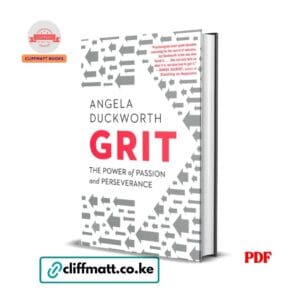
- Every reader of Atomic Habits (Clear), Grit (Duckworth), Die Empty (Henry), Successful Women Think Differently (Burrell), and An Enemy Called Average (Mason) who wants the most directly confronting and most immediately activating personal breakthrough guide to complete their self-development library
📖 Author: Mel Robbins
📄 Format: PDF eBook (instant download via WhatsApp or email)
💰 Price: Ksh 100 only
🚀 Delivery: Instant after M-Pesa payment confirmation
👉 Order now on cliffmatt.co.ke — Pay via M-Pesa, receive your PDF instantly.








Reviews
There are no reviews yet.