

Description
Your child is spending twelve or more years in school learning to be an employee.
Nobody is teaching them to be an owner. Nobody is teaching them to be an investor. Nobody is teaching them the specific difference between an asset and a liability, between earned income and passive income, between working for money and having money work for them. The specific financial knowledge that determines whether your child will spend their adult life as an “A” student working for someone else’s dream — or as the person who owns the business that employs the “A” students — is not in any Kenyan school curriculum. It never has been.
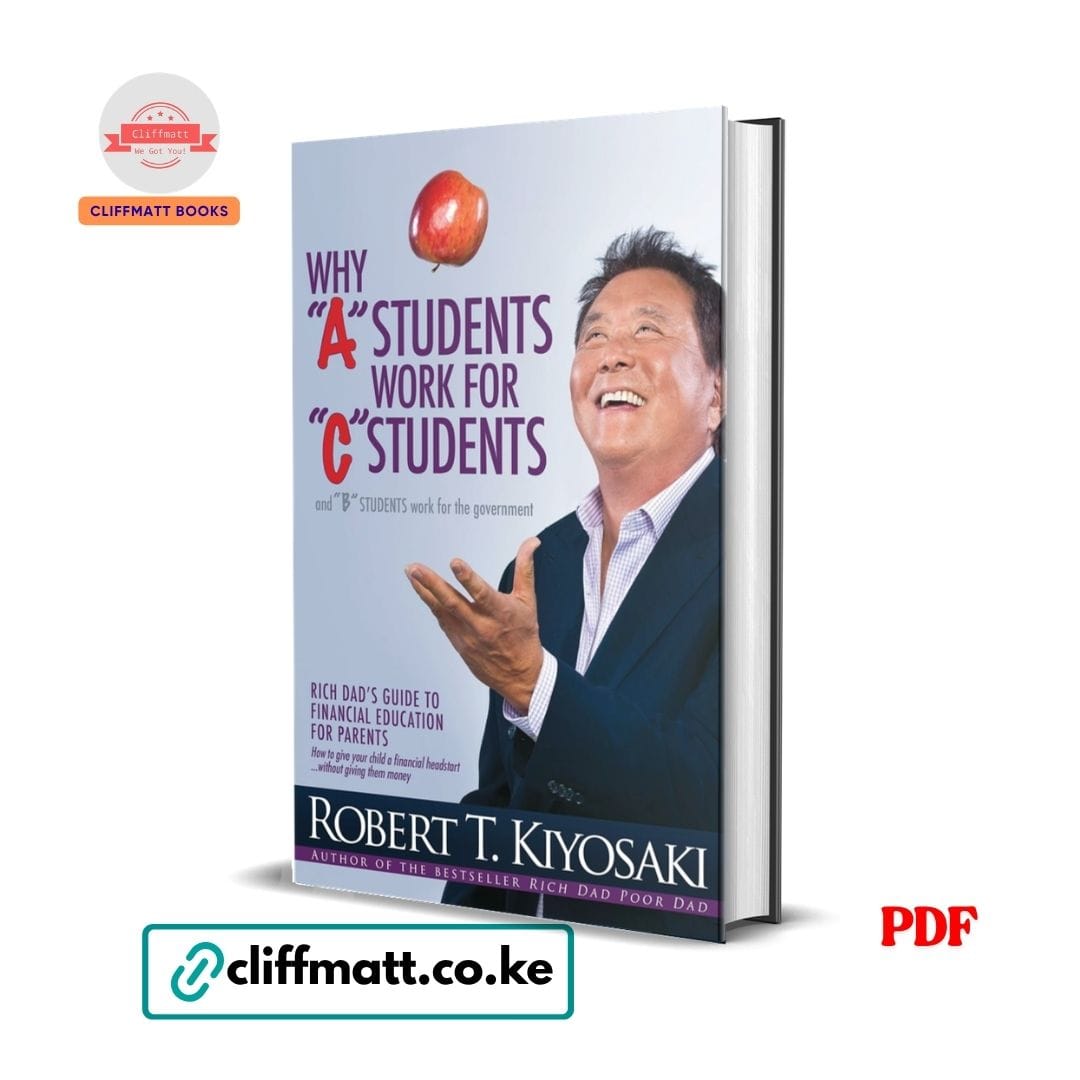
Robert T. Kiyosaki — author of Rich Dad Poor Dad, the bestselling personal finance book in history, whose financial education framework has transformed the money thinking of tens of millions of readers across the world including millions of Kenyan parents and entrepreneurs — wrote Why “A” Students Work for “C” Students specifically for parents. Not for investors. Not for entrepreneurs. For the specific parent who loves their child, who is investing enormous resources in their child’s formal education, and who is increasingly aware that the specific education their child is receiving is preparing them brilliantly for a world that is rapidly disappearing — and not at all for the specific financial world their child will actually have to navigate.
This is Rich Dad’s guide to financial education for parents. How to give your child a financial headstart — without simply giving them money.
At Ksh 100, the most important financial parenting book available to every Kenyan parent.
What This Book Covers:
The Central Argument — Why School Fails at Financial Education:
- The specific, uncomfortable thesis that the entire book builds on — that the educational system was designed for the industrial age, to produce the specific compliant, credentialed employees that industrial-age businesses needed; that the specific financial skills that determine adult financial success (understanding money, building assets, creating passive income, managing risk, thinking like an owner) are not merely absent from this curriculum but are actively contradicted by it; and that the specific parent who leaves their child’s financial education to school is leaving it to an institution that is institutionally designed to produce employees, not financially free adults
- The specific “A” student trap — why the specific child who is best at school is often the specific adult who is most trapped by it; who takes the most expensive university education, earns the highest-paid salary, works the longest hours for the most prestigious employer, and retires with the least financial freedom; why getting the best grades in a system designed to produce employees produces the most thoroughly programmed employee
- The specific “C” student advantage — not that low grades indicate intelligence or that school failure produces success, but that the specific child who was never able to follow the specific employment-preparation programme develops by necessity the specific entrepreneurial, problem-solving, opportunity-recognising thinking that formal education consistently trains out of its highest-achieving students
- Why this argument is specifically, urgently relevant to Kenya — where the specific cultural premium on academic qualifications, on university degrees, on professional credentials, and on government employment is among the highest in the world; where the specific KCPE and KCSE performance pressure on Kenyan children and Kenyan parents is producing the specific most academically pressured generation in Kenya’s history; and where the specific financial results of that academic pressure — the specific graduate unemployment, the specific salary dependence, the specific absence of entrepreneurial financial thinking in Kenya’s most educated generation — are producing the specific outcomes that this book directly and honestly addresses
The Three Types of Education — What School Ignores:
- The specific academic education — what schools teach; the particular literacy, the particular numeracy, the particular subject knowledge that formal education delivers; why this education is genuinely valuable but specifically insufficient for financial success; why Kiyosaki is not anti-education but specifically pro-financial-education
- The specific professional education — the particular vocational, professional, or technical training that prepares a person for their specific career; the particular value of the doctor’s medical training, the engineer’s technical degree, the lawyer’s legal education; and why even the most valuable professional education consistently produces the specific trap of trading time for money that financial education is the only escape from
- The specific financial education — the particular knowledge that schools never teach: what money is, how it works, how assets and liabilities differ, how the rich use debt differently from the poor and middle class, how taxes work differently for employees and business owners, how passive income is created, and how the specific Cashflow Quadrant determines whether you will spend your life working for money or having money work for you; why this specific education — the one that determines adult financial outcomes more than any other — is consistently absent from every level of Kenya’s formal education system
The Cashflow Quadrant Applied to Parenting:
- The specific four quadrants — Employee, Self-Employed, Business Owner, Investor — and the specific financial education that each requires; why moving your child from the left side of the quadrant (E and S) to the right side (B and I) is the specific most important financial gift any parent can give
- Why most Kenyan parents are unconsciously raising their children to stay in the E quadrant — the particular messages (“get good grades, get a good job, work hard, save money, get out of debt”) that well-meaning Kenyan parents consistently deliver and that consistently produce the specific E-quadrant thinking that keeps the next generation on the employment treadmill that the current generation is trying to escape
- The specific B-quadrant and I-quadrant thinking that this book teaches parents to model and to teach — the particular ownership mentality, the particular asset-building focus, the particular risk-management skill, and the specific passive income orientation that the right side of the Cashflow Quadrant requires and that no school teaches
Teaching Financial Literacy at Home — The Practical Chapters:
Starting with the Basics — Money at Home:
- The specific age-appropriate financial education tools and conversations that every Kenyan parent can implement immediately — from the particular allowance structure that teaches a young child the specific difference between spending and saving, through the specific first investment conversation with a teenager, through the specific business mentoring that a young adult needs before they leave the family home
- The specific Monopoly principle — why Kiyosaki’s Rich Dad used the specific board game Monopoly as a financial education tool; why the specific lessons of buying properties, collecting rent, and building from houses to hotels are not merely game mechanics but the specific most accessible introduction to real asset-building thinking available to any child at any age; why the specific Kenyan family that plays Monopoly together is doing more genuine financial education than most school financial literacy programmes deliver
- The specific money conversation framework — the particular way to talk about money with children of different ages; the specific vocabulary (assets, liabilities, cash flow, passive income) that children can genuinely learn and genuinely use; and the specific family financial transparency that Rich Dad recommends — including children in real money conversations rather than protecting them from the specific reality of family financial life
Financial Education by Age:
- The specific guidance for financial education with young children (5-10) — the particular three-jar system (spending, saving, giving), the specific first earning experience, and the specific money mindset conversations that establish the foundation for everything that follows
- The specific guidance for financial education with pre-teens and teenagers (11-17) — the particular first investment experience (even at very small scale), the specific business idea exploration, the particular introduction to the tax system and why understanding it matters, and the specific entrepreneurial projects that develop genuine financial thinking rather than merely financial knowledge
- The specific guidance for young adults (18+) — the particular mentoring conversations about the specific first job versus the specific first business, the specific real estate introduction, and the specific life design conversations that position a young adult to make genuinely informed financial decisions rather than simply defaulting to the specific employment path that their education has prepared them for
Teaching the Difference Between Assets and Liabilities:
- The specific most important financial literacy lesson of the entire Rich Dad framework — the particular definition that Rich Dad gave Kiyosaki as a child and that transformed his financial life: an asset puts money in your pocket; a liability takes money out; the specific simplicity of this definition and the specific clarity it immediately produces about every financial decision a person makes
- Why most things Kenyan families think are assets are actually liabilities — the specific family car (depreciates, requires fuel, insurance, and maintenance — takes money out of pocket), the specific family home (for most Kenyan families, requires mortgage payments, rates, and maintenance — takes money out of pocket until it is paid off), and the specific consumer goods that Kenyan families purchase with debt (credit, SACCO loans, M-Pesa credit) that consistently move the family further from financial freedom rather than closer to it
- How to teach this specific distinction to children in age-appropriate ways — the particular conversation, the particular examples from daily family life, and the specific practice of evaluating every significant purchase through the asset/liability lens that transforms a child’s financial thinking from consumption-oriented to asset-oriented
The Importance of Financial Risk — Why Schools Teach Fear:
- The specific argument that the school system’s specific obsession with avoiding failure — with getting the right answer, with not making mistakes, with the specific grade that communicates whether you have succeeded or failed — produces the specific risk-aversion that is the primary obstacle to financial success in adult life
- Why financial risk, properly understood and properly managed, is not the enemy of financial security but its specific prerequisite — the particular evidence that every significant financial success requires the specific willingness to risk failure that formal education most thoroughly trains out of its most successful students
- How to raise a financially resilient child — the particular parenting approach that allows children to experience the specific small financial failures (losing their allowance on a bad decision, having a lemonade stand that doesn’t make money, investing in a business idea that doesn’t work) that are the specific most valuable financial education available; why protecting children from financial failure protects them from the specific learning that financial success most requires
The Rich Dad Philosophy of Money for Parents:
- The specific conversation about taxes that most Kenyan parents never have with their children — the particular way that the tax system works differently for employees (taxed first, spend what remains) and business owners (spend first, taxed on what remains); why this specific difference is one of the most important financial literacy lessons any Kenyan child can receive, and why understanding it is the specific first step toward the specific financial strategies that legally and legitimately minimise tax burden
- The specific debt conversation — the particular distinction between bad debt (borrowed to buy liabilities — consumer credit, phone loans, M-Pesa Fuliza used for consumption) and good debt (borrowed to buy assets — property that generates rent, business capital that generates profit); why teaching children the specific difference between good debt and bad debt is more important than teaching them to avoid all debt
- The specific giving philosophy — why Rich Dad’s financial framework consistently includes the specific practice of giving as a financial discipline; why the specific Kenyan Christian family that teaches tithing alongside financial literacy is already practising one of the specific most wealth-oriented financial habits available; how generosity and financial success are not in tension but are, in the Rich Dad framework, consistently and specifically connected
Why Kenyan Parents Are Buying This Book:
Kenya’s specific educational culture — the particular premium on KCPE scores, on national school placement, on university admission, on professional qualifications — is one of the most academically serious in Africa. Kenyan parents sacrifice enormously for their children’s education. And yet the specific financial results of that educational investment — the graduate unemployment, the salary dependence, the specific absence of the financial freedom that formal education implicitly promises — are producing the specific growing awareness among Kenya’s most educated and most financially thoughtful parents that something is missing.
What is missing is financial education. And Why “A” Students Work for “C” Students is the specific book that names what is missing, explains why it is missing, and gives every Kenyan parent the specific practical framework for providing it at home — starting today, for free, without waiting for the school system to change.
At Ksh 100, the most important financial parenting investment available to every Kenyan parent.
Who This Book Is For:
- Every Kenyan parent who is investing in their child’s academic education and who wants to simultaneously give their child the specific financial education that school will never provide
- Kenyan parents who are themselves on the employed side of the Cashflow Quadrant and who want their children to have more financial options than they had — and who want the specific roadmap for making that happen
- Kenyan teachers and educators who are increasingly aware of the specific gap between what school teaches and what financial adult life requires — and who want the most direct and most practically argued case for why financial education belongs at the centre of every child’s development
- Kenyan grandparents who want to understand the specific financial legacy they can leave their grandchildren — not in money but in the specific financial wisdom and financial habits that produce financial freedom across generations
- Every reader of Rich Dad Poor Dad (Kiyosaki), Rich Dad’s Cashflow Quadrant (Kiyosaki), Rich Dad’s Guide to Investing (Kiyosaki), The Psychology of Money (Housel), and How Rich People Think (Siebold) who wants the most specifically parenting-focused and most immediately family-applicable Rich Dad title to complete their financial education library
📖 Author: Robert T. Kiyosaki
📄 Format: PDF eBook (instant download via WhatsApp or email)
💰 Price: Ksh 100 only
🚀 Delivery: Instant after M-Pesa payment confirmation
👉 Order now on cliffmatt.co.ke — Pay via M-Pesa, receive your PDF instantly.






Reviews
There are no reviews yet.