Morgan Housel Books
There is a quiet financial revolution happening among Kenyans who read.
Walk into any serious conversation about money in Nairobi today — whether it is in a Chama meeting in Kasarani, a Zoom call between Kenyan professionals in the diaspora, or a WhatsApp group of young hustlers in Kisumu — and one name keeps coming up: Morgan Housel.
Housel is not an economist. He is not a banker. He is a finance writer who has done something extraordinarily rare: he has made thinking about money feel genuinely human. He writes about wealth the way a wise older uncle would — not with formulas and charts, but with stories, honesty, and uncomfortable truths that make you stop and think about your own relationship with money.
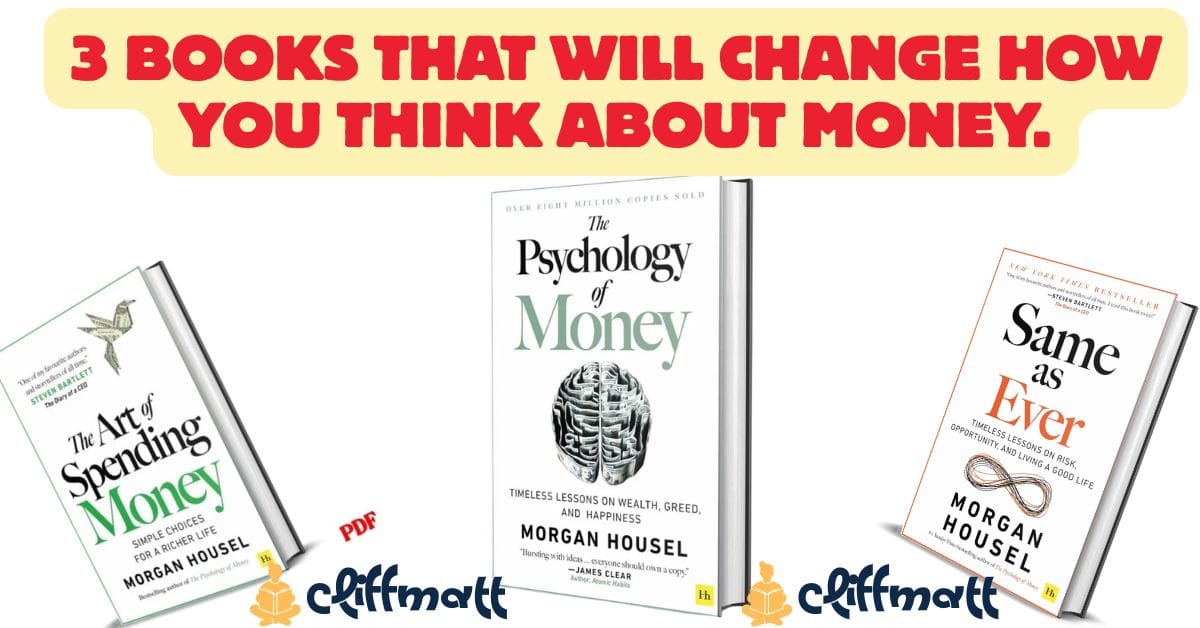
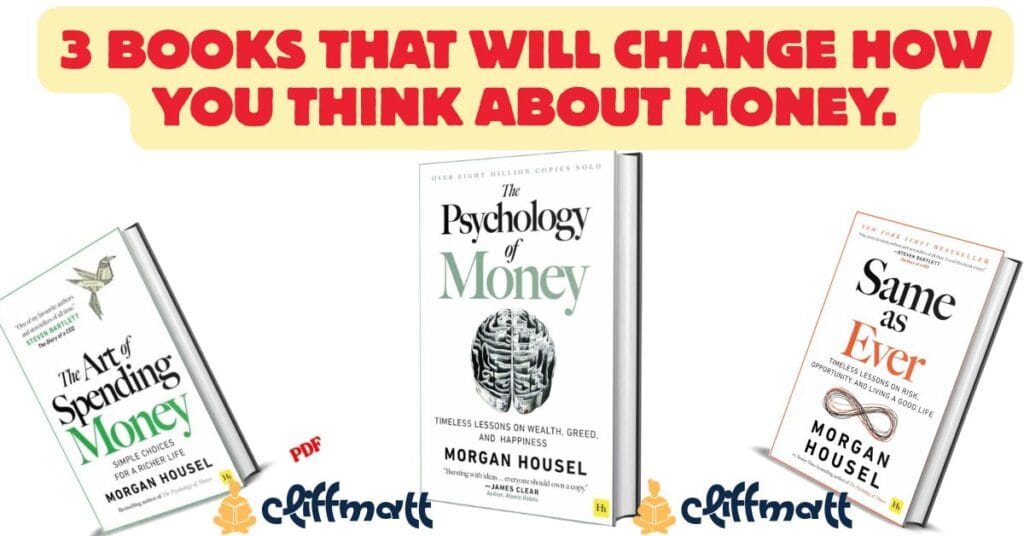
He has now written three books, and all three are available at Cliffmatt Books as PDF ebooks you can have on your phone in minutes:
- The Psychology of Money — KSh 150
- The Art of Spending Money — KSh 100
- Same as Ever — KSh 150
This post gives you a complete review of all three books, explains why they are essential reading for Kenyans specifically, and tells you exactly which one to start with depending on where you are right now.
Who Is Morgan Housel — And Why Should Kenyans Care?
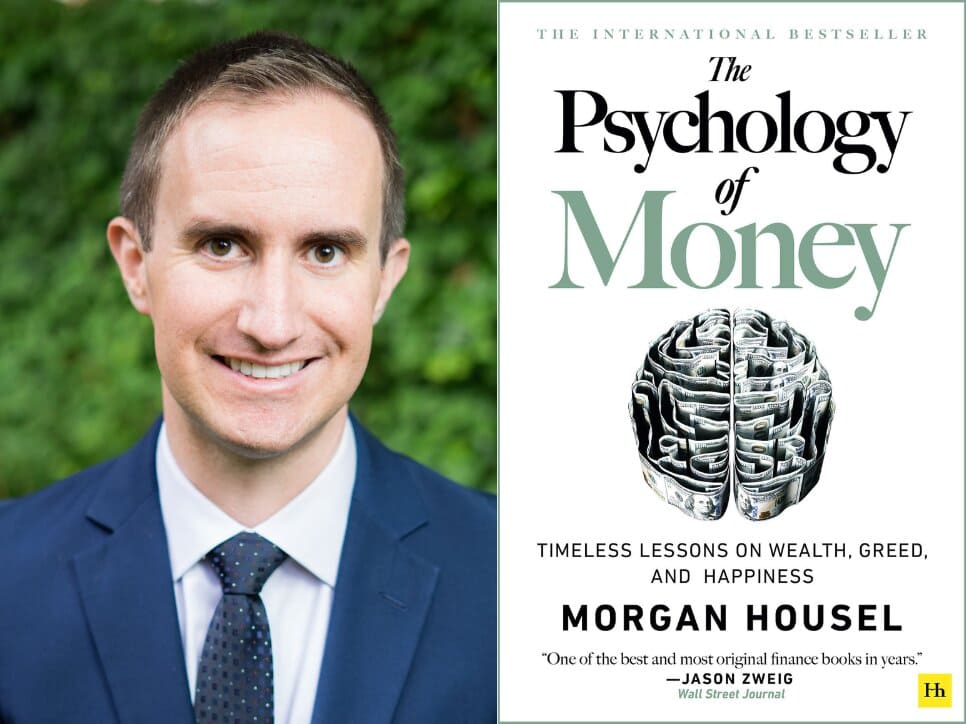
Morgan Housel is a partner at The Collaborative Fund and former columnist at The Wall Street Journal and The Motley Fool. He is a two-time winner of the Best in Business Award from the Society of American Business Editors and Writers and a two-time finalist for the Gerald Loeb Award for Distinguished Business and Financial Journalism.
But awards aside, what makes Housel relevant to a 28-year-old Kenyan saving Ksh 5,000 a month in M-Pesa savings, or a 45-year-old Nairobi businessperson trying to figure out what to do with their first serious profit?
His core argument is one that every Kenyan instinctively recognises: doing well with money is not about being the smartest person in the room. It is about behaviour. Money — investing, personal finance, and business decisions — is typically taught as a math-based field, where data and formulas tell us exactly what to do. But in the real world people don’t make financial decisions on a spreadsheet. They make them at the dinner table, or in a meeting room, where personal history, your own unique view of the world, ego, pride, marketing, and odd incentives are scrambled together.
That is Kenya. That is every Kenyan who has blown their salary before the 20th, or panic-withdrew their SACCO savings during a difficult month, or spent a windfall on a car upgrade instead of an investment. Housel is not judging those decisions — he is explaining them. And understanding them is the first step to making better ones.
Book 1: The Psychology of Money — The One That Started Everything
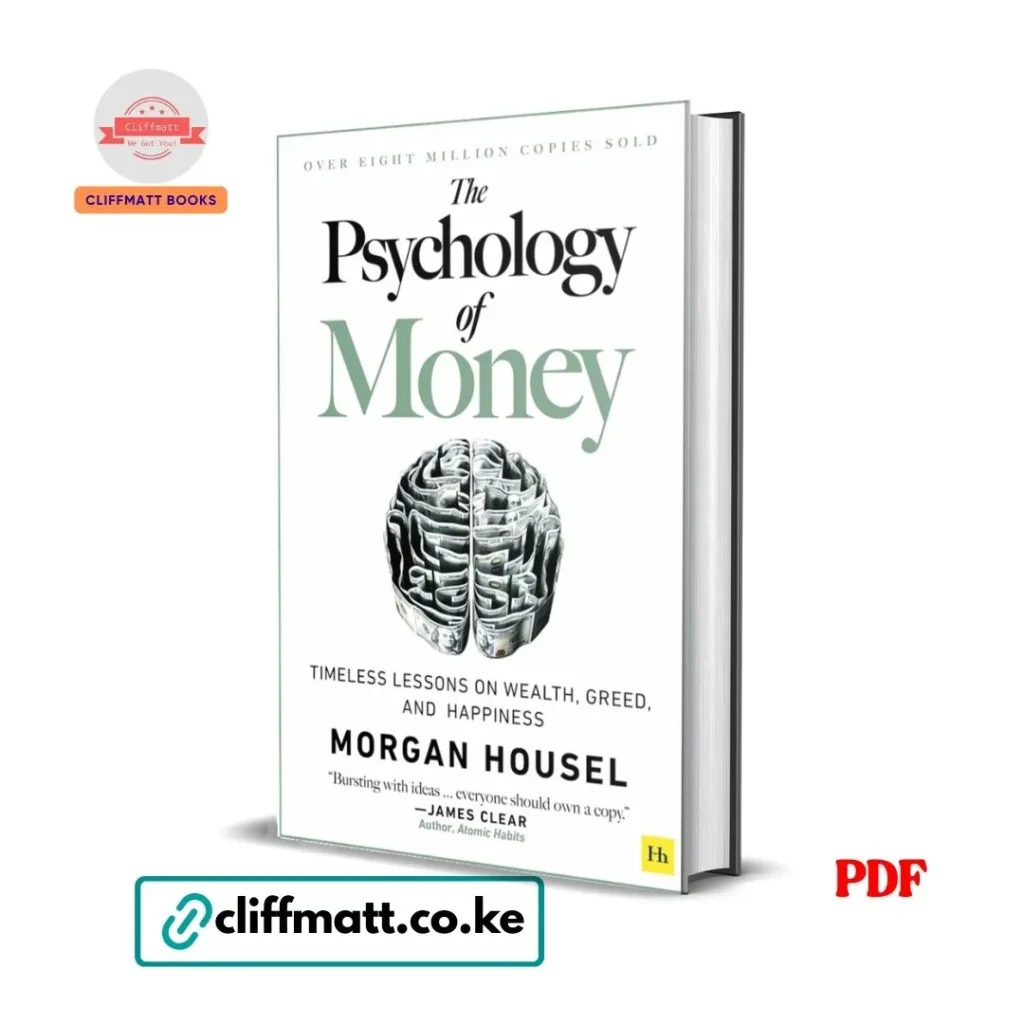
Available at: Cliffmatt Books — KSh 150 PDF
What Is This Book About?
Most of us assume financial success depends on education and intelligence. But in The Psychology of Money, finance expert Morgan Housel presents an alternate hypothesis: the key to financial success lies in understanding human behaviour. Housel posits that when you understand how emotions and beliefs influence your financial decisions, you will make better financial decisions.
The book is made up of 19 short stories — each one exploring a different dimension of how human psychology sabotages or enables financial success. You can read each chapter independently, making it perfect for reading in short sessions on your phone during a commute or lunch break.
The Lessons That Hit Different for Kenyans
Lesson 1: Wealth is what you don’t see
Housel notes that wealth is not visible because it is financial assets not yet converted into what people can see or conceptualise. He argues that one way to become poor is trying to show people how much money you have by spending it.
This one lands hard in Kenya. We live in a culture where a new car, expensive clothes, and a certain address are treated as signs of financial success. But Housel argues the opposite — the richest people you know may be the quiet ones driving a modest car and living in the same house for 10 years. The ones who look rich are often spending their wealth into invisibility.
For young Kenyans navigating social media pressure, house parties with flashy spending, and the constant urge to “upgrade” — this chapter alone is worth the price of the book.
Lesson 2: Getting wealthy and staying wealthy are two different skills
Many Kenyans are excellent at getting money — through hustle, business, a good job, or a lucky investment. But very few are good at keeping it. Housel argues that the skill of acquiring wealth has almost nothing in common with the skill of preserving it. Getting rich requires risk-taking and optimism. Staying rich requires humility and the fear of losing what you have.
This is why so many Kenyan entrepreneurs who build successful businesses in their 30s find themselves broke in their 50s. The same boldness that built the business destroys the savings.
Lesson 3: Compounding requires time — and Kenyans underestimate both
Reflect on your own money history. Your personal experiences and societal influences profoundly shape your financial decisions.
Housel uses Warren Buffett as his central example of compounding — not to show that you need to be a genius investor, but to show that starting early and staying consistent for decades is worth more than any single brilliant investment. For a Kenyan who starts investing Ksh 5,000 a month into a money market fund at age 25 versus one who starts at 35, the gap after 30 years is not small. It is life-changing.
Lesson 4: Plan for things going wrong
Housel warns that people are often too optimistic with their finances, which leads them to put too much of their wealth at risk at any one time on a strategy that can be taken down by any one factor of bad luck. But the future is uncertain. If your financial plan only works in a narrow range of possible futures, you are placing yourself in a precarious position.
For Kenyans whose income fluctuates — due to seasonal business, farming, or contract work — this lesson about building financial buffers is especially relevant. Never run your finances at 100% capacity. Always leave room for the unexpected.
Who Should Read The Psychology of Money?
This book is for every Kenyan who has ever wondered why they keep making the same financial mistakes despite knowing better. It is for young professionals just starting to earn seriously, parents trying to model good money habits for their children, and business owners trying to understand why their profits don’t seem to translate into long-term wealth.
→ Get The Psychology of Money — KSh 150 PDF on Cliffmatt Books
Book 2: The Art of Spending Money — The Most Underrated Book of 2025
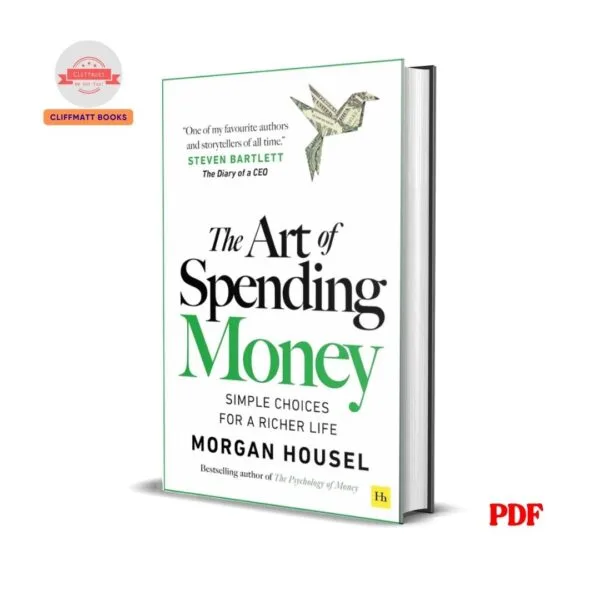
Available at: Cliffmatt Books — KSh 100 PDF
What Is This Book About?
In The Art of Spending Money: Simple Choices for a Richer Life, released in October 2025, the Psychology of Money author returns with another masterpiece on what money really means when the noise fades and the numbers stop moving.
If The Psychology of Money taught you how to accumulate and protect wealth, this book answers the question almost nobody talks about: once you have money, how do you actually use it well?
Housel dissects the fundamental choice we face with every dollar. The first is utility versus status-seeking — distinguishing spending for joy and freedom (high utility) from the costly trap of measuring oneself against others. Housel warns that there are two ways to use money: one is as a tool to live a better life, the other is as a yardstick of status to measure yourself against others. The second is the psychology of expectations — highlighting that happiness eludes us when our expectations grow faster than our income.
The Lessons That Hit Different for Kenyans
Lesson 1: Stop spending to impress people who aren’t paying your bills
Spending in order to impress others rarely leads to happiness. Using money for social status is fruitless because there is always something more to strive toward.
Kenya has a deep culture of visible spending — weddings that cost more than houses, funerals that bankrupt families, birthday parties that go on social media but leave the host in debt for months. Housel’s argument is not that you should be a miser — it is that spending motivated by what others will think of you rarely produces genuine satisfaction. And in Kenya, where social obligations around money are intense, this is a conversation the country badly needs to have.
Lesson 2: Money’s highest purpose is buying freedom, not things
For Housel, financial freedom is less about wealth and more about choice. The richest people are those who can control how they spend their time. Whether that means working fewer hours, travelling, or pursuing a passion project, money should serve your life.
For Kenyan professionals trapped in jobs they hate because they need the salary, or entrepreneurs who work seven days a week because they never built financial cushion — this idea is quietly radical. Savings are not just numbers in an account. They are stored freedom, waiting to be deployed.
Lesson 3: Expectations, not income, determine whether you feel rich or poor
The key lesson is that if your wants and expectations are higher than what you have, you will feel poor no matter how much you have.
This is why a Kenyan earning Ksh 150,000 a month can feel broke while another earning Ksh 50,000 feels comfortable. The difference is not income — it is expectations. Social media has turbocharged this problem, constantly showing Kenyans what they do not have and making them feel their actual lives are inadequate. Housel offers a practical philosophy for escaping this trap.
Lesson 4: The best purchases are emotional, not financial
A theme throughout the book is that satisfaction from spending rarely comes from things. Experiences, relationships, and time — these yield a higher return on happiness. Housel shares examples of people who spent lavishly yet remained unhappy, contrasted with those who lived modestly but with purpose and joy.
The mboga money spent on a family dinner matters more to lasting happiness than the big-ticket purchase you saved for two years. The weekend trip to the coast with your children is worth more to your well-being than the car upgrade that impresses your colleagues. Housel grounds this in research, not sentiment.
Who Should Read The Art of Spending Money?
Anyone who earns a salary or business income in Kenya and has ever felt that money disappears without producing proportionate happiness. This book is for the Kenyan professional in their 30s or 40s who has “made it” but feels strangely unfulfilled. It is also essential reading for young Kenyans just entering the workforce who want to build a healthy relationship with spending before bad habits set in.
→ Get The Art of Spending Money — KSh 100 PDF on Cliffmatt Books
Book 3: Same as Ever — The Wisest Book Morgan Housel Has Written
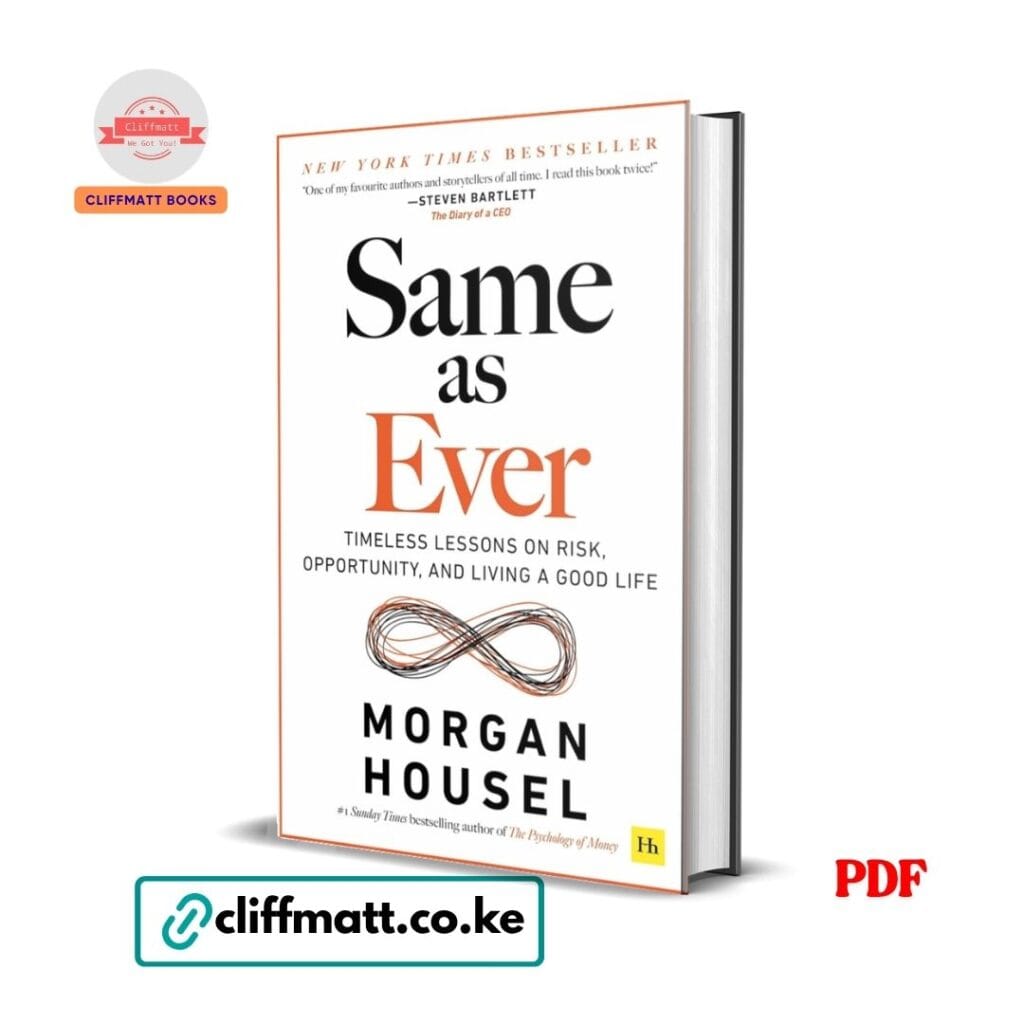
Available at: Cliffmatt Books — KSh 150 PDF (on sale)
What Is This Book About?
When planning for the future, we often ask, “What will the economy be doing this time next year?” But forecasting is hard. The important events that will shape the future are inherently unpredictable. Instead, we should be asking a different question: What will be the same in the future as it is now? Knowledge of the things that never change is more useful, and more important, than an uncertain prediction of an unknowable future.
Same as Ever is a collection of 23 essays, each offering a standalone meditation on human behaviour, risk, uncertainty, and the patterns that persist despite an ever-changing world.
Where The Psychology of Money is about how we think about accumulating money, Same as Ever zooms out to the bigger picture — how human nature, risk, opportunity, and behaviour have stayed constant across centuries. In a world of constant change, Housel argues that understanding what never changes gives you a permanent competitive advantage.
The Lessons That Hit Different for Kenyans
Lesson 1: The biggest risk is always the one nobody is talking about
Invest in preparedness, not prediction. The biggest risk is always what no one sees coming, because if no one sees it coming, no one is prepared for it, and if no one is prepared for it, its damage will be amplified.
Think about what happened to Kenyan businesses in 2020, or during the 2007–08 post-election violence, or during any of the droughts that have periodically devastated the Rift Valley. The risks that caused the most damage were never the ones that financial experts were warning about loudly. They were the ones nobody had prepared for.
Housel argues that instead of trying to predict the specific disaster, smart people build resilience against uncertainty in general. For Kenyans, this means emergency funds, diversified income streams, and not putting all your financial eggs in a single basket — whether that basket is a rental property in one area, a single client, or one crop.
Lesson 2: Good stories beat good data — and this shapes how money flows
One of Housel’s most counterintuitive insights is that in business and investing, the best story usually wins — not the best product, not the best data, not the cleverest strategy. In Same as Ever, the author shares that it is not the best ideas that win, but the best stories.
For Kenyan entrepreneurs, this is enormously practical. The businessperson who can articulate their vision compellingly will raise more capital, attract better partners, and command higher prices than a competitor with a superior product but a weak story. Invest in how you communicate what you do.
Lesson 3: Humility about the future is not weakness — it is wisdom
Kenya’s business culture often celebrates boldness and confident prediction. The entrepreneur who says “I know exactly where this market is going” sounds impressive. But Housel argues that history consistently humiliates confident forecasters.
The wiser approach is to build a business, investment, or financial plan that is robust enough to survive many possible futures — not one that only works if things go exactly as predicted. This is the principle behind why the world’s best investors hold cash buffers, why the wisest farmers diversify crops, and why Kenyan financial experts recommend spreading savings across different instruments.
Lesson 4: The compounding of small behaviours shapes everything
Housel illustrates how tiny things add up to huge things, good and bad.
A Kenyan who saves Ksh 200 every day for 30 years, invested at a modest return, accumulates more than most people who earn high salaries but spend everything. The consistency of small, repeated actions — waking up early, reading one book a month, saving before spending, exercising regularly — produces compounding results that no single dramatic action can replicate.
This is the same principle that built every great Kenyan business that started from a single mboga stall, a single M-Pesa agent, or a single rental unit.
Who Should Read Same as Ever?
This is the book for Kenyan entrepreneurs, investors, managers, and anyone making long-term decisions in an uncertain environment. If you are building a business, planning for retirement, navigating market volatility, or trying to make sense of Kenya’s economic cycles — Same as Ever gives you a timeless mental framework that works regardless of what the economy is doing.
→ Get Same as Ever — KSh 150 PDF on Cliffmatt Books
Which Morgan Housel Book Should You Read First?
Not sure where to start? Here is a simple guide based on where you are right now:
You are new to personal finance or struggling with money habits → Start with The Psychology of Money. It lays the foundation — why you behave the way you do with money, and how to begin changing those patterns. This is the entry point to Morgan Housel’s world and the right first book for anyone who has never seriously studied personal finance before.
You earn decent money but it doesn’t seem to make you happy → Start with The Art of Spending Money. This book is specifically for people who have income but feel like something is missing in how they relate to it. If you’ve wondered “I earn well, so why don’t I feel financially satisfied?” — this book answers that question directly.
You run a business, invest, or make long-term financial decisions → Start with Same as Ever. This is the most strategically valuable of the three for decision-makers. It will fundamentally change how you think about risk, planning, and uncertainty — the things that determine whether a Kenyan business survives its first decade.
You want all three → Read them in this order: The Psychology of Money → Same as Ever → The Art of Spending Money. Each one builds on the previous and together they form a complete financial education that no university in Kenya currently offers.
Get All 3 Morgan Housel Books in Kenya Today — PDF Instant Download
All three books are available right now at Cliffmatt Books as PDF ebooks you can have on your phone within minutes of paying:
| Book | Price | Link |
|---|---|---|
| The Psychology of Money | KSh 150 | Buy PDF → |
| The Art of Spending Money | KSh 100 | Buy PDF → |
| Same as Ever | KSh 150 (on sale) | Buy PDF → |
Total for all three: KSh 400 — less than the price of a single printed book at a Nairobi bookshop, and you receive all three instantly on your phone.
How to buy:
- Click any link above to go to the product page on Cliffmatt Books
- Add to cart and proceed to checkout
- Enter your email and M-Pesa phone number
- Confirm the M-Pesa STK push payment
- PDF delivered to your email instantly
You can also browse all our Finance and Money books in Kenya for more titles at KSh 100 each.
5 Reasons Morgan Housel’s Books Are Essential for Kenyans in 2026
1. Kenya’s economic environment rewards the right money mindset Between rising cost of living, inflation, and the unpredictability of business in East Africa, the Kenyan who understands how to think about money under uncertainty has a massive advantage over one who simply works harder.
2. The books apply directly to how Kenyans actually live Housel’s examples translate perfectly to the Kenyan context — Chama savings groups, the pressure of harambees, SACCO investments, the temptation to upgrade to a bigger car or house the moment income rises, the tendency to conflate visible spending with actual wealth.
3. They are short and readable on a phone None of these books requires a university education to understand. They are written in plain, conversational language that reads easily on an Android phone screen. Each chapter is short enough to finish in 10 minutes.
4. The ideas are actionable today Unlike abstract economic theory, Housel’s books change specific behaviours — how you think about saving, what you do with a windfall, how you make purchase decisions, how you build financial resilience. You can apply these lessons from tomorrow morning.
5. You can get all three for KSh 400 The combined wisdom in these three books took Morgan Housel over two decades to develop and would cost you Ksh 4,000–7,500 at a Nairobi bookshop. At Cliffmatt Books they cost KSh 400 total, delivered to your phone in minutes via M-Pesa.
Frequently Asked Questions (FAQ)
Are Morgan Housel books available as PDF in Kenya?
Yes. All three Morgan Housel books — The Psychology of Money, The Art of Spending Money, and Same as Ever — are available as PDF ebooks at Cliffmatt Books (cliffmatt.co.ke). You pay via M-Pesa and receive the PDF to your email instantly. The Psychology of Money and Same as Ever are priced at KSh 150, while The Art of Spending Money is KSh 100.
What is The Psychology of Money about and why is it popular in Kenya?
The Psychology of Money by Morgan Housel explores how our behaviours, emotions, and biases influence financial decisions. Through engaging stories and research, Housel highlights the importance of patience, long-term thinking, and understanding the psychological aspects of money, rather than just focusing on technical knowledge. It is popular in Kenya because it explains the real reasons Kenyans make the financial decisions they do — including overspending on social obligations, under-saving for the future, and confusing visible wealth with actual financial security.
What is the difference between The Psychology of Money and Same as Ever?
The Psychology of Money focuses on personal financial behaviour — why people make the money decisions they do and how to make better ones. Same as Ever takes a broader view, exploring how human nature, risk, and opportunity stay constant across centuries regardless of economic conditions. Both books are by Morgan Housel and complement each other well. Read Psychology of Money first if you are new to finance, and Same as Ever if you are a business owner or investor making long-term decisions.
What is The Art of Spending Money about?
In The Art of Spending Money, Housel explores the subtle yet powerful relationship between wealth, happiness, and meaning. He reminds us that while money can buy comfort, it cannot always buy contentment. The key, he suggests, is to understand the psychology behind spending — to align your financial decisions with your values, not your impulses. Published in October 2025, it is Morgan Housel’s newest book and the ideal read for anyone who earns well but wonders why money doesn’t seem to produce proportionate satisfaction.
How do I buy Morgan Housel books in Kenya without going to a bookshop?
Visit cliffmatt.co.ke on your phone, find the Morgan Housel book you want, add to cart, and pay using M-Pesa. The PDF is sent to your email within minutes — no bookshop visit needed, no shipping cost, and no waiting. All three titles are available at KSh 100–150 each.
Which Morgan Housel book is best for a young Kenyan starting their financial journey?
Start with The Psychology of Money. It is widely considered one of the most accessible and impactful personal finance books ever written, and its focus on behaviour over technical knowledge makes it ideal for anyone at the beginning of their financial education. Many Kenyans who have read it describe it as the book that fundamentally changed how they think about money.
Final Word: The Most Affordable Financial Education Available in Kenya
For the price of a single matatu ride from Nairobi CBD to Westlands — three times over — you can have three books that represent some of the most important thinking on money, risk, and behaviour written in the last decade.
At Cliffmatt Books, all three Morgan Housel PDF ebooks are available right now. Pay with M-Pesa. Read on your Android phone today.
→ Browse all Finance and Business books at Cliffmatt Books →